What Is the Best Fabric for a Summer Event?
By The Velocity Wear Team
Need this made?Get pricing for this product— free, no obligation, 50 pieces minimum.
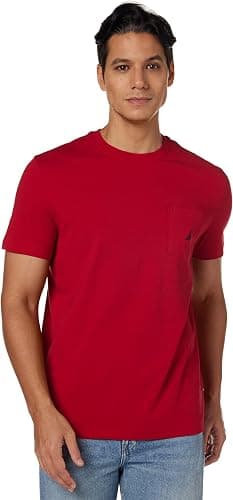
For most UK summer events, a lightweight ringspun cotton tee somewhere around 150 to 180 GSM is the best all-round choice: comfortable in heat, cheap enough to hand out, and the best surface for a sharp print. Choose polyester performance fabric instead only if people will be physically working or moving hard, or if you want an all-over sublimated design. Avoid heavy cotton above roughly 200 GSM, and think about the colour as carefully as the fibre.
Cotton and Polyester Behave Differently in Heat
Cotton absorbs moisture and holds it. That feels pleasant for the first hour because the fabric is taking sweat off the skin, and less pleasant by mid-afternoon when the shirt is damp and stays damp. Polyester does not absorb; it moves moisture along the fibre to the surface where it evaporates, so it dries fast and feels lighter when you are active. The trade is odour. Polyester holds bacteria in a way cotton does not, which is why a synthetic shirt worn hard for a day smells worse than a cotton one.
Poly-cotton blends split the difference sensibly. They dry faster than pure cotton, crease less, hold their shape across a long day, and cost about the same. For staff who are on their feet but not sprinting, a blend is often the most sensible answer of the three.
GSM Is the Number That Matters Most
GSM is grams per square metre, and it tells you more about how a garment feels than the fibre name does. Around 140 to 150 GSM is genuinely light and cheap, but it can be thin enough to show what is underneath and it shows sweat quickly. Around 180 GSM is the sweet spot for summer: substantial enough to hang properly and take a print well, light enough to wear in sun. Above 200 GSM you are into premium tee territory, which looks and feels excellent but is warm to stand around in for eight hours.
Colour Hides Sweat Better Than Fabric Does
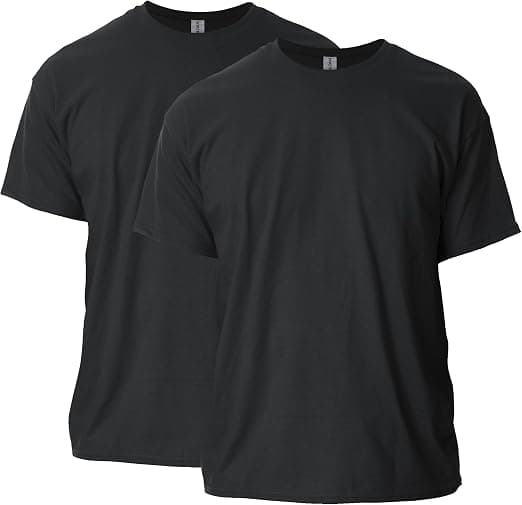
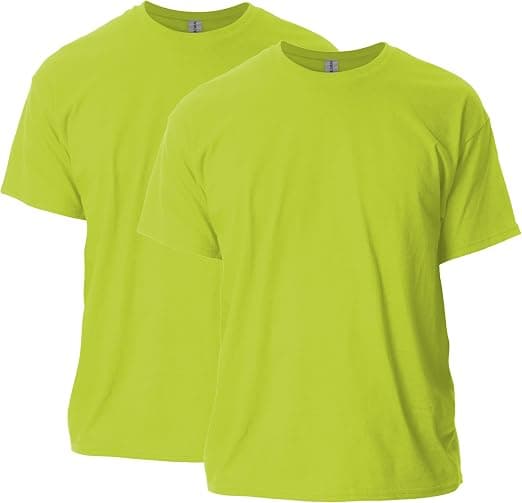
This is the practical point most guides skip. Grey marl is the least forgiving colour ever put on an event shirt. Sweat marks appear as dark patches almost immediately and are visible from across a field. Light blue and other mid pastels are nearly as bad. White hides it reasonably well, black hides it well until salt marks appear, and mid to dark colours in general are far safer. If your team will be lifting, carrying or standing in the sun, the colour decision will do more for how they look at 4pm than any fibre choice.
Ringspun or Carded, and Why It Shows in the Print
Cheaper tees use carded open-end yarn, which is coarser and gives a slightly rougher surface. Ringspun cotton is spun to a finer, smoother yarn, feels noticeably softer, and gives a flatter surface for ink to sit on, which shows in the crispness of small detail. If your design has fine lines or small type, the yarn quality of the blank affects the outcome as much as the print method. For a plain one-colour logo on a giveaway shirt, carded is honestly fine and the saving is real.
Matching Method to Fabric
The fabric decision closes off some decoration options, so make them together rather than in sequence.
- Sublimation is polyester only and light bases only, but it is the way to get true all-over colour on sports and festival kit.
- DTG is cotton only and gives a very soft handle, which suits lightweight summer tees.
- DTF works across cotton, blends and polyester, so it is the flexible choice when the run mixes fabrics.
- Screen printing handles both cotton and polyester well and is the cheapest route at volume for bold, limited-colour designs.
- Embroidery is the right call for staff polos and caps, where a stitched logo simply reads as more professional.
“"Buy the shirt for four in the afternoon, not for nine in the morning."”
Staff Kit Is a Different Problem to Giveaways
Handing out branded tees to visitors and dressing your own team are two different jobs. Giveaway garments should be cheap, light and heavy on the middle sizes, because most of them are worn once. Staff need something that still looks tidy at the end of a long shift, and a pique polo in cotton or a poly blend does that better than any t-shirt: the collar holds its shape, the textured knit hides creasing, and it reads as staff rather than as crowd. Embroidered rather than printed also helps, since a stitched logo does not look tired when the shirt does.
Do Not Forget Headwear
An outdoor event in full sun makes caps and bucket hats far more useful than another layer on the body. Cotton twill caps are comfortable and take embroidery well; polyester performance caps breathe better under exertion. Either way they get worn long after the event, which quietly makes them one of the better value branded items you can order.
Planning the Order
Summer events cluster, and so do orders. Production starts at artwork approval, not when you place the order, so build in time for proofing. As qualitative guidance, screen printing and embroidery typically run around 10-15 working days from approval, with sublimation and more complex jobs nearer 15-20, and UK tracked delivery usually adds a further 2-5 working days. The minimum is 50 pieces per order with sizes mixed freely, and bulk discounts climb towards around 35% as quantities rise, so consolidating staff kit and giveaway stock into one run is usually the better move.