Embroidery vs Puff Embroidery on Tracksuits
By The Velocity Wear Team
Flat embroidery lays thread level with the fleece. Puff embroidery runs the satin stitch over a foam core so the mark stands proud of the surface. Puff reads bolder from across a room and costs more per set, because it needs a denser stitch and a slower machine pass. Flat is the quieter, less expensive finish for a small logo.
What changes when the stitching is raised?
Foam is laid under the design, the satin stitch is worked over it, and the excess is torn away and heat treated. What you get has real height, closer to an embossed badge than a patch. Bold block letters and thick monogram shapes take it well. Thin strokes, small counters and fine internal detail do not, because the foam pushes the stitch outward and fills the gaps.
There is a wearability side too. A raised mark sits higher off the body, so it takes more friction under a bag strap and it is the wrong choice anywhere the wearer leans. Flat stitching has none of those constraints. Our 3D puff page shows what the finish looks like close up.
How does stitch count drive the price?
Embroidery is priced by stitches, and stitches are a function of area and density. Puff needs higher density than flat, so the same shape can carry a noticeably larger count in its raised version. At fifty sets that shows plainly on the quote. At five hundred it is the same gap on every set, because machine time gets none of the volume relief a screen does.
The garment underneath still benefits. A set opens at $53 at fifty on the custom tracksuits page, with up to 35% coming off as the quantity rises. Decoration is quoted next to that, so ask for both halves of the figure when you are weighing a flat version of a mark against a raised one.
Where does each finish belong on a set?
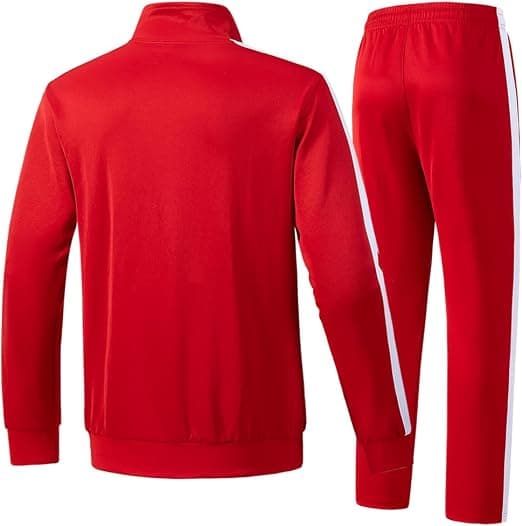
Flat stitching suits the left chest, a cuff, a small back-neck mark and anything sitting in a tight space. Puff suits a large chest block, the upper back, or a leg panel on the jogger where the shape has room to breathe. Both halves of a co-ord can carry a mark and they need not use the same method, so a raised logo on the top with flat stitching on the thigh is a common pairing.
Size is the real constraint. A raised mark under roughly four centimetres tall rarely justifies itself, because the height stops reading and you have paid for density nobody can see. Print placement on tracksuits goes through the positions in more detail.
Artwork prepared for a raised finish usually needs redrawing rather than simply resizing. Strokes are thickened, tight corners are opened out, and detail below a couple of millimetres is dropped because the foam will close it regardless. Budget a round of proofing for that. A raised mark approved from a flat vector rarely arrives looking exactly like the file, and that gap is what the process does to a shape rather than a production error.
How do you decide between them?
Take flat embroidery when the logo is small, the artwork carries fine detail, or the mark is going somewhere that meets friction. Take puff when the design is a bold shape at a decent size and the set is being sold rather than issued, because the raised finish is what makes plain fleece look like a product instead of blank stock.
If neither quite fits, stitching is not the only way off a flat surface. Appliqué, patches and woven labels covers the finishes that sit alongside embroidery and often work out lower across a large panel.