Ordering T-Shirts for Summer Events
By The Velocity Wear Team
For a May or June event, order in March or early April. The build is 10 to 15 working days from artwork approval, artwork takes its own week, and spring is when every other event organiser is ordering too. Pick a lighter cotton than instinct suggests: a shirt that feels substantial in a March showroom is the shirt nobody wants to wear in a June marquee.
When does a summer order need to be placed?
Take the day the shirts must be in the building, which for an event is at least a week before the event itself so that you can count them, sort them and fix anything. Subtract delivery transit. Subtract 15 working days of production. Subtract a week for artwork approval. For a mid-June date, that is the first half of April, and doing it in March gives you room.
The week of slack before the event is not optional padding. Event stock is nearly always split across a crew list, a giveaway pile and a stall, and that sorting is what reveals a size shortfall while there is still time to act on it.
Which weight works in heat?
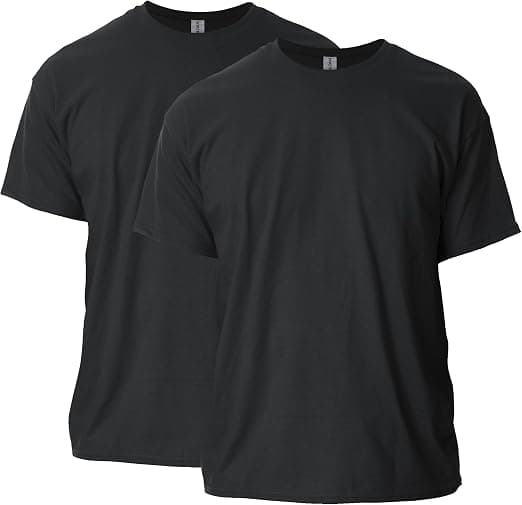
Our tees run 150 to 240 GSM combed ring-spun cotton, and for outdoor summer use the lower half of that range earns its place. A 150 to 180 GSM body breathes, dries faster after a downpour or a spilled drink, and does not turn into a heat trap inside a marquee. The heavier end looks better on a rail and holds a boxy shape, but it is a poor choice for stewards standing in the sun for nine hours.
Where a lighter body needs care is colour. A pale midweight shirt can show through, so if your crew are wearing them over something, either go a shade darker or step up to 180. And on white, a lightweight body shows sweat faster than a mid tone does, which is why so much event crew kit is grey, navy or black despite the heat. The weight question in full is in GSM explained for bulk t-shirts.
How many colours should a summer run carry?
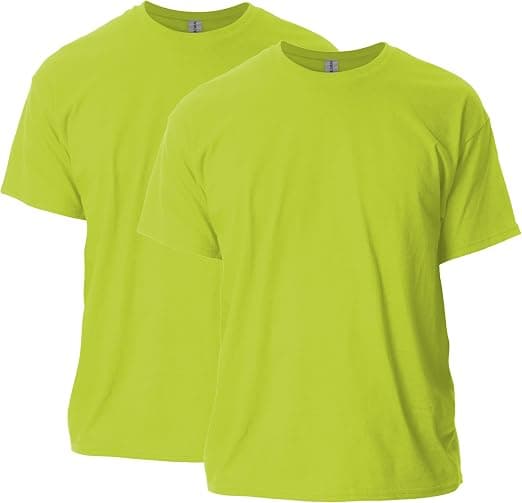
Fewer than you want. The 50-piece minimum applies per design, and each colourway that needs its own screens counts as its own run, so a three-colour crew shirt is 150 pieces before the giveaway stock is counted. For most summer events the answer is one crew colour that is instantly identifiable across a field, plus at most one merch colour if you are selling.
There is a practical argument beyond cost: a single strong crew colour is how an attendee finds a steward in a crowd. Three colours makes your team invisible. Keep the variety for the merchandise you sell, where it drives sales, and keep the crew on one. From-prices start at $13 a piece at the 50-piece minimum on the wholesale t-shirts page, with the discount rising to a ceiling of 35% as the quantity climbs through the tiers.
Is a spring sample worth the time?
For a first-time event run, yes. The £150 sample is credited against the bulk order, and in a summer context it answers a specific question a mockup cannot: how the printed colour looks in daylight. Screen-accurate colour and outdoor colour are different things, and a bright graphic that sings on a monitor can wash out at noon. Order it in February or March, well before the production booking. The samples page covers what arrives and how the credit applies.
If your event is one of several you run in a year, a sample also gives you a reference garment to check future runs against, which matters more than it sounds once a second supplier or a second season is involved. The broader event kit question, including what to order alongside shirts, is covered in conference and corporate event t-shirts.