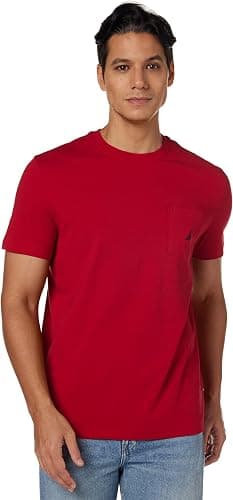
T-Shirts for Schools: print or embroidery
By The Velocity Wear Team
Print handles almost everything on a school shirt. A crest with several colours and fine detail is a DTF or screen print job; a full name list on the back has to be printed, because embroidering a hundred names is neither practical nor legible. Embroidery earns its place on a small chest crest where you want the shirt to feel like uniform rather than merchandise.
Print or embroidery for a school t-shirt?
Decide by artwork first. School crests are usually detailed — a shield, a motto in small type, three or four colours — which is exactly what screen printing struggles with and DTF handles easily. Screen printing is the better choice for a simplified crest reduced to one or two flat colours, and at a large cohort size it prices well because the setup spreads across the run. Embroidery reproduces a crest beautifully at chest size but loses the fine type, so the crest usually needs simplifying for it.
Then consider the garment. Our tees run 150–240 GSM combed ring-spun cotton, and dense embroidery on the lighter weights pulls the jersey. If you want an embroidered crest on a leavers garment, the heavier end of that range is the sensible base. Our schools and leavers page shows the other garments in the leavers kit, several of which take embroidery more naturally than a t-shirt does.
How do you print a full name list?
As artwork, typeset properly, and checked by someone who knows the cohort. The list is set as a block — often a shape or a year number made of names — and it becomes a second print position on the back. Print is the only realistic method: the type is small, there is a lot of it, and it must be readable at arms length. DTF handles a dense block of small type cleanly.
The part that goes wrong is proofreading. Every spelling error on that list is permanent across the whole run, so have two people check it against the register, and make sure preferred names and accented characters are confirmed rather than assumed. The list must be final before approval, because a change to it is a change to the artwork. The school lead time explains what that does to the schedule.
Does the crest have to be embroidered?
No, and for a leavers shirt it usually should not be. Embroidery signals uniform; a leavers shirt is a keepsake and the print version reads better with a name list on the back. Save embroidery for staff polos or a school hoodie where the formality is the point. If you want the crest to feel more premium on a printed shirt, 3D puff raises the design, and we also run sublimation where the base fabric suits it.
What does decoration add to the price?
It is quoted by method and by position. A chest crest is one position and a back list is another, so plan for two. Screen printing carries a setup per colour per position, which is why a four-colour crest costs more to set up than a one-colour one and why simplifying the artwork can genuinely reduce the bill on a smaller cohort. DTF has no per-colour setup, so a full-colour crest prices the same as a simple one. Embroidery is priced on stitch count. Our wholesale t-shirts page sets out the garment side, and the safest way to settle all of it is a £150 sample, credited against the bulk order, with the real crest on it. What a school t-shirt costs covers the rest of the budget.
Who should sign off the decoration?
One named person, and they should be senior enough that nobody overrules them afterwards. School crests carry rules about how they may be reproduced, and a simplified version drawn for screen printing is a change to the mark, not just to the shirt. Get that agreed in writing before the proof goes out rather than discovering at delivery that the colours were not the approved ones. The same person should approve the back print layout, because the two decisions interact and splitting them across two people is how a shirt ends up with a crest and a list that do not sit together.