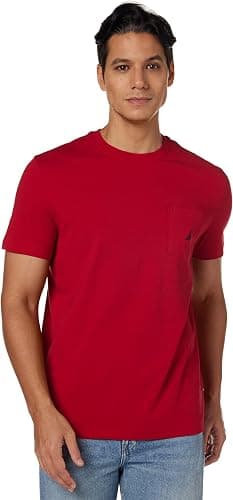
T-Shirts for Retailers: size splits
By The Velocity Wear Team
A retail t-shirt run sells through on a curve, not an even split. Weight the middle sizes hardest, keep the ends small, and treat the first order as the thing that tells you the real curve. Our minimum is 50 pieces per design and sizes mix freely inside that 50, so shaping the split costs nothing extra. T-shirts start at $13 a piece at the minimum.
How should a retailer split 50 t-shirts across sizes?
Start from the middle and work outwards. On a regular-fit tee sold to a general adult customer, the bulk of the run belongs in M, L and XL, with S and XXL as the tail. A workable opening split for 50 pieces on our wholesale t-shirts range looks like this, and you can move any of it before the order is cut.
- S — 6 pieces, the tail that goes first in womenswear-leaning shops
- M — 12 pieces
- L — 15 pieces, usually the single biggest line
- XL — 12 pieces
- XXL — 5 pieces, small until a reorder proves otherwise
That is a starting shape, not a rule. If your shop already sells other garments, pull the curve from your own till data instead. Nothing beats knowing what actually left the rail last season.

Does the fit change the size curve?
It changes it a lot. A regular fit in 150–180 GSM combed ring-spun cotton runs close to the size on the label, so a standard curve works. A boxy fit is wider and shorter through the body, which means a portion of your customers size down into it deliberately. On a boxy 220–240 GSM tee, pull weight out of XL and XXL and put it into M and L, because the garment is already doing the extra width. The boxy fit guide covers the measurements behind that.
Fabric weight matters for the same reason. A heavier 240 GSM tee shrinks less in the first wash if it is pre-shrunk, but it also sits stiffer, and customers read that as a smaller garment. Ask for the finished measurements rather than trusting the size letter across two different blanks.
What happens to the sizes that do not sell?
They sit in the stockroom and quietly eat the margin you made on the rest. The fix is to keep the tail sizes genuinely small on the first run and let the reorder correct it. Because the 50-piece minimum is per design, a second run of the same artwork in the same colourway is a straight repeat, and the screens already exist. We cover the mechanics of that in the reordering guide.
One more habit worth building: record what sold out first, not just what is left. A line that emptied in a fortnight is telling you to buy deeper next time, and that signal disappears once the rail is restocked.
How many sizes can one 50-piece run carry?
Five is comfortable. Six or seven starts to spread the run thin, because every size added takes pieces from the middle where the sell-through actually happens. If you want an extended range, the cleaner route is to hold XS and 3XL back for the second run once the first has proved the demand. Browse the full wholesale range if you are pairing the tee with a hoodie or a cap in the same drop, and size those separately — outerwear curves differently from jersey.
Volume discounts are measured from the 50-piece price and rise up to 35% as quantity goes up, across tiers at 50–99, 100–249, 250–499, 500–999 and 1,000 plus. A retailer buying one design at 250 pieces is buying at a very different unit cost from one buying five designs at 50, which is worth modelling before you decide how many colourways to launch with.