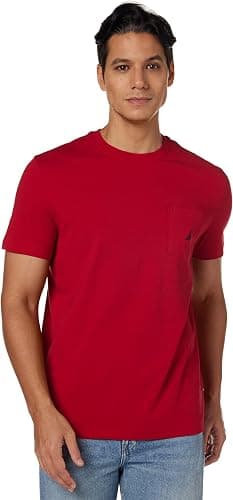
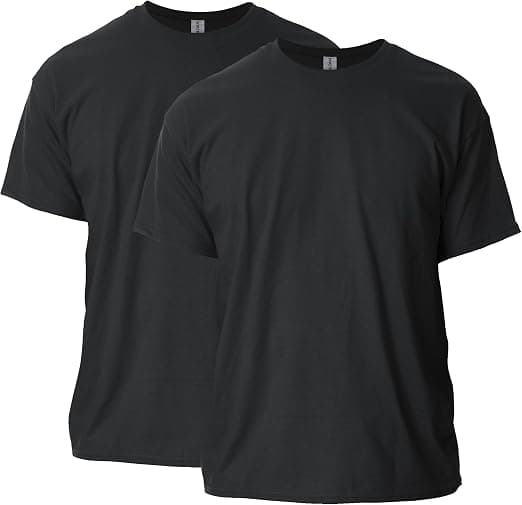
T-Shirts for Retailers: reordering
By The Velocity Wear Team
A repeat t-shirt order uses the artwork and separations from the first run, so the setup work is already done. The minimum stays at 50 pieces per design, production stays at 10 to 15 working days from approval, and the two things worth managing are colour consistency between runs and the gap between placing the reorder and the shelf being empty.
When should a retailer place the reorder?
Before the line runs out, not after. Count backwards: 10 to 15 working days of production plus delivery transit means roughly a month between the decision and the stock arriving. If your best-selling size is down to a fortnight of cover, you are already late. Set a reorder point per size rather than per design, because L will empty long before XXL and the whole run waits on one trigger otherwise.
The reorder is also the moment to fix the curve. You now know what sold and in what order, so shift pieces out of the sizes still hanging and into the ones that went first. That single correction usually does more for margin than any price negotiation.
How do you keep colour consistent between runs?
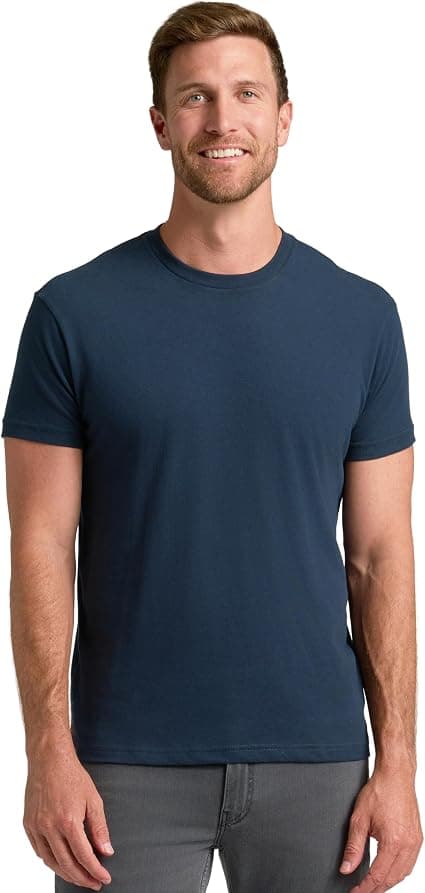
Two colours have to match: the garment and the ink. Ink is the easier one, because the mix is recorded and repeated from the first run. Garment colour moves with the dye lot, and a black or a navy from one lot can read slightly different against another under shop lighting. If your line is going to be sold side by side with the first run, say so when you place the reorder so the fabric can be matched as closely as possible.
Keep one sealed piece from every run as a reference. It is the only version of the truth when a customer holds a new tee next to an old one. The same habit matters more on a boxy or heavier blank where the fabric weight itself is part of the look, as covered in our boxy fit notes.
Is a reorder cheaper than the first order?
The unit price is driven by quantity, not by whether it is a first or second run. Our from-price is $13 a piece at the 50-piece minimum, and the volume discount rises to up to 35% across the tiers at 50–99, 100–249, 250–499, 500–999 and 1,000 plus. That means the real saving on a restock comes from consolidating: one order of 250 costs less per piece than five separate orders of 50 placed across a season.
If a design has proved itself, buying deeper on the reorder is usually the right call. Pricing across the wholesale range works on the same tiers, so a retailer restocking tees alongside hoodies should look at the combined picture rather than ordering each in isolation. Blanks and current from-prices are on the wholesale t-shirts page.
What should you change on a repeat run?
Change one thing at a time. A new size curve, a new colourway and a new print placement all at once means you cannot tell which change moved the numbers. Note that a new colourway needing its own screens counts as a separate design with its own 50-piece minimum, so it is a new line rather than a restock.
Keep your curve notes with the order, so the third run inherits the second run's lesson. The size splits guide has a starting shape if you are rebuilding the split from scratch.
It is also worth deciding, honestly, whether a line deserves a third run at all. A design that sold through in eight weeks is a restock. A design that needed a discount to clear is a design that has told you something, and repeating it because the screens exist is the most common way a small retailer ties up cash. The setup saving on a repeat is real, but it is not a reason on its own.