T-Shirts for Retailers: samples
By The Velocity Wear Team
A t-shirt sample costs £150 and that fee is credited against the bulk order you place afterwards. It exists so a retailer can hold the finished garment, wash it, and check fit and print before 50 pieces are cut. Samples are never free, and a retailer who skips one is buying a spec sheet rather than a product.
What does the £150 sample actually buy?
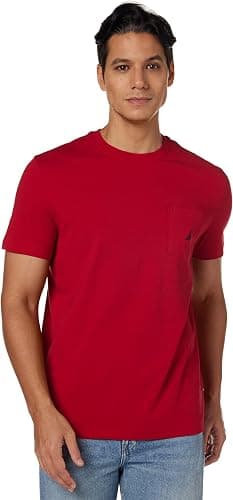
A production-method garment in your chosen blank, in one size, decorated the way the bulk run will be decorated. Not a mock-up on a screen. The point is that every variable you are about to lock in — fabric hand, collar rib, print position, ink colour against the garment colour — is in front of you in physical form. The fee is credited against the bulk order, so for a retailer who goes on to place the order it is effectively an advance on the run.
One size is enough for most decisions. Pick the size that will be the largest line in your curve, usually L on a regular fit, and judge everything else against it. If you are torn between two blanks, sample both rather than guessing from GSM alone.
What should a retailer check on the sample?
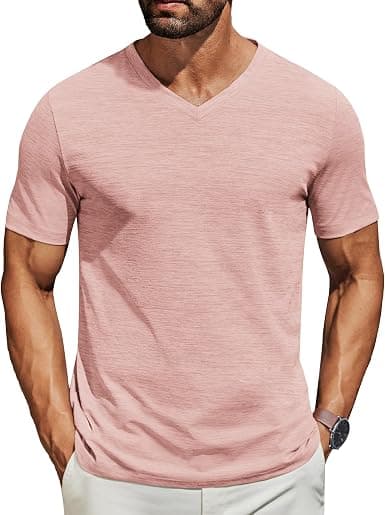
Work through it in order and write down what you find, because the useful notes are the ones you send back as a change request.
- 1Finished measurements — chest, body length, sleeve. Compare them to the garment your customers already buy, not to the size letter.
- 2Collar recovery — stretch the rib gently and watch whether it returns. This is what separates a tee that survives a season from one that does not.
- 3Print position and size against the body, held up on a hanger rather than flat on a table.
- 4Handle of the decoration — how much the print or transfer changes the feel of the front panel.
- 5Wash test — one cycle at the temperature your care label will recommend, then measure again for shrinkage and look at the print edge.
The wash test is the one most people skip and the one that catches the most. It tells you whether your 150 GSM blank drops half a size, and whether the print edge lifts. Both are fixable before the run and expensive after it.
How does the sample fit into the timeline?
Sample first, approval second, then 10 to 15 working days of production from artwork approval before delivery transit. A retailer aiming at a specific drop date should count backwards from the date and give the sample round its own slot, including the days you spend washing and measuring it. Rushing the sample to protect the launch date defeats the purpose of having one.
If the sample throws up a fit change, that is a good outcome, not a delay. Correcting a body length on one garment is a conversation. Correcting it on 50 is a reprint. The blanks are listed on our wholesale t-shirts page, and the rest of the wholesale range samples the same way if you are building a full drop.
Does the sample settle the size curve too?
There is also a merchandising use for the sample once the decision is made. Hang it in the shop before the run lands, photograph it for the online listing, and show it to the customers who buy your other lines. A week of informal reaction before 50 pieces arrive is information you cannot get any other way, and it occasionally saves a colourway.
Partly. It gives you the true measurements, which is the input your curve needs, but it does not tell you how your customers are shaped. Use the sample for the measurements and your own sell-through history for the split — the size splits guide walks through building the curve. If you are still choosing between print methods when the sample is ordered, the decoration comparison is worth reading first so the sample is decorated the way you intend to sell it.