T-Shirts for Bands: reordering
By The Velocity Wear Team
A reorder runs on the same 10 to 15 working day production window as a first order, but the days that usually disappear before it — artwork, separations, colour approval — are already behind you. Restocking also stacks with your original quantity for tier purposes in practice, because a second run of 100 is priced at the 100-piece tier rather than at the 50-piece entry rate.
How quickly can a design be restocked mid-tour?
Assume three weeks from the day you say go to the day boxes reach you, and place the order the night you notice a size running low rather than the night it runs out. The production window itself is 10 to 15 working days and transit sits on top. What you save on a reorder is the front end: no file rebuilds, no colour debates, no sample. The wholesale t-shirts page has the spec, and the bands and music page covers the rest of the merch line.

Will the second run match the first?
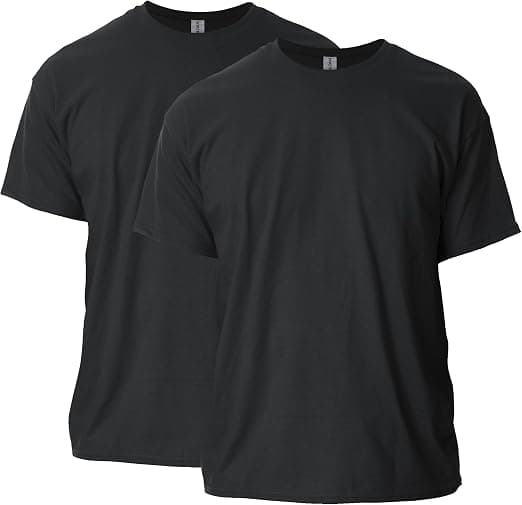
It will if you keep the variables fixed. Same base garment, same GSM, same garment colour, same ink references — change none of them and the runs sit side by side on a table without anybody noticing. Where mismatches creep in is when something gets substituted quietly: a different weight of cotton, a slightly different grey, an ink matched by eye rather than to the original reference.
Dyed cotton also varies fractionally between dye lots, which is physics rather than carelessness. On a black or white tee it is invisible. On a mid-tone heather it can be just perceptible under stage lighting, so if the shirt matters to you as a product, order deep once rather than in three small waves.
Does a reorder get a better price?
The rate follows the quantity on the order in front of us, and our tiers run 50–99, 100–249, 250–499, 500–999 and 1,000 plus, with the discount reaching up to 35% off the 50-piece price at the top. So a reorder of 250 is priced at the 250 tier. What a reorder does not do is retroactively improve the rate on the fifty you already bought — which is the argument for ordering deeper the first time if you are confident. The cost breakdown walks through where that confidence should come from.
Which designs are worth running again?
The one that sold out in the sizes you actually stocked. Be honest about the difference between a design that sold out and a design you under-ordered in medium — those look identical on a sales sheet and are completely different problems. Reorder the first. For the second, fix the curve instead, which our size-split guide covers. And a design that sold half its run over a full tour is telling you something clear: print the next graphic instead.
How do you plan restocks across a long tour?
Split the tour into legs and treat each one as a checkpoint rather than waiting for a crisis. At the end of every leg, count what is left by size and compare it against how many dates remain. If the remaining stock will not cover the dates at your current rate, that is the moment to order, because three weeks from now is still inside the tour.
Decide in advance where the restock ships to as well. Boxes chasing a moving van rarely catch it, so pick a fixed address on the route — a venue with a reliable office, a promoter, or home if there is a gap in the dates — and send everything there. It is a dull detail that has ruined more restocks than any production problem.
One more thing worth doing before the tour starts: agree what happens to leftovers. Stock that goes back into a webstore keeps earning; stock that sits in a garage does not, and the difference is usually just whether somebody was given the job on day one.