Embroidery vs Puff Embroidery on T-Shirts
By The Velocity Wear Team
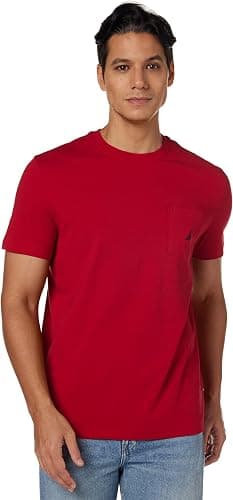
Flat embroidery stitches the design into the fabric surface. 3D puff lays foam under the stitching so the design stands proud of the garment. Puff reads as streetwear and eats fine detail; flat embroidery reads as considered and holds detail down to about 5mm. On a 150 to 240 GSM cotton tee, puff needs bold simple shapes and a body with enough weight to support them.
What is 3D puff, and how is it made?
A layer of foam is placed on the garment, the design is stitched over it, and the excess foam is removed by heat, leaving the stitching raised. The height is what people respond to: a puff wordmark catches light and shadow in a way a flat stitch never will. That raised structure is also the limitation, because every stroke has to be wide enough to enclose the foam cleanly. Both methods are covered alongside our wholesale t-shirts range, and the 3D puff service page shows the finish in detail.
Does a t-shirt hold puff properly?
It can, with care. Puff is at home on caps and heavyweight hoodies, where the fabric supports the raised stitching without distorting. On a lightweight tee a large puff design pulls the knit and the garment can pucker around it, which looks worse the more the shirt is washed. The answer is to specify the heavier end of the fabric range, keep the design compact, and put it where the fabric is stable, which usually means the chest rather than a sleeve. Fabric and weight covers what 240 GSM changes.
How does stitch count change the cost?
Embroidery of either kind is priced on stitches, so a small tight logo is inexpensive and a large detailed crest is not. Puff adds the foam step and generally uses a denser stitch to cover it, so the same artwork costs more in puff than flat. Neither method has a screen setup, which means quantity moves the decoration cost far less than it does for screen printing. The garment itself still steps down through the tiers at 50, 100, 250, 500 and 1,000, reaching up to 35% off the 50-piece price.
Which artwork survives each?
Flat embroidery handles solid shapes, confident type down to about 5mm, and outlines, though it cannot do gradients or photographs. Puff needs everything thicker: strokes below roughly 3mm do not enclose the foam, so thin serifs, hairlines and small text are either redrawn heavier or dropped entirely. A logo that works beautifully flat often needs a simplified version for puff, and that redraw is part of the digitising conversation rather than an afterthought. Screen printing against embroidery puts these alongside the print options.
Pick flat embroidery when, pick puff when
Pick flat embroidery when the mark is small, when it contains fine type or an outline, when the shirt is uniform or corporate, and when it has to sit under a jacket or an apron without catching. Pick puff when the design is a bold wordmark or a simple shape, when the product is streetwear being sold rather than issued, when the fabric is at the heavier end, and when the raised finish is the reason someone would buy the shirt. If you are weighing either against a graphic print, read the full run-through of decoration methods before deciding.
Where does puff belong beyond t-shirts?
It is most at home on caps and heavyweight hoodies, where the fabric has the structure to hold a raised stitch without distorting. That is worth knowing if you are building a range rather than a single garment, because a puff wordmark that works beautifully on a cap can be the wrong call on a 150 GSM tee in the same collection. Many brands run puff across the heavier pieces and flat embroidery or print on the lighter ones, keeping one visual identity without asking a lightweight knit to do something it cannot.