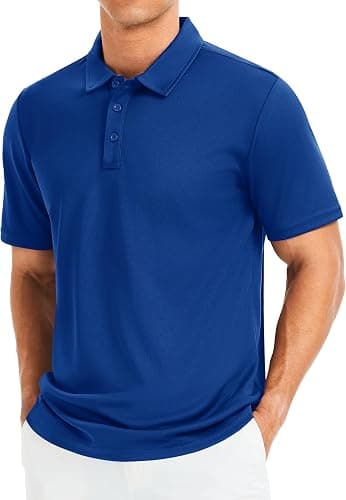
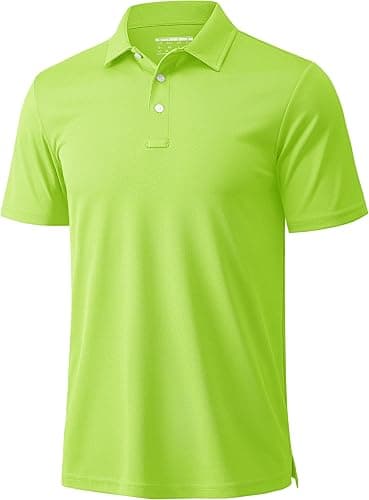
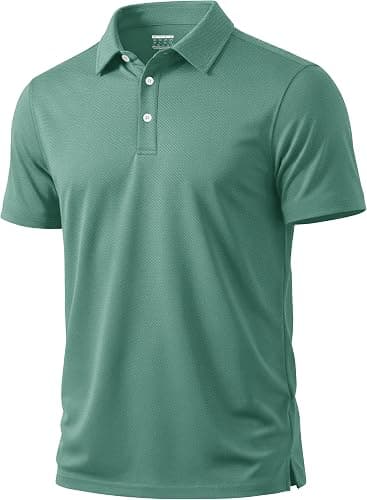
Midweight vs Heavyweight on Polo Shirts
By The Velocity Wear Team
A midweight polo drapes, breathes and costs less to ship. A heavyweight polo hangs straighter, hides what is underneath and reads as the more expensive garment before anybody looks at the label. Midweight suits summer events, active wear and large rota orders. Heavyweight suits retail, member kit and anything where the buyer picks the shirt up before deciding.
What does the weight number actually describe?
Grams per square metre measures how much yarn is in a fixed area of knit. It is a density figure, not a thickness figure, and two fabrics at the same GSM can feel quite different depending on how tightly they are knitted and what the yarn is. A loosely knitted heavyweight can feel spongier than a tightly knitted midweight at the same number. That is why the figure belongs on the spec sheet and the sample belongs in your hand.
On polos the working range is narrower than it is on fleece, so the differences between weights are subtler and easier to miss on a photo. The step from a light summer piqué to a dense retail piqué is obvious across a table and almost invisible on a website. A side-by-side view of the options is on the comparison page, and the full spec vocabulary sits in GSM explained for bulk polo shirts.
What does the buyer feel in the hand?
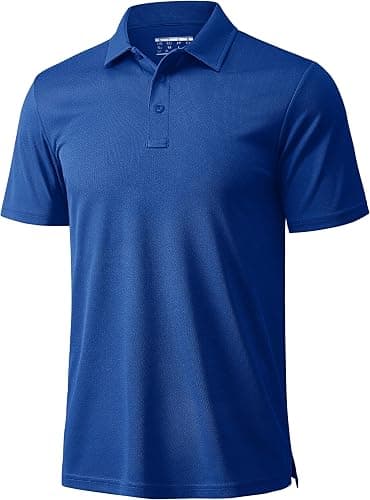
Three things, in this order. Opacity first: a lighter knit shows a vest or a tattoo through it, which decides plenty of corporate orders on its own. Then structure, meaning whether the hem falls straight or clings and whether the collar stands without help. Then surface, because a denser piqué has more defined cells and a drier handle, while a lighter one feels smoother and slightly slippier.
None of that shows in a listing. It is why buyers ordering for a retail rail almost always take a sample first at £150, credited against the bulk order, and why buyers ordering replacement uniform for a known garment usually do not need to. If you are choosing between two weights, order one sample of each rather than one of the weight you already suspect you want.
How does weight move the price and the shipping?
More yarn costs more, so heavier polos sit higher than the $18 fifty-piece from-price and lighter ones sit closer to it. The gap between weights is modest per piece and adds up across a large run, which is exactly where the volume tiers do their work: up to 35% off the fifty-piece price through 50–99, 100–249, 250–499, 500–999 and 1,000-plus. A heavyweight polo at five hundred pieces can land under a midweight at fifty.
Freight is the quieter cost. Heavier garments mean more cartons per hundred pieces and more weight on the pallet, which matters on an order shipping to the USA or across Europe rather than within the UK. On a five-hundred-piece run to a single address, that difference is worth asking about at quote stage rather than discovering on the invoice.
So which should you pick?
Pick midweight for summer events, outdoor crews, stewarding, sports days and any order where the shirt is worn in heat for long stretches. Pick heavyweight for retail, alumni and member kit, front-of-house hospitality and anything sold rather than issued. If half your order is one and half the other, remember that each is a separate design against the fifty-piece minimum, so plan the split before you commit.
Weight interacts with cut as well. A heavyweight in a boxy block reads as streetwear; the same weight in a tailored block reads as corporate. Get the two decisions in the same conversation rather than one after the other, and see fits and cuts for wholesale polo shirts for how the blocks size on a real team. Current weights and colourways are listed on the wholesale polo shirts page.