GSM Explained for Bulk Polo Shirts
By The Velocity Wear Team
GSM is grams per square metre: how much yarn sits in a fixed area of fabric. On polo shirts it separates a light summer knit from a dense retail one, and it moves the price because more yarn costs more. It is a useful shorthand and a poor substitute for handling the cloth, because knit construction changes the feel as much as the number does.
What does the number measure, and what does it miss?
It measures mass over area. Cut a square metre of the fabric, weigh it, and that is the figure. What it does not measure is thickness, stiffness, opacity or how the fabric behaves when you pull it. A tightly knitted fabric at a given weight is denser and thinner than a loosely knitted one at the same weight, and the two feel entirely different across a counter.
Fibre confuses it further. Polyester is lighter than cotton for the same bulk, so a performance knit and a cotton piqué at identical GSM figures will not feel identical, and the polyester one will usually feel more substantial than the number suggests. This is why a spec sheet gives you the weight, the fibre content and the knit type, and why reading only one of the three leads you astray. The glossary page defines the terms if you are writing a spec for the first time.
What do the weight bands mean on a polo?
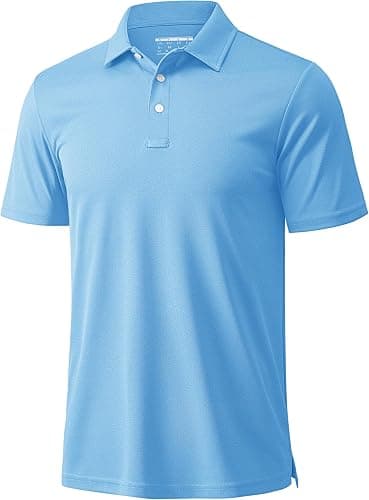
Polos occupy a narrower range than fleece or jersey, so the bands are close together and the differences are subtle rather than dramatic. At the lighter end you get airflow, drape and a shirt that moves with the body, at the cost of opacity and collar structure. At the heavier end you get a garment that hangs straight, holds a collar and reads as expensive in the hand, at the cost of breathability and a little more freight weight.
Mapping that to use: lighter knits for outdoor crews, sports and summer events; mid-range for general uniform where the shirt is worn all year; heavier for retail, member kit and hospitality front of house. A side-by-side of the two ends of the range is set out in midweight vs heavyweight on polo shirts.
How does GSM move the price and the decoration?
Directly on price, since yarn is the raw material. Heavier polos sit above the $18 fifty-piece from-price and lighter ones closer to it, and on a large run that difference compounds. Quantity moves the number far more: the tiers run 50–99, 100–249, 250–499, 500–999 and 1,000-plus, taking up to 35% off the fifty-piece price.
On decoration the effect is mechanical. A denser fabric resists the pull of embroidery, so a detailed crest sits flatter with less backing and less puckering. A lighter knit stretches under the needle and needs firmer stabilising, which a factory will specify but which you should expect to see mentioned. Screen printing is the reverse: a smooth lighter knit takes a fine line better than a heavily textured dense piqué, where the cell structure breaks up thin strokes.
How should you use GSM when you buy?
Treat it as a filter, not a decision. Use it to narrow a range of garments down to two or three candidates, then handle those candidates before committing fifty pieces to one of them. A sample is £150 and is credited against the bulk order, which makes it a low-cost way to resolve a question that no number can answer.
Then write the figure down and keep it, because the useful thing about GSM is continuity. When you reorder next year, quoting the weight, the fibre content and the knit type means you get the same garment rather than something that looks like it in a photograph. Current specifications are listed on the wholesale polo shirts page, and the fabric comparison in cotton vs poly blend on polo shirts covers the fibre half of the equation.