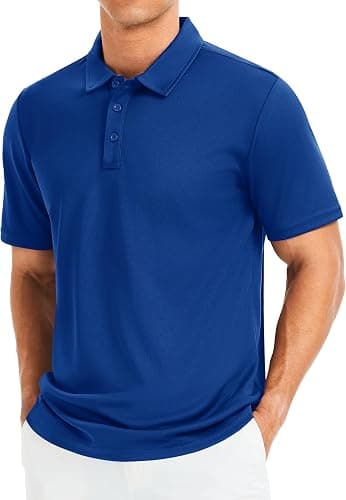
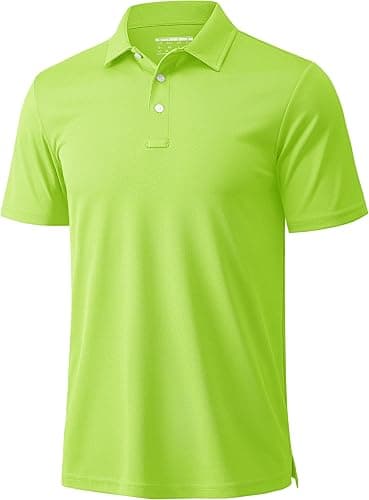
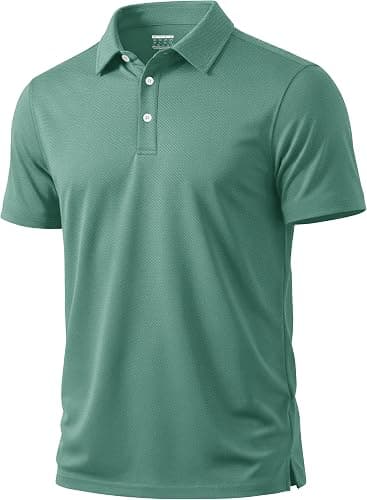
Cotton vs Poly Blend on Polo Shirts
By The Velocity Wear Team
Cotton piqué feels better in the hand and holds a softer colour. A polyester blend keeps its shape, dries faster and shrugs off a hot wash. For a uniform that goes through laundry every week, order the blend. For a retail or hospitality polo people choose to wear, order cotton. Both sit on the same $18 from-price at fifty pieces, so this is a wear decision rather than a cost one.
How much does each fabric move in the wash?
Shrinkage is the first thing buyers notice and the last thing they ask about. Untreated cotton piqué will pull in through the body length on its first few hot washes, and the change is mostly vertical rather than across the chest, so a polo that fitted arrives shorter rather than tighter. Pre-shrunk cotton reduces that considerably but does not abolish it. Polyester barely moves at all, and a blend moves roughly in proportion to how much cotton is in it.
The practical consequence is about sizing, not quality. If you order cotton for a team who wash at 60 degrees, order with the movement in mind and tell people to wash at 30. If you order a blend, what arrives is what you have in year two. Fabric terms and the weights they usually come in are defined on the glossary page if you want the vocabulary before you spec a run.
Which fabric takes decoration better?
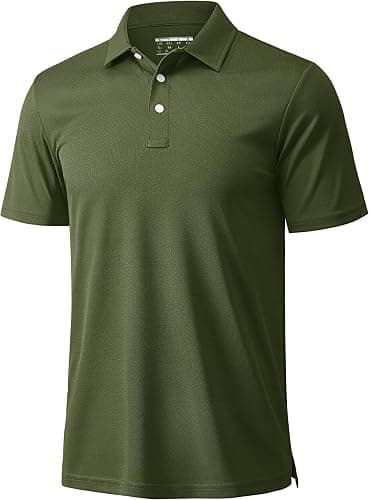
Embroidery is happy on both, though blends need firmer backing because the knit has more stretch. Print is where the fabrics separate. Cotton takes screen printing and DTF cleanly and holds solid blocks of colour without help. Polyester carries disperse dye that can migrate into a print under heat, turning a white logo pink on a red garment weeks after delivery, so polyester runs use a blocking underbase or a low-cure ink.
Sublimation reverses the rule completely. It only bonds to polyester, so a high-polyester performance polo is the one fabric that can carry an all-over pattern or a full-colour photographic panel. On cotton, sublimation has nothing to bond to and washes straight out. If the design you have in mind is a printed panel rather than a logo, the fabric is already chosen for you.
What does each feel like after a year of wear?
Cotton softens. The piqué cells relax, the colour loses a little depth, the collar starts to roll rather than stand. Most people read that as the shirt bedding in. A polyester blend does the opposite: it keeps its colour and its structure and it looks newer for longer, but the surface can pill where a rucksack strap or a seatbelt rubs, and it holds odour more stubbornly than cotton does.
Collar behaviour is the detail worth checking on a sample. A ribbed collar in a blend will still stand after a season of laundry, where the same rib in pure cotton will have softened. If the polo is being worn with a name badge or under a jacket on a shop floor, that standing collar is the difference between a smart team and a tired one. Care labelling changes with the fabric too, which we cover in care and washing for polo shirts.
So which should you pick?
Pick cotton piqué when the polo is worn by choice rather than instruction: hospitality front of house, golf days, retail drops, member kit. Pick a polyester blend when it is a rota garment, when it is washed hot and often, when the wearer is active, or when you need the third order to match the first. Pick a high-polyester performance knit when the design is sublimated or when moisture movement is part of the brief.
Mixing fabrics inside one order is possible but each fabric is its own design for minimum purposes, so a cotton version and a blend version are two runs of fifty rather than one of a hundred. Quantity is what moves the price: the tiers run from 50–99 up to 1,000-plus, with up to 35% off the fifty-piece price at the top. Specify the fabric alongside the colourway when you enquire through the wholesale polo shirts page, and if colour consistency across fabrics matters, read colour matching bulk polo shirts first.