Planning Apparel for a School Trip: Sizes, Consent, Timing
By The Velocity Wear Team
Need this made?Get pricing for this product— free, no obligation, 50 pieces minimum.
Set the departure date, then work backwards through tracked UK delivery of roughly 2-5 working days, production of around 10-15 working days from artwork approval for screen printing or embroidery, and longer for anything complex. Production starts at artwork approval, not at order placement. For a school trip the binding constraint is usually not the print at all: it is the date by which consent forms and payments are all in, because until then you do not know how many children are actually going.
Fix Departure, Then Work Back Through The Paperwork
Most trips have a hard departure date set a term or more in advance, which is a gift. Use it. Mark the departure, subtract the delivery window, subtract the production window, and mark the artwork approval date. Then mark a second date, earlier still, which is when you need final numbers. That second date is the one to put in front of the office and in front of parents.
Allow for the school calendar itself as well. Half term, INSET days and exam weeks all remove working days from your side of the process, and a delivery that lands during a closure sits in reception until somebody opens the box.
Consent Forms Are The Real Bottleneck
You cannot sensibly order a counted or personalised item for a child whose place is not confirmed. Consent forms come back in a long tail: a burst after the letter goes out, then a slow drip, then a cluster after the reminder, then two stragglers on the morning of the deadline. Payment plans stretch this further, and a handful of children will withdraw for perfectly good reasons after they have been counted.
Build that into the plan. Set the shirt order deadline noticeably earlier than the final trip deadline, say so in the letter, and order a small overage rather than promising to add children later. A late addition is a second order, with its own minimum, its own setup and its own lead time.
Sizing Children Is Not Sizing Adults
Children's sizing is sold by age, and an age label is a rough approximation of a real child. In a single Year 6 class you will find children two nominal sizes apart. Collect actual chest measurements or, more realistically, ask parents to state a size from the published size guide rather than guessing an age band.
The second issue is time. If you order in February for a July residential, some children will have grown a size. Erring one size up is the safer error, because a slightly loose t-shirt is wearable and a tight one is not. Older students should be given the choice of adult sizing, and it is worth quietly offering a wider range than you think you need.
The Safeguarding Point Most Guides Skip
Matching shirts make a group easy to count in a crowded museum or airport, which is the whole point. But a shirt that displays a child's full name in large letters on the chest lets a stranger address that child by name, which is exactly the scenario safeguarding training warns about. The same caution applies to printing the school name and town in a way that is legible from a distance in a public place.
The practical compromise is to make the group identifiable without making the individual identifiable. A strong block colour and a simple graphic does the counting job perfectly well. If you want names for the children's own benefit, use first names only, keep them small, or place identification on the inside of the collar. Check your own school's policy and follow that rather than any supplier's opinion.
- Set the shirt deadline earlier than the trip deadline, and put both dates in the parent letter.
- Ask parents to pick a size from the published size guide rather than stating the child's age.
- Order a small spare set in the most common sizes for late confirmations and accidents.
- Keep full names off the outside of the garment; a small first name, or nothing at all, is safer.
- Order staff kit in the same run so the adults are identifiable too, ideally in a contrasting colour.
Which Decoration Method Suits School Kit
For a one-colour or two-colour design across a decent quantity, screen printing gives the best value and a durable finish that survives repeated washing. For a detailed, full-colour design on a smaller group, DTF avoids per-colour setup and handles fine artwork well. Embroidery suits polos and staff kit and reads as more formal, though fine detail and small text need simplifying before they can be stitched cleanly. Sublimation is polyester only and light bases only, so it is rarely the right answer for a standard school tee.
“"A trip shirt should let a teacher find a child in a crowd, and stop a stranger from doing the same."”
Colour, Visibility And Spares
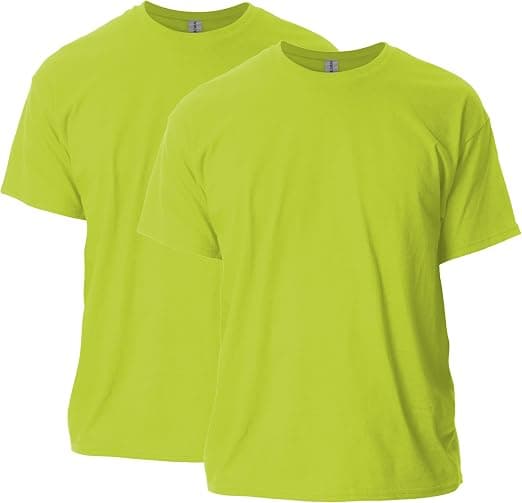
Pick a colour that is not commonly worn by the public in the places you are going. Bright yellow or orange counts heads faster than navy in an airport. If the trip includes roadside walking or an outdoor centre, a proper high visibility layer is a separate item and should be treated as safety equipment rather than as branding. Order two or three spare shirts beyond your headcount, because a spilled drink on day one of a five-day residential is not a hypothetical.
Velocity Wear works to a 50-piece minimum per order with sizes mixed freely, so a single class, its staff and a set of spares fits comfortably into one run, and larger year-group orders benefit from bulk discounts reaching up to around 35%.