Jackets & Outerwear for Offices: size splits
By The Velocity Wear Team
Sizes mix freely inside the fifty-piece minimum, so an office order is a question of curve rather than quantity. Outerwear needs shifting up against a t-shirt curve, because a jacket is worn over a shirt, a jumper or both. The usual mistake is ordering to the headcount exactly, which leaves nothing for the people who join three weeks after delivery.
How do you split fifty jackets across an office?
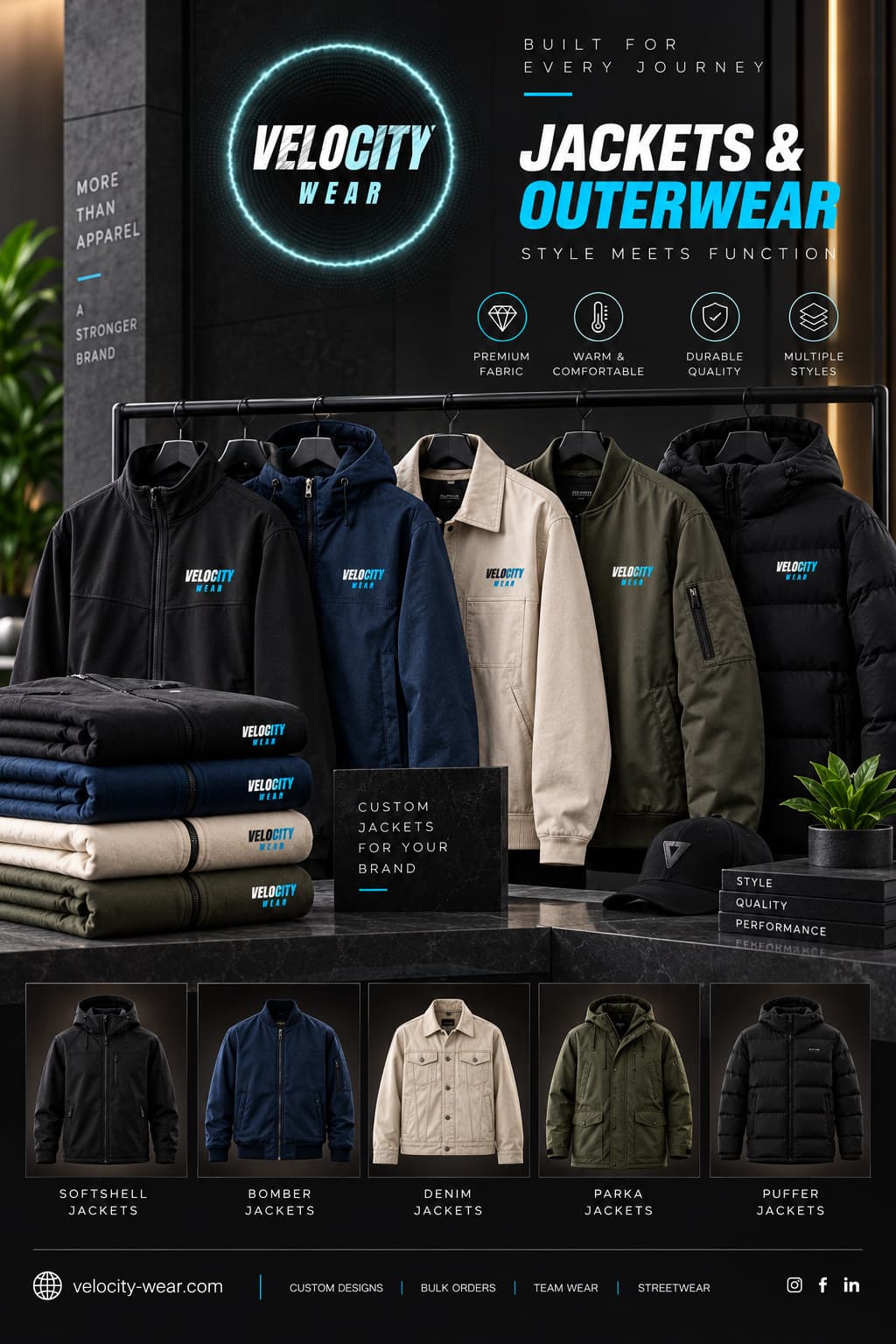
Start from your actual staff list rather than from a template. Ask everybody, in writing, and accept that a proportion will not reply. For the ones who do not, use the size they wear in existing company kit if you have it, and the middle of the range if you do not. Then weight the middle sizes a little heavier than the responses suggest, because middle sizes cover mistakes in both directions and extreme sizes cover nothing. Fifty across a forty-person office is not overordering, it is a sensible buffer. The garment builds we run are on the jackets range, and the way offices typically handle staff kit is set out on the corporate page.
What size curve works for a mixed staff list?
A jacket curve leans larger than a t-shirt curve by roughly one step across the board. Somebody who wears a medium tee often wants a large jacket, because the jacket goes over the tee and over whatever else the weather demands. Unisex outerwear compounds this: the cut is drafted on a male block, so women on a mixed list frequently size down one or two, which pulls demand towards the small end at the same time the layering pulls it towards the large end. Ordering both ends generously and accepting a slightly fat middle is cheaper than a second run. The mechanics of getting a size run right are covered properly in our sizing and fit guide.
How do you avoid ending the year with dead stock?
Dead stock in outerwear is almost always at the extremes. Order XXL and XS to real named demand plus one spare each, not to a percentage from a spreadsheet, and put the saved pieces into medium and large where they will be used. Keep a short record of what was issued and to whom, so the next order is based on evidence instead of memory. And label the box: outerwear ordered in July and found in a cupboard in January is worth nothing if nobody knew it was there.
Should people choose their own size?
Yes, with a measurement to anchor it. A size chart alone produces optimistic answers. A sample jacket passed round the office produces accurate ones, and at £150 credited against the bulk order it is a cheap way to cut the guesswork out of a fifty-piece commitment. If offices sit in more than one country, be explicit about which system the labels use, because the same letter means different things in different markets, as the Canadian sizing post shows.
Write the final split down in the order it will be packed and issued, rather than as a single total. Fifty jackets arriving in one carton with no breakdown means somebody spends an afternoon sorting them across a meeting room table. Ask for the packing list by size, and keep that file somewhere shared instead of in the inbox of whoever placed the order. Six months later, when three new people need kit, the difference between a two-minute lookup and a cupboard search is whether the list still exists.