Jackets & Outerwear for Offices: reordering
By The Velocity Wear Team
A repeat order of office jackets carries the same fifty-piece minimum and the same 10 to 15 working day production window as the original. The artwork and the setup carry over, so a reorder is usually a conversation about quantity and sizes alone. The thing to plan around is fabric: dye lots vary between runs, so a repeat placed a year later may land a shade away from the first.
How do you keep a jacket in stock for new starters?
Order ahead of the need and hold the stock yourself. An office that issues a jacket on day one cannot wait three weeks for a production run every time somebody joins, and a fifty-piece order is not something you place for two starters. The workable pattern is one annual order sized to headcount plus expected joiners, kept in a cupboard with a simple issue log. That also lands you in a better price tier, since the per-piece figure drops by up to 35% against the fifty-piece rate as quantity rises through the bands at 50, 100, 250, 500 and 1,000.
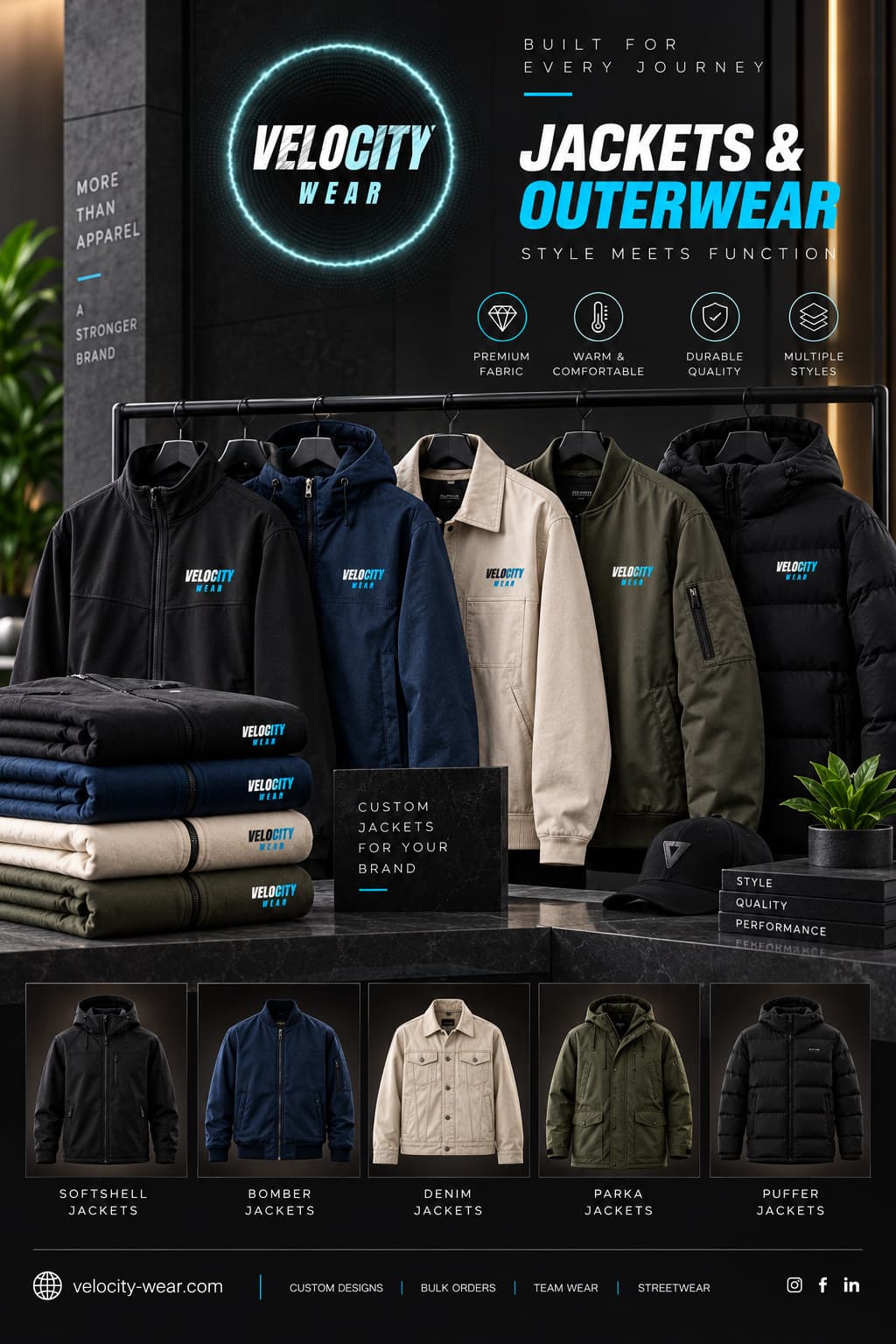
The current styles are on our jackets page, and the wider question of running kit as a programme rather than a series of panics is covered on the corporate and offices page.
What changes between a first order and a repeat?
Less than you would expect, and that is the point. The digitised embroidery file, the logo dimensions, the placement measurements and the thread references are all held, so nothing needs redrawing or re-approving. What can change is the fabric batch, the size split, and occasionally the garment itself if a style has been discontinued. Flagging at the point of ordering that the run must sit next to existing stock is what triggers a colour check rather than an assumption, and how that stored setup works is explained in can I reorder the same design later.
Should the repeat be the same style or a refresh?
Keep the style if the jacket is working. Consistency is most of the value of company outerwear, and a mixed set of three different builds across an office looks accidental rather than considered. A refresh makes sense on a genuine trigger: a rebrand, a change in what people are doing in the garment, or a style that has stopped being available. If the office has moved from indoor meetings to site visits, that is a reason to look at a weatherproof build, and the rain jacket post covers what changes when branding one.
What is worth recording after each run?
The size split you ordered against the size split you actually issued, the date, and any change you made to the artwork. Three lines in a spreadsheet, added the week the delivery arrives, is the difference between a five-minute reorder and a fortnight of archaeology. It also means the next buyer, who may not be you, inherits a decision rather than a mystery.
Decide who owns the reorder before you need one. Company kit tends to be managed by whoever ordered it last, which works right up until that person changes role and takes the knowledge with them. Naming the role rather than the individual, keeping the order file somewhere shared, and setting a calendar reminder for the month before stock usually runs out costs nothing and prevents the scramble entirely. It also means the buffer stock question gets asked once a year instead of never.