Jackets & Outerwear for Offices: lead time
By The Velocity Wear Team
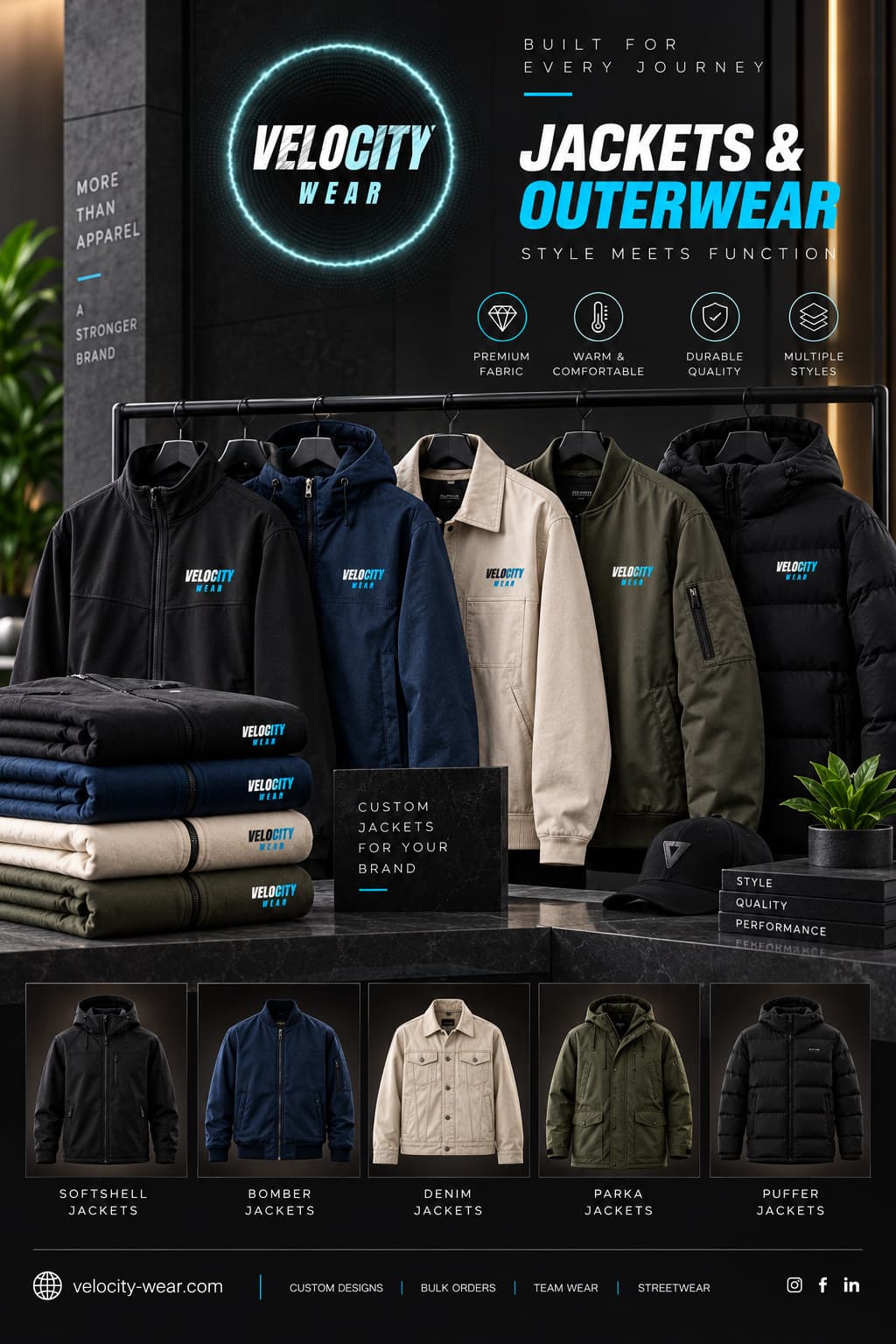
Branded office outerwear takes 10 to 15 working days to produce from the moment artwork is approved, and delivery transit sits on top of that. If you want a sample first, add the time to make it and the time your people spend looking at it. For a jacket handover in the first week of December, the artwork wants signing off in early November rather than late.
How long does an office outerwear order take end to end?
Count it in four blocks. Specification and quote, which is usually a couple of days once the style and quantity are settled. Sample, if you take one, which is the block people forget and the one most worth keeping. Production, at 10 to 15 working days from approval. Then transit to wherever the boxes are going. Nothing in that sequence is unusual, but it adds up to longer than the production figure alone suggests, and the production figure is the one everybody quotes internally. The lead times explained post walks through the same arithmetic across other garments.
What happens during the ten to fifteen working days?
Fabric is allocated and cut against the size split you supplied. Decoration is set up, which for embroidery means the artwork is digitised into a stitch file and test-run on the actual fabric. Garments are decorated, then finished, checked and packed, with any private labelling fitted during the build rather than added afterwards. The variation between ten days and fifteen is mostly garment complexity and how many separate decoration positions each piece carries.
The clock starts at artwork approval, and that phrase does the heavy lifting. An order sitting for a week while somebody chases a director for sign-off has not started production, however long ago the purchase order was raised. The single best thing a buyer can do for a deadline is name one person who can approve artwork and make sure they are not on leave.
When should a starter kit order be placed?
Ahead of the intake, and with a buffer. If new people start in September, the jackets want ordering in July, which also keeps you clear of the autumn rush on outerwear. For a programme that runs continuously, the practical approach is one larger annual order with stock held in the office, rather than a fifty-piece run every time three people join. That also buys a better tier, since the price falls by up to 35% against the fifty-piece rate as the quantity climbs.
What if the date genuinely cannot move?
Then say so at enquiry, not after the order is placed. A fixed date changes what we recommend: a style held in stock rather than one that needs sourcing, a decoration method with a shorter setup, a simpler size split. It may also mean skipping the sample, which is a real trade-off rather than a free saving, and one worth making consciously. Freight is the other variable, and distance is the reason for it, which the Canadian freight and winter post illustrates well for anyone shipping long haul into cold weather.
One habit removes most of the avoidable delay: settle the garment before the artwork conversation starts. Looking through the builds on our wholesale jackets page and agreeing a style with the person holding the budget takes an afternoon, and it means the logo is drawn once against a known panel size instead of redrawn when the style changes. The way offices usually sequence that decision is described on the corporate and offices page, and it is worth following even when the deadline looks comfortable. A schedule loses its slack quietly, one small delay at a time.