Jackets & Outerwear for Trades: samples
By The Velocity Wear Team
A jacket sample costs £150 and that amount is credited against the bulk order when it goes ahead. For trades outerwear it is worth ordering every time, because the things that make a site jacket good or useless are all physical: zip pull weight, cuff closure, how the shoulder moves when an arm goes up, and whether the body is cut to be worn over a hoodie.
What does the sample stage actually tell you about a work jacket?
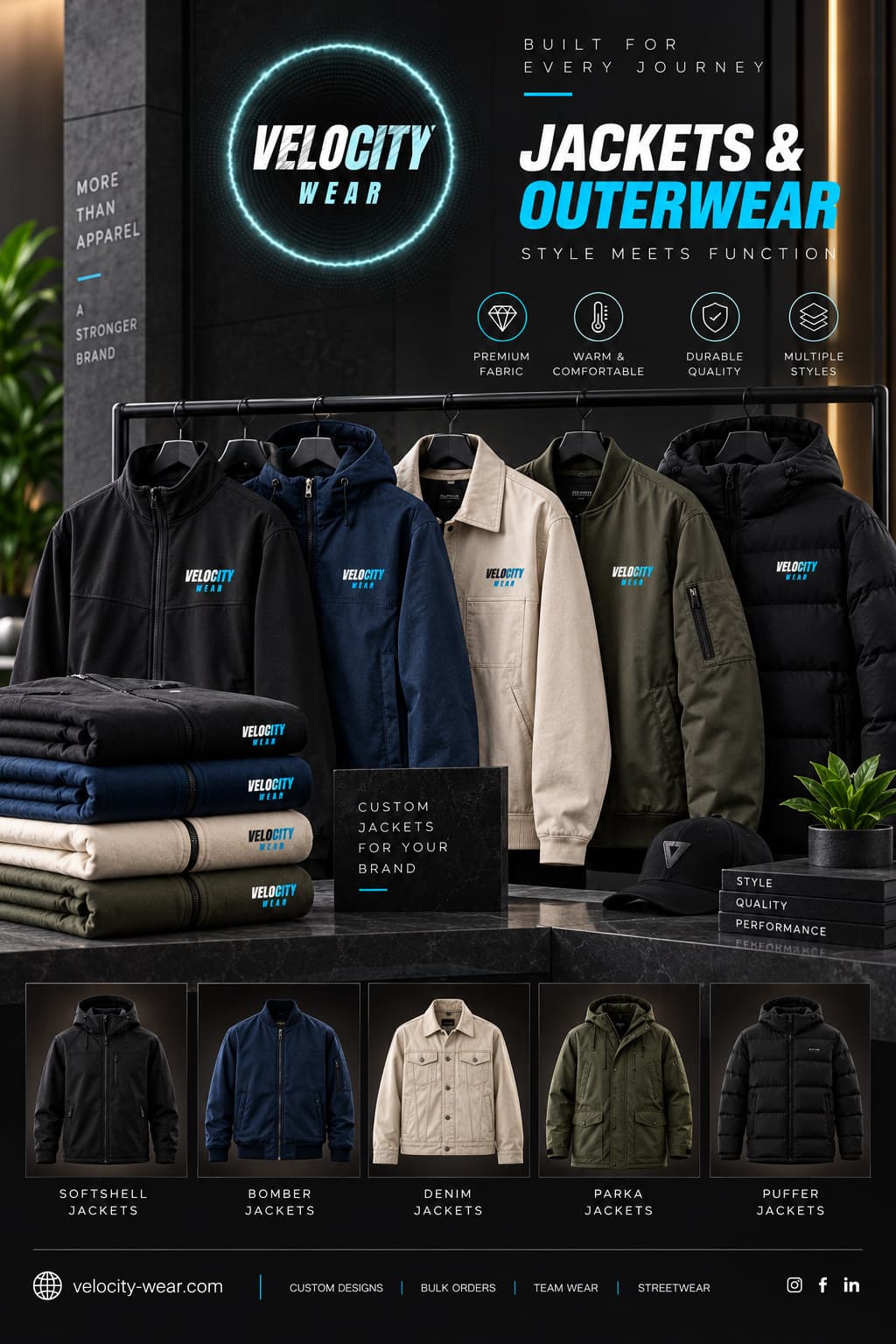
It tells you three things a screen cannot. First, scale. A logo that looks balanced at 400 pixels wide can arrive as a postage stamp on a size XL back panel, and the only way to know is to stand across a room from the real thing. Second, hand. Softshell in particular ranges from a soft fleece-backed drape to something close to board, and the same fabric name covers both. Third, room. Site jackets are layered over a hoodie or a fleece, so a size L that fits a bare torso perfectly is a size L that will not do up on a working crew. Browse the builds on our jackets range first, then sample the one that matches the way your teams actually dress, which the trades and construction page describes in more detail.
Which faults show up on a sample and nowhere else?
Hardware faults, mostly. A zip that catches on the storm flap, a puller that is too small to grip in a glove, a hood that will not sit under a hard hat, a pocket opening angled so anything in it falls out when you bend. None of these appear in a photograph and none of them appear in a spec sheet either. Thread colour against the garment colour is another: a logo rendered on screen in flat brand colours can land two shades off once it is stitched in a real thread range, and on a dark jacket that difference either disappears entirely or shouts.
The argument for holding a physical piece over trusting a render is made at length in our comparison of mockups and samples. The short version for outerwear is that renders show the artwork and hide the garment, and on a work jacket the garment is most of the decision.
How long should you hold a sample before approving bulk?
Long enough for somebody to work in it. A week on a live site will find the problems in a way that ten minutes in an office never does. Give it to the person who is hardest on kit, not to the person who signs the order. Ask them to wash it once, because that is when a cheap lining shrinks away from a shell and a transfer edge first lifts. Then approve or change, and remember the 10 to 15 working day production window starts from artwork approval, so a sample round needs to sit in front of that, not inside it.
How does the fee work against the bulk order?
The £150 is a deposit on the decision rather than a separate purchase. Place the bulk order and it comes off the invoice. Decline, and you keep the jacket and have paid a modest amount to avoid committing fifty pieces to a garment your crew would not wear. Fifty per design is the floor, sizes mix freely inside it, and the per-piece price drops as the run grows to as much as 35% below the fifty-piece rate at the largest tier. Ordering the sample in the size and colour you will actually buy the most of is the one thing people get wrong.
One more habit is worth building in at this stage. Photograph the approved sample from four angles and keep the images with the order paperwork. When a delivery lands months later and somebody queries a logo position, a picture of the piece you signed off ends the discussion in a minute rather than a week. It is also the quickest way to brief whoever inherits the account, since a photograph carries everything a written specification leaves out.