Jackets & Outerwear for Trades: reordering
By The Velocity Wear Team
Repeat jacket orders run on the same fifty-piece minimum and the same 10 to 15 working day production window as the first one. What changes is the risk: fabric is dyed in batches, and a navy cut nine months apart can land a shade off. Say at the point of ordering that the run has to sit alongside existing stock, and the match is checked rather than assumed.
Will a second run of site jackets match the first?
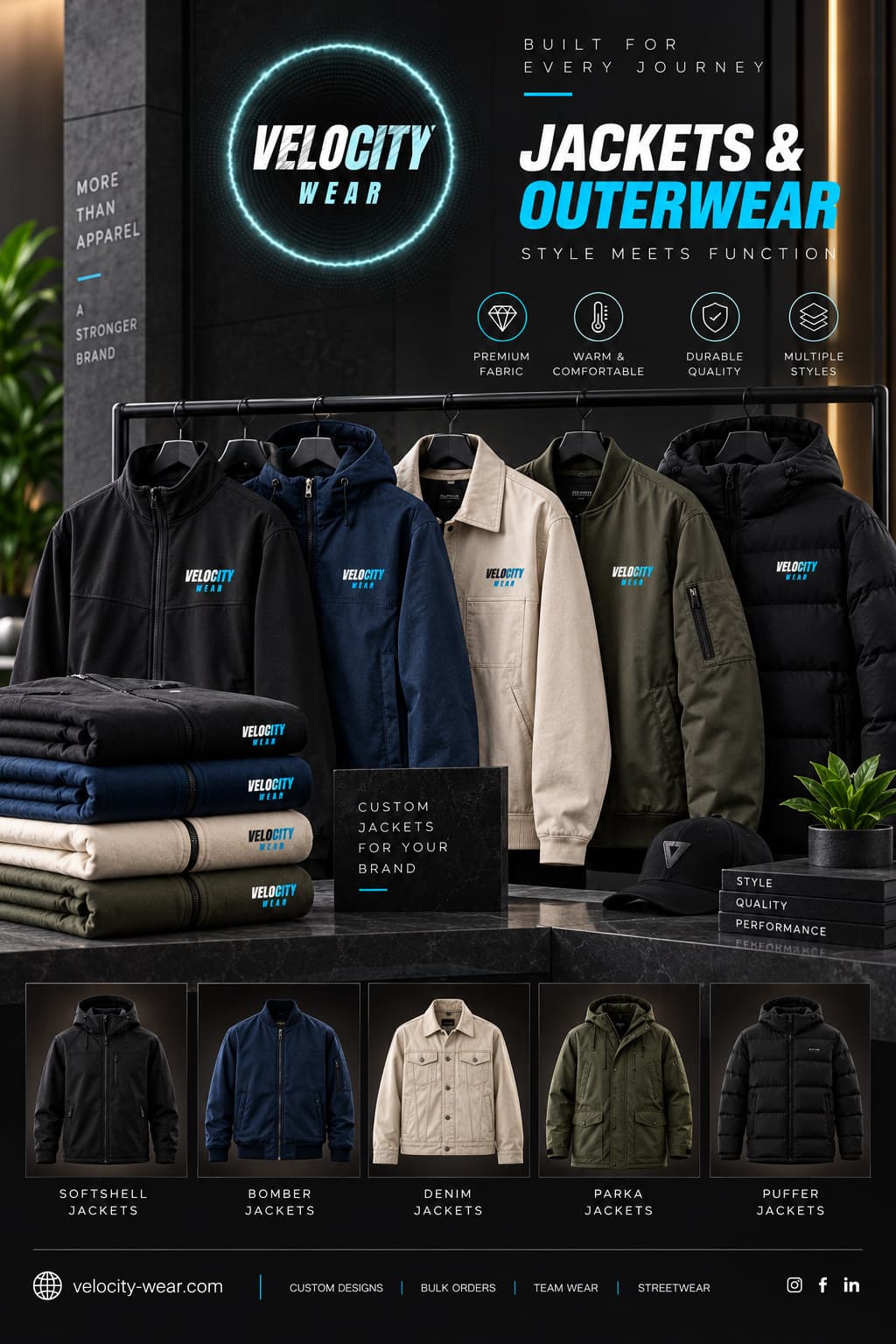
Close, and usually close enough to wear together, but nobody honest promises identical. Dyed fabric varies between lots, and outerwear shells show it more than cotton does because the finish is part of the colour. The practical fix is to keep a jacket back from the first delivery, unworn, as a reference piece. It costs one garment out of fifty and it settles any argument about whether a shade has drifted. Thread and transfer colours are easier because they come from fixed ranges and do not move between runs. The styles we keep running are listed on the wholesale jackets page, and the specification habits that make repeats painless are covered on the construction and trades page.
What should you record before the first order ships?
Six things, and they fit on one page. The exact garment style and colour name. The size split you ordered and the size split you actually needed, which are never the same. The artwork file you approved, with its final dimensions in millimetres, not as a percentage. The logo positions measured from a seam, so a new person can reproduce them. The thread or transfer colour references. And the date, because it tells you how long a set of jackets survived on your sites, which is the number that drives the next order.
We hold your approved setup at our end too, which is the mechanism described in can I reorder the same design later. That means a repeat is a quantity conversation rather than an artwork conversation, and it skips the whole approval round.
When is the right moment to restock a crew?
Before the current set is finished, not after. Trades outerwear tends to be replaced in autumn, which means every contractor in the country wants the same garments in the same six weeks. Placing a repeat in late summer takes you out of that queue. Work backwards: 10 to 15 working days of production from artwork approval, then transit, then distribution across sites. A mid-September order is a comfortable October handover. A mid-October order is not.
Is a bigger repeat order worth the storage?
Often, yes. The per-piece price falls as quantity rises, by up to 35% at the top of the scale against the fifty-piece figure, and the tiers step at 50, 100, 250, 500 and 1,000. A firm that hires steadily through the year and orders fifty twice is paying the fifty-piece rate twice. Ordering the same total in one run buys the better tier and removes a dye lot question at the same time. The limit is real cupboard space and honest hiring forecasts, and outerwear is bulky, so the sums are worth doing before committing.
One detail saves an argument later: agree in advance what happens to the leftover sizes. A run that arrives with twelve spare extra-large jackets is fine if somebody has already decided they go to the next intake. It becomes a problem when they sit in a site office for two years and the following buyer orders fifty more because nobody knew they were there. A single shared list of what is on the shelf, updated whenever stock moves, is enough to prevent that.