Briefing a Supplier for Jackets & Outerwear
By The Velocity Wear Team
A jacket brief that produces a real quote contains six things: the style, the quantity, the fabric or a reference garment, the decoration and where it goes, the artwork files, and the date you need the goods. Miss any of those and the number you get back is a guess that will move later. Jackets are quoted per job, so the quote is only as specific as the brief.
What does a supplier need before quoting?
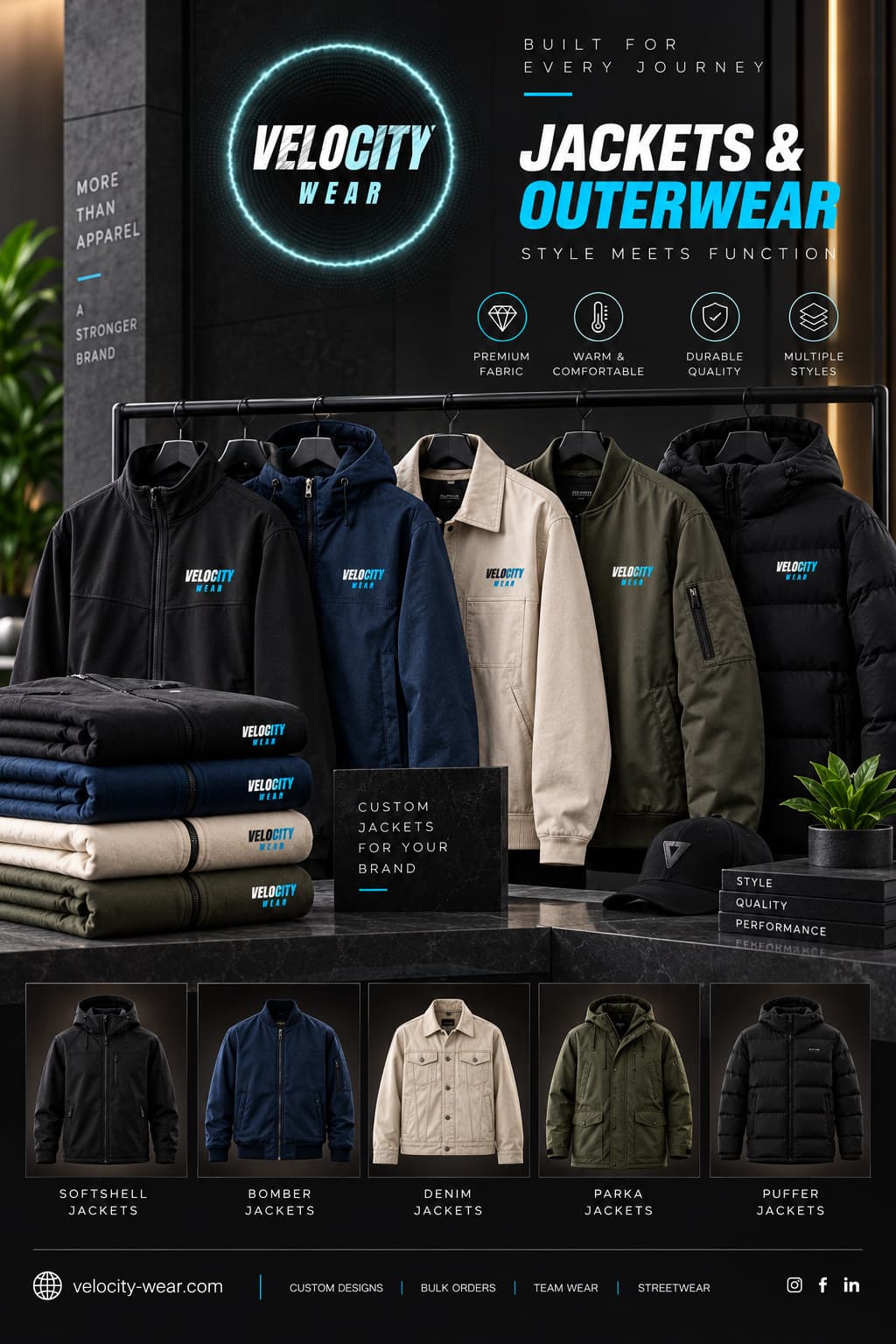
Start with the style, because softshell, puffer, coach and varsity price quite differently and are built differently. Then the quantity, stated as a real number rather than a range, since pricing moves through tiers at 50 to 99, 100 to 249, 250 to 499, 500 to 999 and 1,000 plus, with discounts reaching up to 35% off the 50-piece price. Then the fabric, either as a weight and composition or as a garment you already own and like. Then the decoration method and placement, then the artwork, then the deadline. The styles are set out on the wholesale jackets page and the tiers on the pricing page.
How should artwork be supplied?
As vector files where possible, with fonts outlined and colours specified as Pantone references rather than as screen values. Supply the mark on its own, not embedded in a slide or a mock-up, and supply it in the versions you actually want used rather than every version your brand has ever had. If the design was generated rather than drawn, check the edges and the text before sending it, for the reasons set out in spotting low-effort AI artwork.
Which details change the price most?
Quantity first, by a wide margin. Then the number of separate decorations, because each placement is a separate setup and a separate operation. Then the fabric and the construction, since a lined, quilted or bonded garment takes longer to build than an unlined one. Finishing options such as custom woven neck labels, tear-out labels, swing tags and packaging add cost per piece but are what make the garment your own product rather than a decorated blank. Say which of those you want in the brief, rather than adding them after the quote is agreed.
What happens when the brief is vague?
You get an indicative price based on assumptions, and every assumption that turns out wrong moves the number up. It also costs time, because each round of clarification is a day, and those days come out of the same calendar as the 10 to 15 working day build. The most useful single addition to any brief is the date the goods are needed in hand, because it tells the supplier immediately whether the job is feasible. How to read the quote that comes back is covered in reading a wholesale quote for jackets.
Include the use case in a sentence, even though it is not a specification. Telling a supplier that the jackets are for a groundworks crew in winter, for a school leavers group, or for a retail range at a particular price point changes the recommendations you get back, because it turns an order form into a conversation. A good supplier will sometimes tell you that the style you asked for is wrong for the job, and that only happens if they know what the job is.