What Bands Pay for Branded Clothing
By The Velocity Wear Team
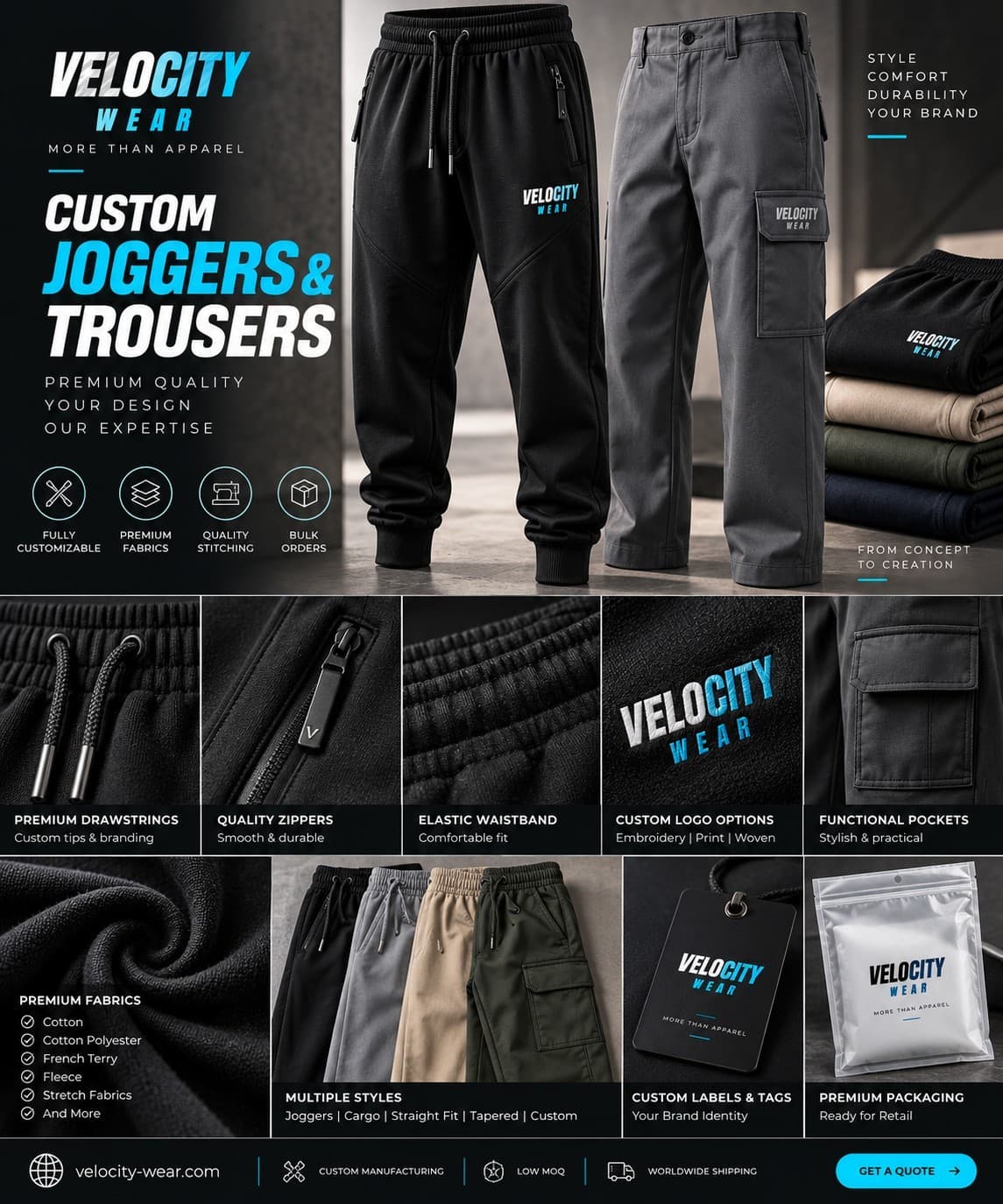
At our 50-piece minimum, t-shirts start at $13 a piece, hoodies at $31, caps at $12 and joggers at $22. Those are starting prices that fall as quantity rises, by up to 35 per cent at the top tier. For a band, the number that matters is not the unit cost on its own but the gap between it and what the piece sells for at the table.
What does band merch cost per piece?
The from-prices above are per piece at 50, which is where most first merch runs sit. Tracksuits are $53 per set for a hooded top and matching jogger, polos start at $18 and denim jackets at $38. Jackets, towels, bottles, bags and keychains are quoted per job rather than carrying a list price, because the specification varies too much for a single figure to be honest. How much does custom clothing cost breaks the components down further.
How far does the price fall as quantity rises?
The tiers are 50 to 99, 100 to 249, 250 to 499, 500 to 999 and 1,000 upwards, and the ceiling on the discount is 35 per cent measured against the 50-piece price. A band moving from 50 shirts to 250 is not shaving pennies, it is changing the economics of the whole table. The risk runs the other way though: a tier only pays off if the stock sells, and unsold merch in a van is worse than a slightly higher unit cost. Minimum orders for bands covers how to size a first run sensibly.
Which garments earn their place on a merch table?
Tees carry the volume because they are the impulse buy and the lowest entry point. Hoodies carry the margin, since the gap between a $31 cost and a hoodie price at a venue is the widest in the range. Caps from $12 sell to people who already own the shirt. Tracksuits and denim jackets work as a limited run for an audience that already buys everything, not as a first order. The bands and music page shows what we produce most often for merch.
What is not in the per-piece price?
Four things. Delivery, which depends on where the boxes go, and we ship to the UK, the USA and Europe. Sampling, which is £150 and credited against the bulk order. Private label extras such as woven neck labels, tear-out labels and swing tags. And anything that turns one design into two, because a second colourway needing its own screens is its own run of 50. Ordering routes are on the wholesale page.
How should the table price relate to the unit cost?
Work from the gap, not the multiple. What a band needs to know is how many pieces have to sell before the run is paid for, and that figure depends on the difference between the cost delivered and the price at the table. A shirt bought at the 50-piece rate pays the run back later than the same shirt bought at a higher tier, which is the real argument for ordering more once a design has proven itself.
Include everything in the cost before you set the price: the per-piece figure, delivery, any sampling that was not credited, and the labels if you added them. Bands that price against the garment cost alone tend to find the run breaks even somewhere it should have profited, and the correction always comes too late to change the order.
Keep the number of price points small as well. A table offering three things at three clear prices sells faster than one offering seven, because the decision is made standing up, in a queue, in the dark. Two garments and a cap is a complete merch line for most bands, and it keeps the whole offer inside two or three runs rather than five.