How Societies Buy Tracksuits Wholesale
By The Velocity Wear Team
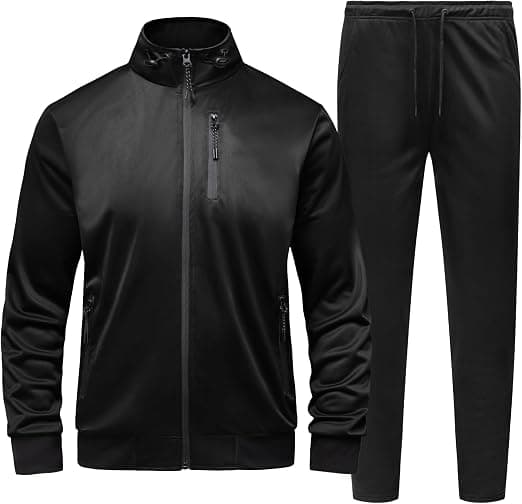
A society orders tracksuits by running a sign-up with a hard deadline, taking payment up front, and placing one order once the list passes 50 sets. At $53 a set for a hooded top and matching jogger, that is a committee collecting money rather than a committee spending a budget, which is what keeps the treasurer out of trouble.
How does a committee get to fifty?
Open the sign-up during freshers week while enthusiasm is highest, close it two weeks later, and price the set to members at slightly above your unit cost so the society covers postage and the odd wrong size. If your society is small, run the sign-up jointly with a sister society under one design, since the minimum of 50 counts designs and not clubs. Prices and colourways are on the wholesale tracksuits page.
Names and numbers on the back are the usual request and the usual mistake. Individual personalisation changes the artwork per garment, which does not sit inside a single design run, so most societies put the society name on the back and leave the individuality to the colourway.
When should the order be placed?
Count back from the first social you want the kit at. Production is 10-15 working days from artwork approval, then transit, and artwork approval is usually delayed by a committee vote on the crest. Six weeks from sign-up to wearing is comfortable; three is tight. Apparel production lead times explained sets out where the time actually goes.
Societies that order in the summer for October get the calmest run of it, because nothing about the process is competing with the start of term.
How do you avoid a box of unclaimed sets?
Take payment at sign-up, not on delivery. Collect sizes in the same form as the payment so the two cannot disagree, and order to the list rather than rounding up to a tier. A handful of spares in middle sizes is sensible; twenty spares is next year's committee inheriting a problem.
Where a society wants to keep selling kit through the year, treat the second run as its own order of fifty and plan it after the first sells through. Schools and student groups buying leavers kit work the same way, and our schools and leavers page covers that side.
What does the money look like per member?
Fifty sets at $53 is the starting figure and the tiers run 50-99, 100-249, 250-499, 500-999 and 1,000 or more, with up to 35% off the fifty-set price at the top. A large society reaching the second or third tier can drop the member price noticeably, which is the argument for a joint order with another club.
Does society kit need to last four years?
It needs to last three of them, which is longer than most committees plan for. Kit bought in first year gets worn through every social, every away trip and every wash in a shared machine on whatever setting the house agreed on, which is usually the wrong one.
That argues for a stitched or simply printed mark rather than a large graphic that cracks, and for a body colour that does not show every wash. It also argues against novelty designs tied to one year's committee, which look dated by the following October.
A design that survives is also a design the next committee can reorder without redrawing anything, and that continuity is worth more to a society than any single year's idea.
Write the whole process down before you hand over: who you ordered through, what the sizes were, what the members paid and how long it took. A handover note of ten lines is the difference between next year repeating a good order and next year starting from nothing in the middle of freshers week.