Choosing Fabric for Wholesale Tracksuits
By The Velocity Wear Team
Fabric is the first decision on a tracksuit order and the one that is hardest to change later. It sets the drape, the warmth, how the set behaves after twenty washes and how cleanly decoration sits on it. Sets start at $53 at the minimum of 50, and fabric choice moves the feel of that set far more than the colour does.
What are the realistic options?
Cotton-rich loopback sits flat, breathes well and has the dry handle people associate with a considered garment. Brushed-back fleece is warmer and softer inside, which suits outdoor and winter wear. Poly-rich blends hold their shape and colour through heavy washing, which is why laundry-heavy buyers lean towards them. The available constructions are listed on the wholesale tracksuits page.
None of them is the right answer in the abstract. A hotel leisure team, a touring band and an office pack want three different garments, and the fabric is where that difference actually lives.
How does weight change the garment?
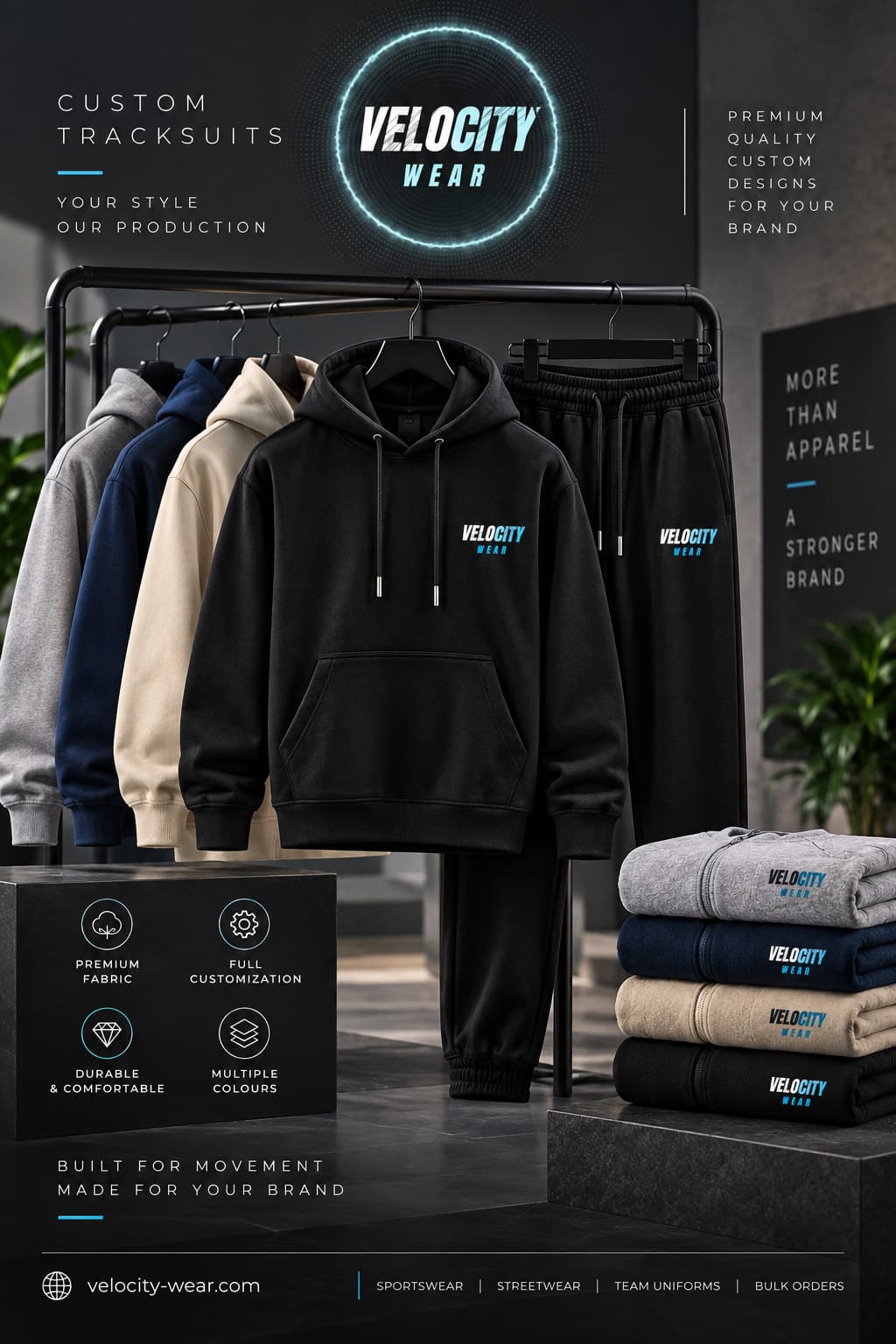
Heavier fabric hangs straighter, resists bobbling, and reads as more expensive on a rail, but it takes longer to dry and costs more to ship. Lighter fabric is comfortable across more of the year and suits a set that will be worn indoors. Ask for the weight on the specification rather than guessing from a photograph, because a render cannot show you drape. the best fabrics for gym wear and activewear covers the same trade-off for active garments.
The set has to be consistent across both halves. A heavy top with a thin jogger feels wrong in a way most people cannot name but all of them notice.
Does the fabric limit the decoration?
It shapes it. Screen printing and DTF both sit well on a smooth-faced fabric; a heavily brushed surface can soften fine detail. Embroidery works across most constructions but needs enough body behind it to sit flat. Sublimation needs a poly-rich base to bond at all, so a cotton-rich set rules it out. 3D puff wants a stable surface and a bold mark rather than fine linework.
Say what the artwork is when you ask for a quote and the fabric recommendation comes with it, rather than arriving as a problem after approval. The tier structure on the pricing page is unaffected by fabric choice; the from-price is.
What about a custom fabric colour?
Dyeing a bespoke shade is a different exercise from picking from stock colours, and it comes with its own minimums at mill level. For most orders of fifty to a few hundred sets, choosing the closest stock colour is both cheaper and faster. Fabric minimums and custom colours explains where that line sits.
How should fabric be described in a quote request?
Describe the use, not the specification. Say that the sets will be worn outdoors in winter by volunteers, or indoors by staff and washed hot four times a week, or sold to customers who will compare them with premium streetwear. Each of those points to a different construction, and a supplier can only recommend one if they know which it is.
State the decoration at the same time, because fabric and decoration constrain each other. Asking for sublimation on a cotton-rich body is a question that has no answer, and it is better to discover that at quote stage than after approval.
Then ask for the weight and composition in writing on the final quote. Having it recorded is what lets you order the same thing again next year and get the same garment back.
Buyers who skip that step usually find out at the restock, when the new run feels different and nobody can say what changed. The specification is the only thing standing between a consistent product and a yearly negotiation with your own memory.