
How Much Do Wholesale Tracksuits Cost?
By The Velocity Wear Team
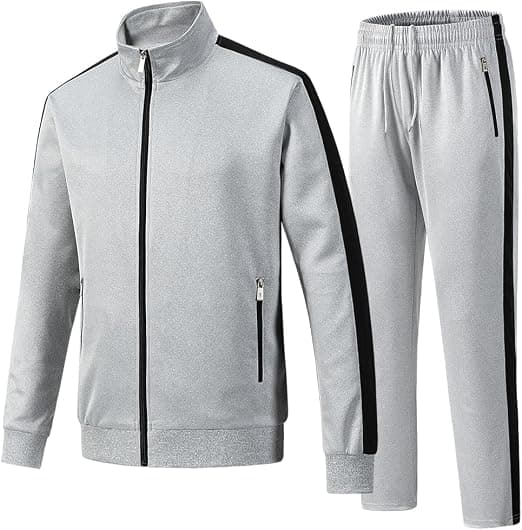
Wholesale tracksuits start at $53 per set at our minimum of 50, and a set is a hooded top with its matching jogger, so that figure covers two garments rather than one. The price falls as quantity rises, by as much as 35% at the highest tier. Decoration, labelling and delivery sit on top of the garment price.
What does the $53 include?
The pair of garments, cut and produced together so the colour matches between them. That last part is the reason a co-ord is quoted as a set: two separately sourced pieces in the same nominal shade routinely arrive as two different shades. The wholesale tracksuits page lists the fabric and colour options behind the figure.
For comparison within the range, hoodies start at $31, joggers at $22 and t-shirts at $13. A set is not simply the two numbers added, because it is produced as one item with one approval and one dye run.
How much does the price move with quantity?
The tiers are 50-99, 100-249, 250-499, 500-999 and 1,000 or more, and the reduction is measured against the fifty-set price, reaching up to 35% at the top. Every tier boundary is a real step, so an order of 95 is worth a conversation about whether 100 costs less in total. The pricing page shows how the ladder works across the range.
What else belongs in the budget?
Decoration, which varies with method and size: screen printing, DTF, embroidery, 3D puff and sublimation do not cost the same, and an embroidered mark is priced on stitch count rather than on dimensions. How embroidery stitch count affects cost explains why a detailed logo costs more than a simple one at the same width.
Then labelling, if you want custom woven neck labels, tear-out labels, swing tags or packaging; delivery to the UK, the USA or Europe; and a £150 sample if you want to hold a set first, with that fee credited against the bulk order. How much does custom clothing cost puts the same structure across the wider range.
Why is a second colourway not cheaper?
Because the cost sits in the setup, not in the fabric. A colourway that needs its own screens is a separate design with its own minimum of 50 sets, so two colours is a hundred sets and two setups. Buyers who want variety usually get more from one colour with a strong mark than from two thin runs.
Why do two quotes for the same garment differ?
Usually because they are not for the same job. One quote covers a stitched left-chest mark and the other covers a stitched chest, a printed back and a custom neck label, and that is three setups against one. Placement count is the single biggest swing on an otherwise identical set.
Artwork complexity is the second. A four-colour screen print is four screens, and an embroidered logo with heavy fill is more stitches than the same logo drawn as an outline. Both are decisions a designer can revisit before approval and neither can be changed afterwards without cost.
Then there is what sits outside the garment entirely: labelling, packaging and the freight leg to the UK, the USA or Europe. Compare landed cost against landed cost and the quotes usually turn out to be closer than they first appeared.
Ask for the breakdown rather than the total when two numbers disagree. A quote split into garment, decoration, labelling and freight is one you can act on, because it shows you which line to change if the figure has to come down before anybody signs it off.

