Wholesale Polythene Bags: choosing a supplier
By The Velocity Wear Team
Judge a polythene bag supplier on four answers: what exactly the quoted price includes, what the minimum is per design, when the production clock starts, and what a physical sample costs. Ours are a per-job quote against your size and print, 50 pieces per design, 10 to 15 working days from artwork approval, and a £150 sample credited against the bulk order.
What should you ask a polythene bag supplier?
Start with the question that reveals the most: what changes this price? A supplier who can explain which variables move the number — size, print colours, printed area, quantity — is quoting your job. One who reads a figure off a chart is quoting somebody else's. The second question is about setup: is the minimum per order or per design, because those are wildly different commitments once you want more than one bag size.
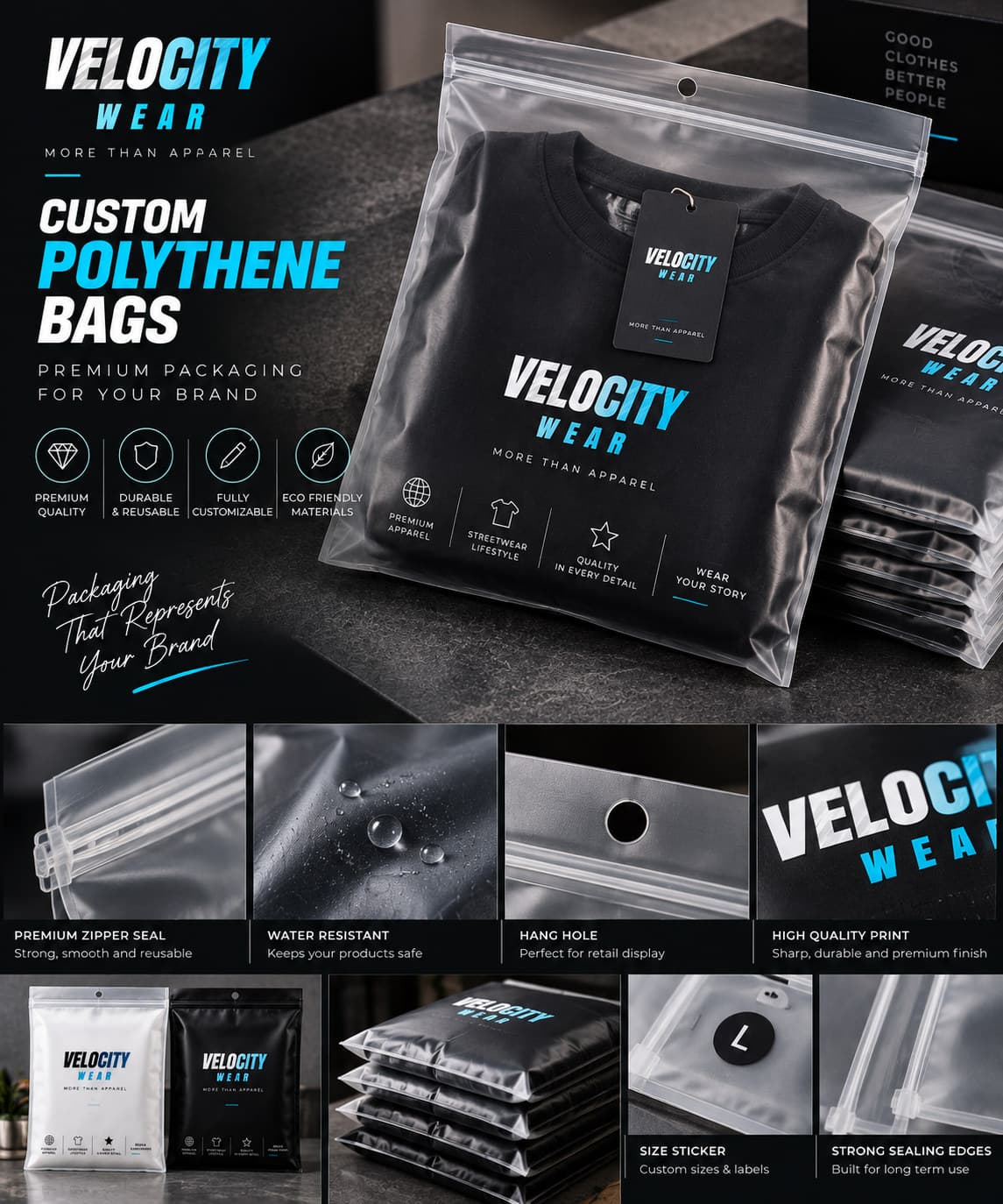
Then ask about proofs. You want to know whether you will see the artwork positioned on the bag before it prints, and whether approving that proof is what starts the production window. Our polythene bags page covers the product side, and the wholesale range shows what else can be produced on the same terms if you want one supplier for packaging and garments.
How do you compare bag quotes fairly?
Put both on the same specification before you compare anything. Same finished size, same number of print colours, same faces printed, same quantity, same delivery point. Nine times out of ten a gap that looked like a bargain turns out to be one of those five lines quietly set differently. Ask both suppliers to quote your top two quantities as well, so you can see how each one's tiers behave rather than just the entry price.
Then look at what sits outside the unit price entirely: delivery, sample cost, and whether artwork preparation is chargeable. The habit of totalling everything before comparing is the same one that keeps garment buying honest, and it is set out in questions worth asking a manufacturer.
Which warning signs matter?
Vagueness about the minimum is the first. A supplier who will not say plainly whether 50 applies per design or per order is leaving themselves room to reprice you later. The second is a turnaround promise with no starting point attached; any number that is not anchored to artwork approval is a number that can be blamed on you afterwards.
The third is a sample offered at no cost. Producing a bag to specification has a real cost, so one given away is either generic stock or recovered inside your bulk price somewhere you cannot see it. We charge £150 and credit it against the order, which is the same money handled openly.
Is one supplier for bags and garments worth it?
Usually, yes, for a reason that has nothing to do with price: one approval cycle instead of two. Both sit in the same 10 to 15 working day window, so a combined approval means the packaging and the product land together rather than a fortnight apart. Splitting suppliers is how brands end up with garments in a warehouse and nothing to put them in.
It also makes the discount tiers work harder, since consolidating spend moves you up the 50–99 to 1,000+ ladder faster, with up to 35% off the 50-piece price at the top. Weigh that against the value of a specialist if your bag specification is genuinely unusual, as it sometimes is for oversized or heavyweight items.
A last test costs nothing. Send the same enquiry to both suppliers and read what comes back rather than timing it. A reply that asks for the dimensions of the product going inside is from someone who has made bags before. A reply that quotes immediately without asking anything has priced a bag nobody has specified, and that figure will be revised once the details finally arrive.