Size Splits for a Bulk Polo Shirts Order
By The Velocity Wear Team
Fifty pieces of one design can be any mix of sizes you like, so the split is entirely your decision and entirely your risk. The rule that holds across almost every order: weight the middle heavily, keep both ends thin but present, and never build the split from a headcount you have not checked against real people.
Why does a polo split differently to a t-shirt?
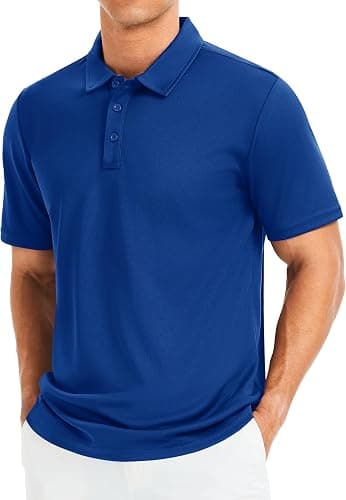
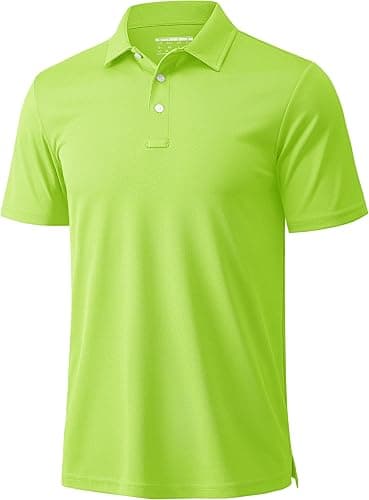
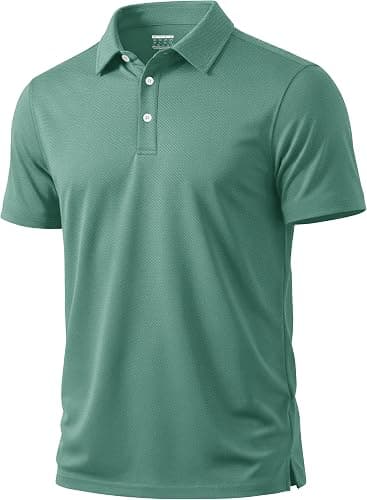
Because a polo has a collar, a placket and a set sleeve, and none of them stretch the way a tee does. A person who wears a medium t-shirt comfortably will often want a large polo, because the fit is closer through the chest and shoulder and the buttoned front shows strain immediately. The practical effect is that polo orders skew a size larger than the equivalent tee order, and a split copied straight from a previous tee run leaves you short of larges. Fabric plays into this too, which we cover in choosing fabric for wholesale polo shirts.
How do you collect sizes from a group?
Ask for a size, publish the garment measurements next to the question, and set a closing date you actually hold. People answer accurately when they can check a chest measurement against a shirt they already own, and vaguely when they are guessing from a letter. For a workplace, going desk to desk beats a form; for a club or a society, a form with a hard deadline beats chasing. Either way, assume ten per cent of the group will not reply and build that into the padding rather than delaying the order for them.
What does a workable split look like?
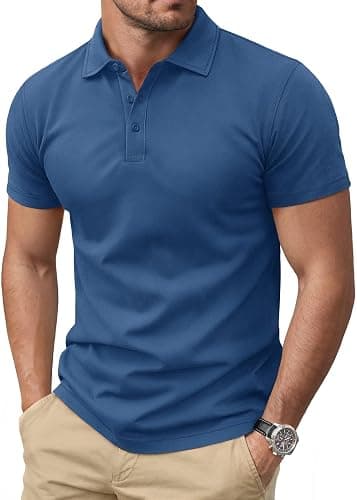
For a mixed adult group of fifty with no size data at all, something in the region of five small, thirteen medium, fifteen large, ten extra-large and seven double extra-large will fit far more people than an even spread. Adjust it hard once you have real numbers — a warehouse team and an office team have visibly different curves, and a group that skews young skews smaller. If you are selling rather than issuing, the curve tightens further towards medium and large because those are the sizes that sell through first and the ones a customer will pay for immediately.
How much should you pad, and where?
Pad in the middle, not at the ends. Spare mediums and larges get used by new starters, replacements and anybody whose shirt is ruined, while spare double extra-larges sit in a box for three years. A reasonable habit on a fifty-piece order is to allocate forty pieces against known people and leave ten as middle-size spares. Because the minimum is fifty per design, spares are cheaper than a restock in any case — the reasoning is in minimum order for wholesale polo shirts.
Do men's and women's cuts change the count?
Where both cuts of the same body, colour and artwork are offered, they count inside the same fifty rather than starting a new one. Many buyers still choose a single unisex body, because it simplifies the split and makes shirts reusable between people when someone leaves. If you do offer two cuts, publish measurements for both, since the letter sizes do not map across and people will otherwise pick by habit and get it wrong.
Whatever you land on, record the final split alongside the sell-through or the leftovers. The order after this one is where that note pays for itself, and every buyer who runs kit regularly ends up keeping one. Prices per band are on the pricing page and the size ranges on the wholesale polo shirts page.
What do you do with the shirts nobody claimed?
Keep them bagged and label the box by size, because the moment a spare is loose in a cupboard it stops being findable. Issue from the spares before ordering anything new, and count what is left once a year. Groups that do this discover their curve is wrong in one direction every time, and correct it on the next run for nothing. Groups that do not end up ordering fifty more while thirty sit in a store room two floors away.