Polo Shirts for Charities, Ordered Properly
By The Velocity Wear Team
Charity polos start at $18 a piece at our 50-piece minimum, with the discount rising to up to 35% as quantity increases. The two problems specific to charity orders are sizing for volunteers nobody has measured and keeping the unit cost defensible against donated income. Both are solved at the ordering stage rather than afterwards.
How do you keep the unit cost defensible?
By ordering once, at the right quantity, and by making the garment last more than one campaign. The volume tiers run 50–99, 100–249, 250–499, 500–999 and 1,000 plus, measured from the 50-piece price, so a charity that buys annually rather than per event pays materially less per volunteer. A durable cotton piqué that survives several seasons costs less per wear than a cheaper garment replaced every year.
Keep the design undated and generic. A polo carrying a year, an event name or a campaign strapline is unwearable the following season, which turns a reusable asset into a one-off cost. Put the charity mark on it and nothing else.
How do you size a run for unknown volunteers?
Weight it to the middle and accept that a slightly loose polo is wearable while a tight one is not. M, L and XL should carry most of the 50, with S and XXL as a genuine but small tail. Sizes mix freely inside the 50-piece minimum, so the curve costs nothing to shape.
Where volunteers are registering in advance, collect sizes on the registration form rather than chasing them later — it is one extra field and it removes the guesswork entirely. Charities that also run t-shirt campaigns will recognise the same problem, and our charity t-shirt guide covers how to handle it on a larger giveaway.
What should a volunteer polo actually look like?
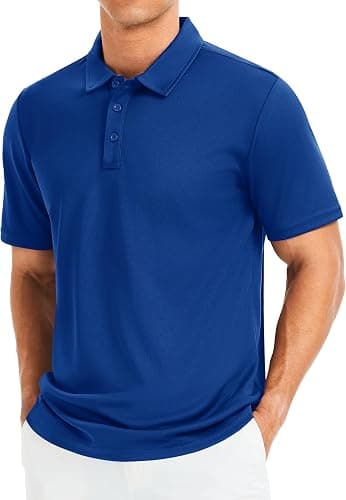
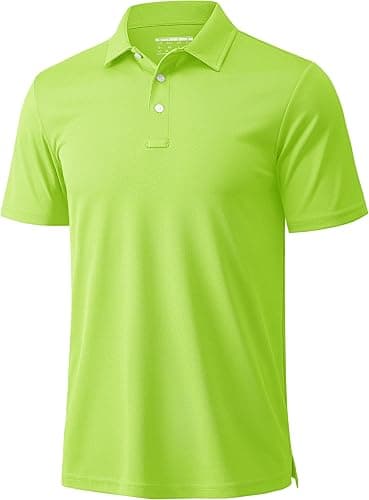
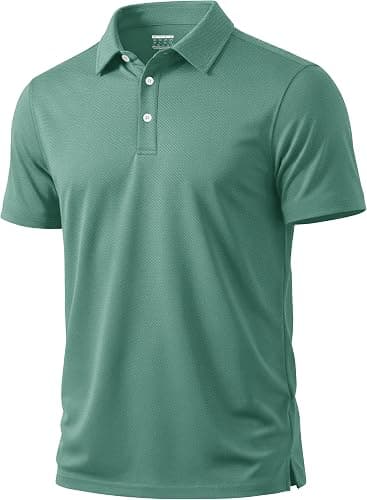
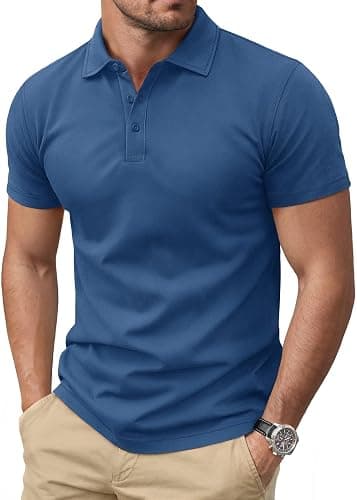
Identifiable first. A strong, consistent colour that reads across a car park or a collection point does more for volunteer safety and public trust than a subtle one. A clear chest logo, and a larger mark on the back if the role involves being approached by the public.
Cotton piqué is comfortable for long shifts and takes embroidery cleanly; a performance knit suits outdoor events where volunteers are moving or likely to get wet. Both knits are on our polo shirts page. For personalising named roles such as team leads, the guide for clubs and societies sets out how per-garment personalisation is priced.
When should a charity place the order?
Well before the campaign that needs it. Production is 10 to 15 working days from artwork approval, before delivery transit, and charity approval chains can be slow because trustees and a comms lead may both need to sign off. A £150 sample, credited against the bulk order, is useful to have in the room when that decision is taken.
Each colourway needing its own screens counts as a separate design with its own 50-piece minimum, so resist the temptation to give each region its own colour unless the numbers justify it. Our charities and fundraising page covers how these orders are usually structured.
How should volunteer kit be issued and returned?
Decide up front whether the polo is a gift or a loan, and say so when it is handed over. A gift is simpler to administer and usually better for goodwill, but it means budgeting for replacement every time the volunteer base turns over. A loan keeps the stock and the cost down, and it needs a register and someone willing to chase.
Most charities settle on a middle position: long-standing volunteers keep theirs, one-off event helpers are issued a shirt for the day and hand it back. That works as long as the shirts coming back are washed and counted before they go into storage, which is a job worth assigning to a named person rather than assuming.