
Wholesale Keychains: choosing a supplier
By The Velocity Wear Team
Pick a keychain supplier on how precisely they describe the piece. Material, size, thickness, fitting, branding method and packing should all be named before a price means anything, because a vague specification is where a cheap quote hides. Then check the terms: 50 pieces per design, 10 to 15 working days from approval, a £150 sample credited against bulk, and up to 35% off at volume.
What separates two keychain suppliers?
Willingness to be specific. A small item is the easiest thing in merchandise to quote loosely, because the buyer has no reference point for what a good one costs. A supplier who names the material and the dimensions is selling you an object. A supplier who names only a price is selling you whatever is convenient on the day the order lands.
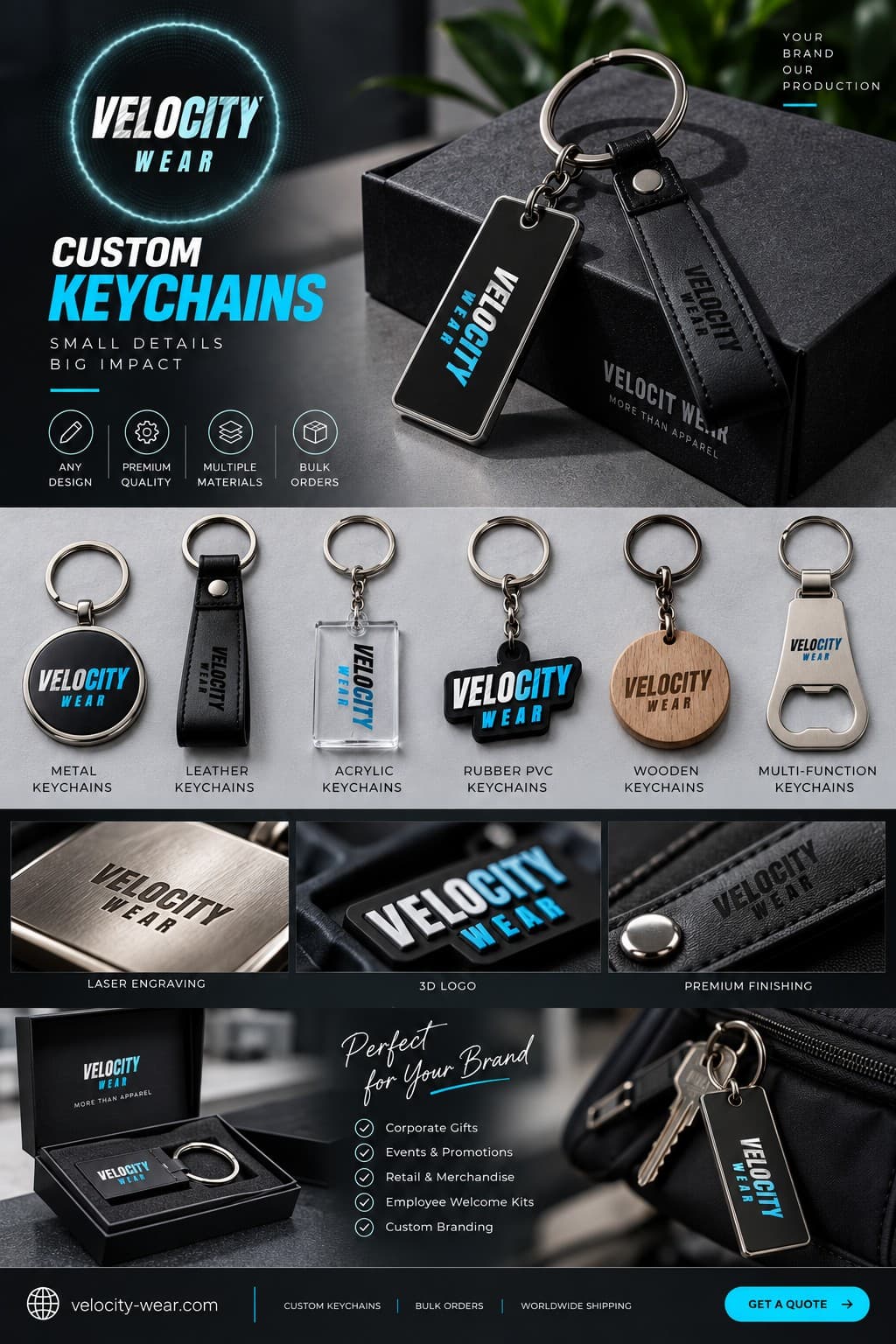
The second difference is what happens when your artwork is unsuitable. A supplier who flags that your mark will not hold at that size and proposes a fix is doing the job. One who applies it silently and ships 500 illegible pieces is not. Our keychains page sets out the product, and the wholesale catalogue shows what else can be branded to match.
What to ask before you send artwork?
Ask whether the minimum is per design or per order, since those are very different commitments if you want two shapes. Ask what starts the production clock, because 10 to 15 working days is only meaningful when anchored to artwork approval. Ask whether you will see a proof at actual size. And ask what a physical sample costs, which tells you a great deal about how the business is run.
Then ask how the price changes at your realistic quantities rather than at the one you first mentioned. Seeing how a supplier's tiers behave across two numbers is more revealing than any single quote, and it is the same discipline recommended in questions worth asking a manufacturer.
How do you read a keychain quote?
Line by line, checking for what is absent. Is the fitting included or listed separately? Is packing loose or individual? Is the price for one branded face or two? Is delivery to your address or to a port? Each omission is a place the final invoice can grow, and on a low-value item those additions are proportionally large.
Then total everything, including delivery and the sample, before comparing. On small heavy items the shipping line can outweigh the difference in unit price entirely, which is the argument made in landed cost explained.
Is it worth using one supplier for a whole kit?
Generally yes, because it collapses several approval cycles into one and gets the kit delivered together rather than in fragments. It also concentrates your spend, and since the tiers run from 50–99 up to 1,000+ pieces with up to 35% off the 50-piece price at the top, a consolidated order reaches a better band than three scattered ones.
The exception is a genuinely specialist piece with unusual tooling. In that case, buy it where it is made properly and accept the extra coordination — but keep your artwork files in your own hands so you are never locked to one supplier by a missing vector.
One final signal is worth reading. A supplier who tells you that 50 is a sensible first run, rather than steering you straight to a thousand pieces for the discount, is thinking about whether the item works before thinking about the size of the invoice. Across several orders that instinct is worth considerably more than a small difference in unit price.
Settle how your artwork will be handled, too. Agree in writing that the file is used for your job alone, because a mark sitting on a supplier sample shelf is a small matter until the day a competitor is handed one at an exhibition. It costs nothing to agree at the start and is awkward to raise once the pieces have been made.

