Print or Embroider Wholesale Joggers?
By The Velocity Wear Team
Print a jogger when the mark is large, flat colour or photographic. Embroider it when the mark is small and needs to read as a quality garment rather than a promotional one. Joggers are harder to decorate than tops because the leg is narrow, curved and seamed, so the position you choose narrows the methods available before anything else does.
Where can a jogger actually be decorated?
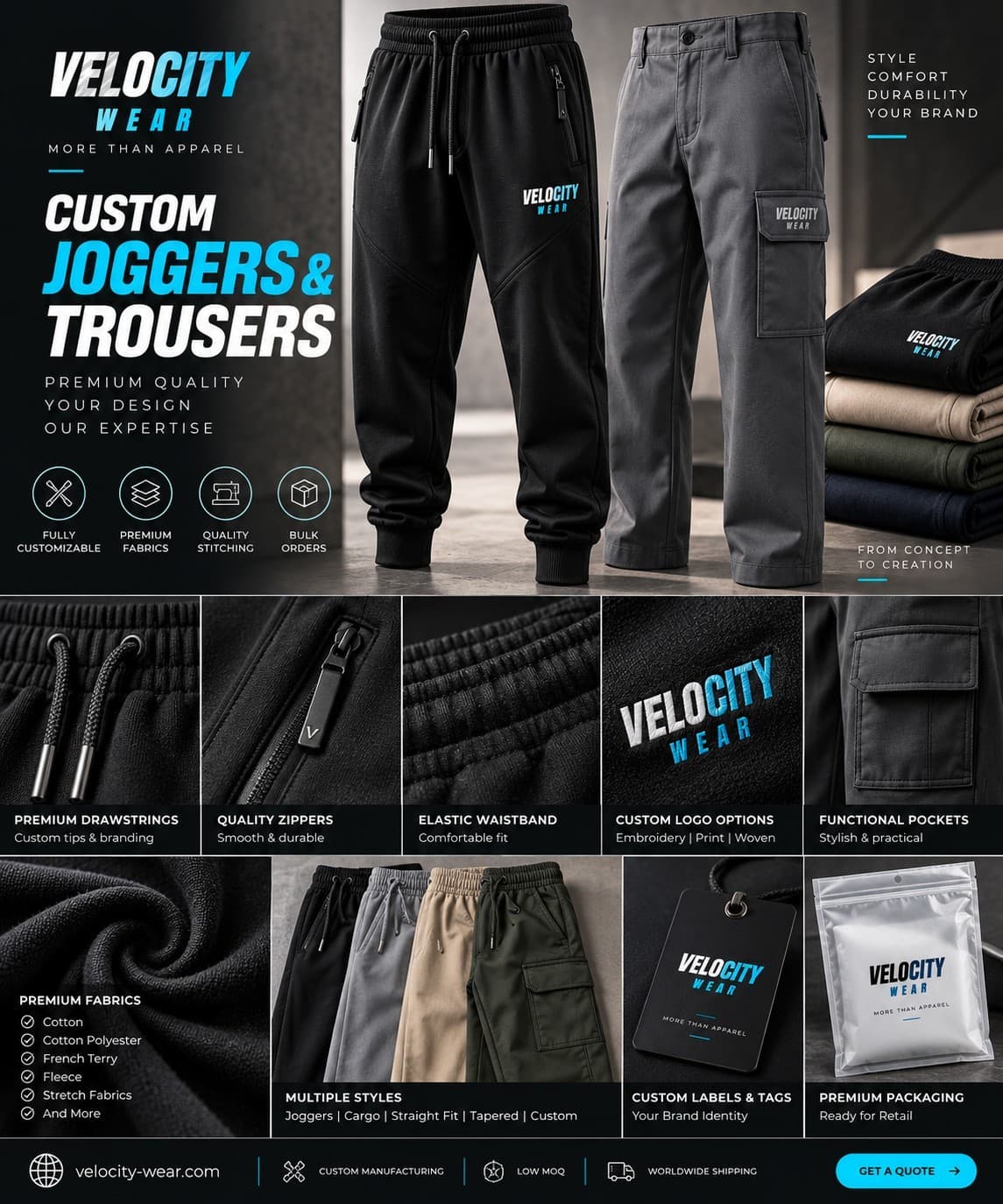
Four positions cover nearly every order. The outer thigh, which is the largest flat area and takes vertical artwork well. Above the cuff on the lower leg, which suits a small mark and is highly visible when someone is seated. The hip or pocket area, which reads like a discreet brand mark. And the waistband or back rise, which is where names and personalisation usually go.
What the leg will not take is a wide horizontal graphic. The panel curves, and a design that wraps towards a side seam distorts and sits badly when the garment is worn rather than laid flat. Keep artwork vertical, keep it clear of seams, and the result on the body matches the mockup. The positions available are listed with the garment on the wholesale joggers page.
Which method suits which artwork?
Screen printing is the workhorse for flat colour. One screen per colour, a setup charge per screen, then a very low cost per piece, which makes it the best value at volume. DTF prints from film with no colour limit at all, so gradients, photographs and complicated multi-colour work are straightforward, with almost no setup and a cost per print that barely moves with quantity.
Embroidery puts thread above the fabric. It reads as considered, wears for the life of the garment and suits small marks; it is priced by stitch count after a one-off digitising charge. 3D puff raises the stitching for a bold sculpted effect that works on a lower leg badge. Sublimation dyes the fibre itself but needs a high-polyester light body to work, so it is a fabric decision as much as a decoration one. The full decision tree across garments is in which printing method should you choose.
How does the fabric face change the result?
A brushed fleece has a raised nap, and a thin ink film sitting on top of that nap loses a little edge definition. Printers compensate with an underbase, but fine serif type on heavy brushed fabric will always look slightly softer than the same type on a smooth loopback. If your artwork has hairline detail, either print it on loopback or increase the size until the detail is robust.
Embroidery has the opposite relationship with nap. Thread sits proud of the surface and the pile hides small imperfections, so brushed bodies are forgiving to stitch. That is why a heavyweight winter jogger with a small embroidered mark above the cuff is one of the most reliable specs in the catalogue.
Can one order use more than one method?
Yes, and mixed specs are common. An embroidered hip mark with a printed thigh graphic costs less than embroidering both and looks better than printing both. Each position is priced separately because each is a separate machine pass, so three positions is three lines on the quote regardless of how they are decorated.
What you cannot do is treat two methods as one order. A printed version and an embroidered version of the same logo are two designs, each needing its own fifty pieces. Decide the method before you commit, ideally on a sample. The cost comparison at fifty and at five hundred is worked through in screen printing versus embroidery on joggers, with the tiers on the pricing page.