Wholesale Bottles: samples
By The Velocity Wear Team
A branded bottle sample is £150, credited against the bulk order when you proceed. Samples are never free. What you get for the fee is the one thing a screen cannot supply: a physical object you can hold, fill, carry and open, produced to the specification you asked for rather than approximated from stock.
Can you get a bottle sample before bulk?
Yes, and for drinkware it is worth doing more often than for clothing. A garment can be judged reasonably well from a specification and a fabric weight. A bottle cannot, because so much of its quality is in the parts a photograph does not show — how the closure feels after twenty uses, how heavy it is when full, whether it fits a standard cup holder or a gym bag pocket.
Order the sample once the specification is settled rather than as a way of exploring options, since it is made to one configuration. Confirm the capacity and finish you want from the bottles page first, and if the bottle is going into a kit, check the rest of the wholesale range at the same time so one sample round covers everything.
What does the £150 cover?
It covers producing a bottle to your agreed specification with your branding applied, and the fee comes off the bulk invoice when the order goes ahead. The reason it is charged at all is that a real sample takes real setup; a supplier giving one away is either sending generic stock or recovering the cost inside your unit price.
Approving the sample is the same gate as approving artwork. Once you sign it off, the job moves into the 10 to 15 working day production window, so build the sample round trip into your schedule rather than treating it as a free checkpoint at the end.
What can only a physical bottle tell you?
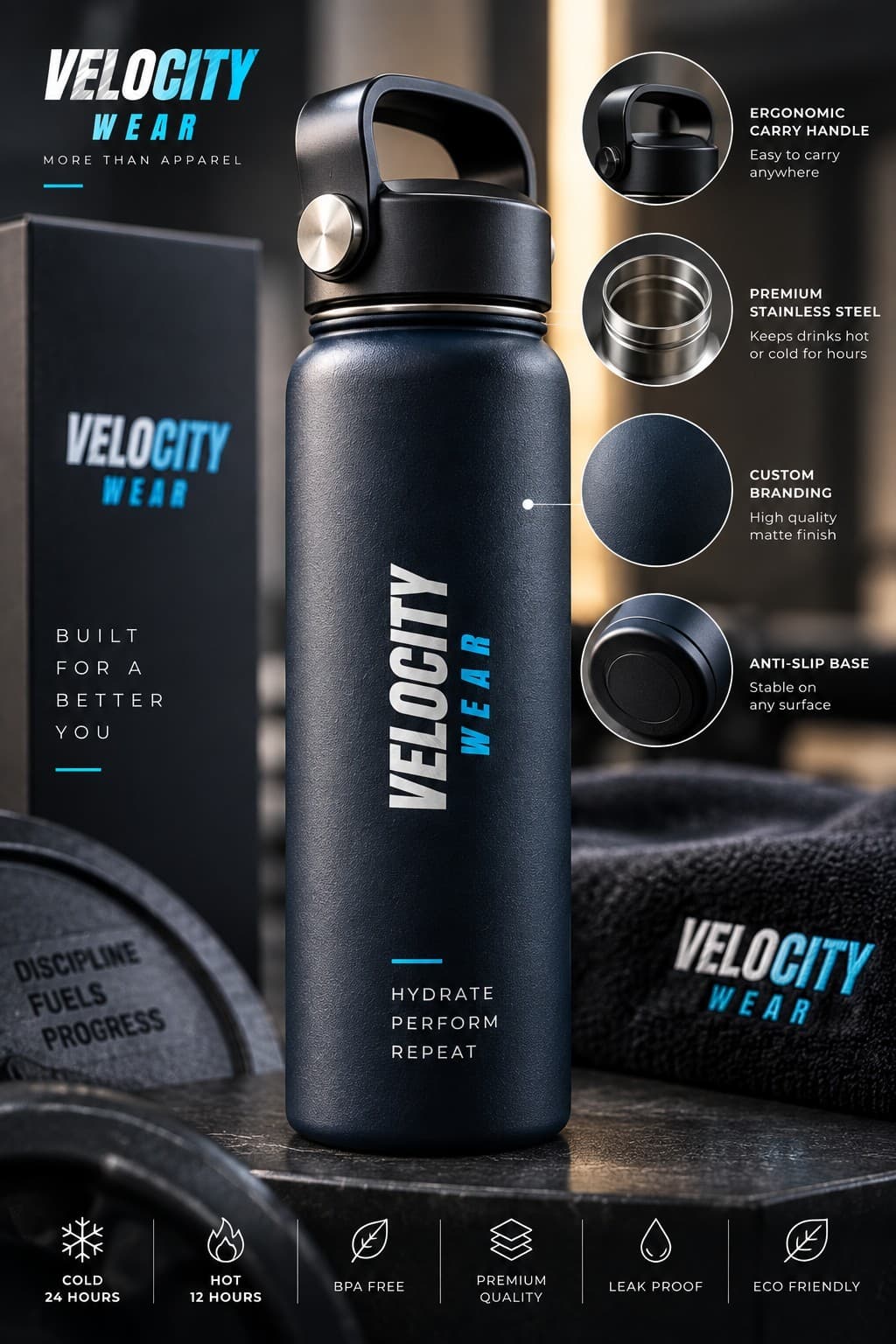
Four things, in order of how often they cause regret. Weight when full, because a bottle that is pleasant empty can be unpleasant to carry. Closure behaviour, because a lid that loosens in a bag will end the product's life. How the branding sits on the curve, which almost never matches the flat mockup. And the actual colour, which shifts between a screen and an object under real light.
That gap between rendering and reality is not specific to drinkware, but it is wider here than almost anywhere else, and it is set out properly in AI mockups vs physical samples. A render is a drawing of an intention; the sample is the product.
When can you skip the sample?
On a straight reorder of a bottle you have already run, where nothing about the specification has changed. Your previous production is the reference and paying again adds nothing. Skip it also if you are ordering a modest first quantity purely to test reception internally, where the 50-piece run is effectively doing the sampling for you.
Do not skip it when the bottle is going to a customer rather than to your own staff, or when the branding is the reason for the purchase. Those are the cases where a surprise is expensive, and the general case for checking before committing is made in questions worth asking a manufacturer.
Test the context as well as the object. If the bottle is going out inside a membership package, put the sample in the package. If it will sit on a shelf, stand it next to whatever it will sit beside. An item that looks right in isolation and wrong in its setting is a common disappointment, and it is entirely avoidable at this stage.
Fix a date for the decision at the point you order the sample. Samples that arrive with no review booked sit on a desk for three weeks, and every one of those days lands on the delivery date at the far end of the job rather than being absorbed somewhere harmless.