Reading a Wholesale Quote for Tracksuits
By The Velocity Wear Team
The per-set figure on a tracksuit quote covers the garment itself, the standard labelling and the bagging. Decoration, private label extras, the sample and freight generally appear as their own lines. Read the quantity the quote was built on before anything else, because a price calculated at 250 sets does not apply to an order of 80, and the band is where most misreadings start.
Which costs sit inside the per-set figure?
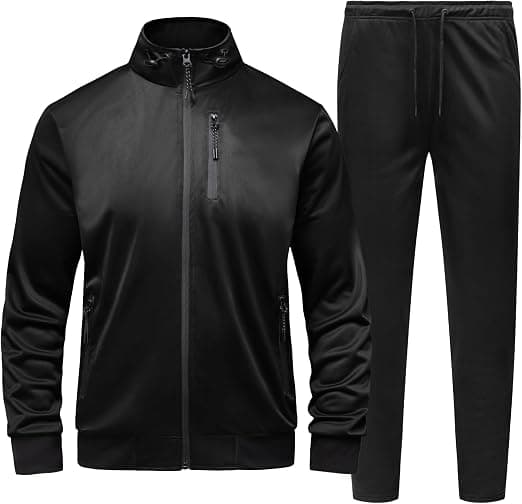
The fabric, the cutting and sewing, the standard size and care label, and bagging the top and jogger together as a set. That is what the from-price of $53 per set describes at the 50-set minimum: a hooded top with its matching jogger, made and ready to hand over. Our tracksuits page carries the current figure and what it includes.
What that figure does not assume is any particular decoration. A plain set and a set with a stitched crest on the chest, a print across the back and names on the hip are the same garment with very different work applied to it, and the quote separates the two so you can see what each element is costing you.
What appears as a separate line?
Screen setup, priced per colour per position. Embroidery digitising, priced once per design and reusable afterwards. Private label items — woven labels, swing tags, printed bags. The £150 sample, which is credited back against the bulk order. Freight to your address. Each one is listed rather than folded in, so you can drop a line item and see immediately what it saves.
Embroidery cost is driven by stitch count rather than physical size, which surprises people whose logo is small but densely filled. How embroidery stitch count affects cost explains where the number comes from and what can be simplified without losing the mark.
How do you read the quantity tier on a quote?
Find the quantity the quote is built on and check it against the bands: 50 to 99, 100 to 249, 250 to 499, 500 to 999, and 1,000 upwards. The reduction against the 50-set price grows as you climb, reaching up to 35% at the highest band. If your number sits three or four sets under a band edge, ask for both prices side by side — occasionally the larger order costs less in total than the smaller one, and it is worth seeing that in writing.
The pricing page lays the bands out, and how much does custom clothing cost explains why the curve flattens rather than continuing downwards forever. Setup costs are fixed; once they are spread thin enough, extra volume stops moving the per-piece figure much.
Which questions close the remaining gaps?
Four are worth asking every time. Which currency is this in, given seven are available and the conversion is yours to carry if it is not the one you budgeted in. Does the figure include freight to my address, or to a port. What is the lead time from approval, and is it working days. And what would change this price — a different fabric weight, one fewer print colour, a hundred more sets.
Write the answers onto the quote itself. A quote with its assumptions annotated is a document you can hand to a treasurer or a finance team; a quote without them is a number that needs explaining every time it is looked at.
Check the quantity written on the document against the quantity you asked for as the very last step. It is the commonest reading error and the most expensive one: a figure that looks attractive because it was calculated at 300 sets when the order is for 90 will not survive contact with the invoice. If the two numbers differ, ask for a fresh document rather than doing the arithmetic yourself.