
Quality Checks on Bulk Tracksuits
By The Velocity Wear Team
Pull three sets from different cartons, lay them flat, and check four things: the colour match between top and jogger, the print or embroidery against your approved artwork, the seams and drawcords, and the size label against the actual measurement. Ten minutes of that tells you more about a run than an hour spent reading the paperwork, and it is the window in which problems are easiest to fix.
What should be checked in the first ten minutes?
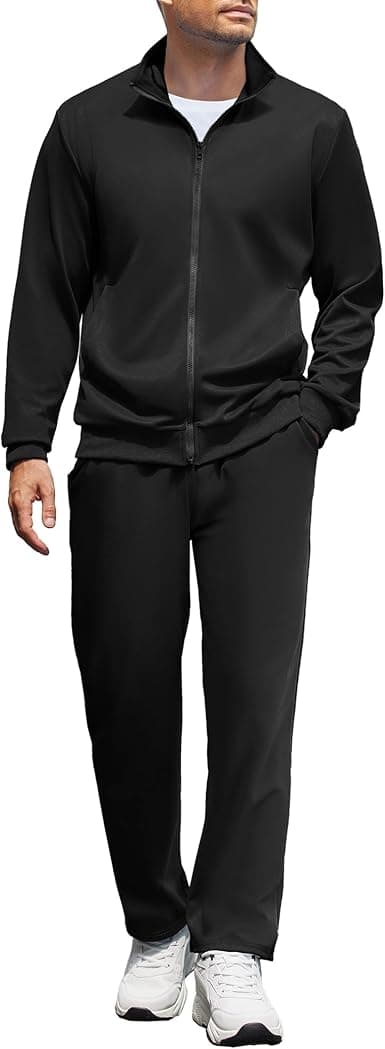
Colour first, because it is the one thing that cannot be corrected afterwards. Hold the hooded top and the jogger from the same bag side by side under daylight rather than office lighting, which shifts blues and greys badly. They should be indistinguishable. Then check the artwork: position, size, and whether the colours match what you signed off. Then the build — seams, cuff ribbing, drawcord ends, zip if the top has one.
Measure one garment rather than trusting the label. Chest across, body length from the high shoulder, inside leg on the jogger. A centimetre or two of variance across a run is normal in cut-and-sew production; five is not. If something reads off, measure a second piece in the same size before raising it, because a single odd garment and a systematic grading problem need different conversations. Sets from our tracksuits range are quoted with the measurement chart attached for exactly this reason.
Which faults are worth raising?
Anything that makes the garment unwearable or unsellable: a print that has shifted position, a crest stitched crooked, an open seam, a broken drawcord channel, a colour that does not match its pair. Raise those with photographs and the carton number, the same day if possible.
What is not a fault is more useful to know. A loose thread end is trimmed, not replaced. Slight softness at the very edge of a large screen print is how plastisol behaves on fleece. Minor variation in pile direction across a brushed fabric is the fabric, not the sewing. Embroidery that looks denser on one garment than another is usually the digitising rather than the run, and embroidery digitising explained covers why the same file behaves differently on different cloth.
How is colour consistency judged across a run?
Within a single dye lot, tops and joggers are cut from the same batch of fabric, which is how a co-ord set matches at all. Across two separate production runs months apart, an exact match is not something any factory can promise — dye lots drift. That is the practical argument for ordering the full season in one go rather than topping up later.
Judging it is simple: same light source, garments flat and touching, viewed straight on rather than at an angle. Fleece reflects light differently depending on nap direction, so turn one piece around and look again before concluding that two shades differ. The vocabulary used on quality reports — dye lot, shade band, pilling, skew — is set out on our glossary page.
What happens when something is genuinely wrong?
Photograph the fault, the carton label and the packing list, and send all three together. Count how many pieces are affected before you write, because the remedy for four sets and the remedy for forty are different. Do not wash or alter the affected garments in the meantime.
The broader receiving routine, including what to record and when to sign, is in checking a delivery properly. Applying it costs an afternoon once, and the alternative is discovering a problem when the kit is being handed out in front of the people who ordered it.

