Tracksuits for Sports Clubs: print or embroidery
By The Velocity Wear Team
Embroider the club crest, print the sponsor, and choose for numbers based on how hard they will be worn. Thread holds up to training and washing better than ink does, which is why crests are stitched. Ink reproduces gradients and fine detail that thread cannot hold, which is why a modern sponsor logo is usually printed. Both can appear on the same set.
Which method suits a club crest?
Embroidery, in almost every case. A crest is small, dense with meaning and expected to look the same in ten years as it does now, and stitching gives it a physical presence on a fleece that print cannot. It also survives the wash cycle a training kit goes through without cracking.
The limit is detail. Thread has a minimum size below which a line disappears, so a crest with a date, a motto and fine heraldry has to be simplified for stitch. That simplification is done at the digitising stage, and embroidery digitising: why the same logo looks different everywhere explains why the same file behaves differently on different cloth.
How are squad numbers and surnames applied?
Usually by DTF transfer, because each one is different and screen printing a unique number per garment is not practical. DTF applies individual artwork per piece with no setup cost per number, which is exactly the shape of the problem. Embroidered names look excellent and cost more, since each is its own machine run.
Decide the position before sizing is finalised. A number on the jogger thigh sits differently on a youth size than an adult one, and on a set that spans both ranges the placement is specified per size rather than once. Club work is described on our sports clubs page.
Does the fabric limit the choice?
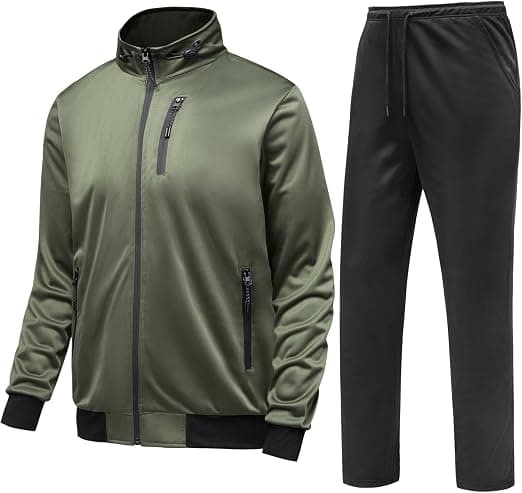
It narrows it. Brushed fleece has a raised pile, and a fine print laid over that pile loses its edges unless the artwork is drawn for it. Sublimation needs a polyester-rich fabric and dyes the fibre rather than coating it, so it cannot print white or light colours onto a dark garment at all. 3D puff needs a bold shape to raise, not a thin outline.
Position matters as much as fabric. Anything crossing a seam, a zip or a pocket edge needs to be planned around, because neither press nor needle handles a step in the surface well. The full set of options is on our wholesale tracksuits page.
Colour is the other constraint people meet late. A print laid onto a dark fleece needs an underbase of white ink beneath it to stop the garment colour showing through, and that underbase counts as a screen in its own right. Thread has no such problem, which occasionally makes embroidery the cheaper option on a dark set even though it looks like the premium choice. Ask for both figures when the garment colour is dark and the artwork is light, because the answer is not the one instinct suggests. Thread colour is chosen from a fixed range rather than mixed to order, so a brand shade sometimes has to be matched to the nearest available rather than reproduced exactly. Ask to see the thread reference against your Pantone before the run starts.
What does a multi-sponsor kit need?
A placement plan before anything else. Four sponsors, a crest and squad numbers is six positions, and each has its own artwork, its own colours and its own setup. Draw it out on a garment outline and circulate that drawing, because sponsors who see their position in advance argue about it before production rather than after.
Set a hard deadline for sponsor artwork and hold it. The comparison between the two methods, and what each one costs to set up, is worked through in hoodie decoration options compared, and the same logic carries across to a tracksuit top.