Pricing T-Shirts for Resale
By The Velocity Wear Team
Work from landed cost, not the from-price. Take the per-piece figure — our t-shirts start at $13 at the 50-piece minimum — then add decoration, labels, packaging and freight divided across the run. That total is what a shirt costs you on the shelf. Set retail against that number, and use the volume tiers to move it down as the design proves itself.
How do you turn a wholesale price into a retail one?
Divide every fixed cost across the run before you touch margin. Setup, sample and freight are fixed; the garment and decoration are per piece. On a 50-piece run the fixed costs land heavily on each shirt. On a 500-piece run of the same design they barely register, which is why the same tee can be uncomfortable at one quantity and comfortable at another. The wholesale t-shirts page gives the garment side; the rest you assemble yourself.
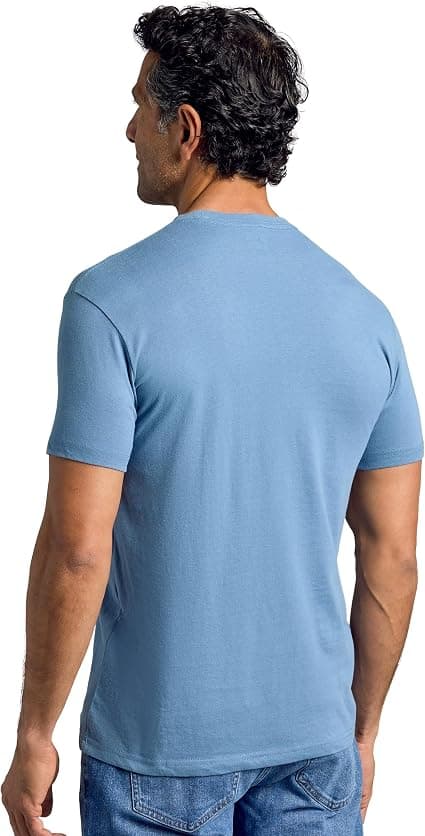
Then decide what you are selling. A 150 GSM tee and a 240 GSM tee sit at different price points in a customer head as well as on your invoice, and combed ring-spun cotton in a boxy fit reads as a different product from a regular-fit basic. Pick the blank for the price you intend to charge, not the other way round.
What costs sit between the shirt and the sale?
The ones people forget are the ones that eat the margin. Payment processing on every online order. Postage and a mailer on every single unit if you ship direct. Returns and exchanges, which on apparel are not rare. Storage, even if it is a spare room. Any marketplace or pitch fee if you sell somewhere other than your own site. None of these are in the wholesale quote and all of them are real.
Private label work belongs in this calculation too, because it is what lets a shirt sell as yours rather than as a printed blank. Woven neck labels, tear-out labels, swing tags and packaging are quoted separately, add to unit cost and usually add more to the price you can charge. If you are selling at events rather than online, band merch for UK tours covers the same maths with a merch table attached.
How many do you need to sell to clear the run?
Divide total spend by your gross margin per shirt and you have the break-even count. Do it before you order, because it tells you whether 50 pieces is a test or a commitment. A design that needs to sell 40 out of 50 to break even is a tight run. One that breaks even at 22 leaves room to give a few away, lose a few to sizing, and still finish ahead.
Does ordering more make the margin work?
It can, and the effect is larger than people expect. Volume discounts reach up to 35% off the 50-piece rate as quantity rises, and the tiers step at 50–99, 100–249, 250–499, 500–999 and 1,000+. Crossing a boundary lowers every unit, not just the extra ones, so a design you are confident in is usually cheaper to buy deep than to reorder twice. The pricing page shows where the steps sit. The counterweight is obvious: unsold stock is money on a shelf, so buy deep on proven designs and shallow on new ones.
What is your plan for the last ten shirts?
Decide that before you order rather than after. Every run leaves a handful of sizes that do not clear, and having a route for them — a bundle price, a giveaway that seeds the next launch, a stall at an event — is worth arranging in advance. Sellers who plan for the tail treat those last shirts as marketing. Sellers who do not end up discounting in a hurry, which teaches customers to wait for the markdown on the next drop and makes the following run harder to sell at full price.