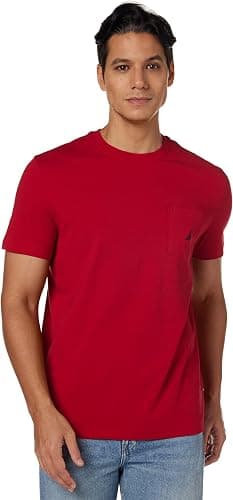
T-Shirts for Sports Clubs: print or embroidery
By The Velocity Wear Team
For club t-shirts, screen printing is the default for crests and sponsor blocks on a run of 50 or more, DTF handles detailed or multi-colour artwork without screens, embroidery suits a small chest crest where the club wants a premium finish, and sublimation is for all-over designs on synthetic fabric. Squad numbers are usually printed, not embroidered, because stitched numbers on a light tee pull the fabric.
Print or embroidery on a club t-shirt?
Print, in most cases. A t-shirt is a light garment - 150-240 GSM combed ring-spun cotton - and embroidery adds weight and stiffness that shows on thin cloth. On a training tee worn in heat, a stitched crest sits heavier against the skin than a printed one. Embroidery earns its place on the heavier end of that range, on a coaches or committee shirt where the club wants something that reads as smarter than the squad kit. We list the decoration methods we run on the wholesale t-shirts page.
Which method suits squad numbers and names?
Printed, and usually DTF for small runs of personalisation. Screen printing sets up per design, so 22 different numbers would mean 22 setups, which makes no sense. DTF prints each name and number individually without screens, holds a crisp edge on small lettering, and survives washing well. Keep numbers to one or two colours and avoid outline-heavy number fonts, because thin outlines are the first thing to break down after repeated washing.
What does a sponsor block need?
A vector file and a decision about colour count. Sponsors send logos in whatever they have, which is often a low-resolution image lifted from a website, and that cannot be reproduced cleanly at chest width. Ask for an EPS, AI or PDF vector early - it is the single most common cause of delay in a club order, as club lead times explains. On colour, every additional screen colour is another setup, so a sponsor willing to accept a single-colour version of their mark saves the club money without anyone noticing on the pitch.
How does the fabric change the answer?
Weight and content both matter. On 150 GSM cotton, a large solid print can feel plasticky and stiff across the chest, so a lighter ink coverage or a slightly heavier garment is worth considering. On 240 GSM, a big front print sits comfortably and embroidery is viable. Sublimation only works on synthetic fabric and on light colours, so it is not an option for a cotton club tee - it belongs to a different garment conversation. 3D puff is dramatic on a hoodie but overpowers a thin t-shirt.
How do you decide, in practice?
Match the method to the mark rather than picking one method for the whole shirt. A typical club order ends up as a screen-printed crest on the chest, a screen-printed sponsor block on the back, and DTF names and numbers where they are needed. That combination is also the one that keeps the per-piece figure sensible, which club t-shirt cost breaks down, and the sports clubs page shows what clubs usually pair with their tees. If the club is choosing between two finishes and cannot agree, order the sample with the finish in question rather than arguing about it from a proof.