T-Shirts for Retailers: cost
By The Velocity Wear Team
Custom t-shirts start at $13 a piece at the 50-piece minimum and fall through five quantity tiers to as much as 35% below that on the largest runs. For a retailer the number that matters is landed cost — garment, decoration, any private label finishing, freight and duty — because that is what the retail ticket has to cover along with your markup and the units that never sell.
What does a retail t-shirt cost at wholesale?
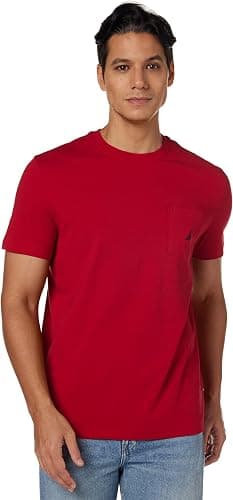
The base is a 150 to 240 GSM combed ring-spun cotton tee, cut regular or boxy, from $13 at fifty pieces. Decoration sits on top and is priced by method and by the number of print positions. If you are putting your own neck labels and swing tags in, that is a further layer. The wholesale t-shirts page carries the garment detail, and the wholesale overview shows the rest of the range if you are building a mixed buy.
How does the tier structure change the maths?
The bands are 50–99, 100–249, 250–499, 500–999 and 1,000 plus. A retailer testing a design at fifty sits at the top of the cost curve, which is the right place to be while you are learning whether it sells, and the wrong place to stay once you know. The step from a test buy to a committed buy is where most of the available margin lives, and it does not require an enormous order — moving from the entry tier to the next one is a change most independents can carry.
It also changes how you plan a range. Six designs bought at fifty each and two designs bought at two hundred each cost broadly similar money and behave completely differently on a shop floor. Where the money goes on a bulk t-shirt order sets out which costs respond to quantity and which do not.
What margin does that leave at retail?
Start from landed cost and decide the multiple your channel needs, rather than working back from a price you would like to charge. A physical shop carries rent, staff and shrinkage that an online-only seller does not. An online seller carries payment fees, returns and acquisition cost instead. Neither of those is in the $13.
Build in the units that will not sell at full price, too. If experience says a tenth of a run ends up discounted, that markdown comes out of the margin on the nine-tenths that did not. Getting the size curve right is the most reliable way to shrink that number.
What costs sit outside the per-piece price?
Freight, duty where it applies, and the finance cost of holding stock between paying for it and selling it. We deliver to the UK, the USA and Europe and invoice in seven currencies, which removes a conversion for most buyers but not the shipping. Timing that holding period well is a large part of retail margin, which is why our lead time guide covers restock cadence as well as production.
How should a first buy be structured?
Narrow and honest. Two designs at fifty pieces each tells you more than six at fifty, because you can give two designs proper space on a rail and proper attention online, and the data comes back clean rather than diluted across a range nobody saw. Six designs shallow mostly teaches you which one happened to be nearest the door.
Keep the base garment constant across that first buy as well. If one design is on a 150 GSM regular tee and another on a 240 GSM boxy one, a difference in sell-through tells you nothing about the artwork. Change one variable at a time and the second order can be made on evidence instead of instinct.
Then commit properly on whichever one works. The step from the entry tier into the next band is where the margin on a proven line actually appears.