Minimum Orders Explained for Restaurants
By The Velocity Wear Team
The minimum is 50 pieces of one design, with sizes mixed freely inside it. A twenty-person venue reaches that on a single polo design once you allow three shirts per person and a few spares for new starters. What splits an order in two is a second design, including a colourway that needs its own screens.
How does the minimum work for a single site?
Count garments in circulation rather than people on the rota. Each member of front of house needs one shirt on, one in the wash and one spare, which is three. Twenty staff on that basis is sixty pieces, comfortably past the minimum, and the sizes can span extra small to extra large within the same run.
If your headcount genuinely produces fewer than fifty, order fifty anyway and keep the balance as replacement stock. Hospitality burns through shirts, and stock in a cupboard is worth more than a second setup six months later.
It helps to think of the minimum as a year of supply rather than a wardrobe for today. A venue that replaces shirts as they wear out will get through the surplus without noticing, whereas a venue that orders exactly enough for the current rota will be back at the same decision within months and paying the bottom-tier rate again.
Do front and back of house count as one design?
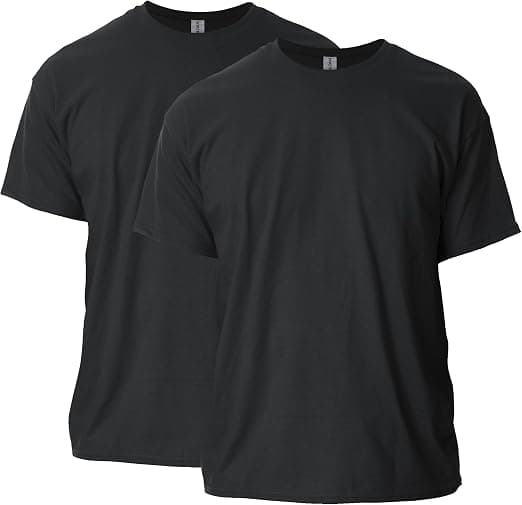
Only if they are the same garment with the same artwork. A black polo for waiting staff and a black tee for the kitchen are two designs even with an identical logo, because they are different garments. Two, therefore two minimums.
Many venues solve this by putting everyone in the same base garment and distinguishing roles with an apron or a cap instead. It is one run, one tier position, and the distinction still reads across the floor.
The other workable approach is to accept two designs but place them together. They do not share a minimum, but they do share your attention, your artwork session and your delivery, and running them side by side avoids the situation where the kitchen is in new kit and the floor is still waiting three weeks later.
Can a small team reach 50 without dead stock?
Yes, if the surplus is genuinely usable. Order the design in a size spread that matches who you hire rather than a flat split, keep the spares in the sizes most people actually are, and avoid anything on the garment that dates it, such as a specific year or a limited promotion.
Dead stock in hospitality is almost always caused by over-ordering the extremes or by printing something time-limited. The general argument is in what a 50-piece minimum actually changes.
How do multi-site groups use the minimum to their advantage?
By consolidating. Four sites ordering fifty each separately pay the 50-piece rate four times. The same four ordering two hundred together land two tiers up, where the discount runs towards the 35% ceiling. Ship to one address and redistribute, or split delivery and keep the single order.
The tiers are 50 to 99, 100 to 249, 250 to 499, 500 to 999 and 1,000 plus, which is set out on the wholesale pricing page. The garments most groups standardise on are listed on our restaurants and hospitality page.
Consolidating has a second benefit beyond price. One run means one dye lot, so every site is wearing the same shade of shirt, which is hard to achieve when four managers order independently across a year. For a group where guests visit more than one venue, that consistency is worth as much as the discount.