Ordering Polo Shirts for Summer Events
By The Velocity Wear Team
For a May or June event, place the order in March or early April. Production is 10 to 15 working days from artwork approval, delivery transit follows, and spring is the busiest stretch of the year for event kit. The spec matters as much as the date: a summer polo needs a lighter knit, a colour that holds up in sunlight and decoration that will not bake.
When does a summer order need to be placed?
Take the first day of the event, subtract a week so the kit can be sorted and distributed, subtract transit, then subtract fifteen working days of production from artwork approval. A June event lands around the start of May for approval, which means the enquiry and the artwork conversation belong in April. Anything involving a sample moves that back into March.
Events with volunteers rather than staff need more slack again, because the headcount is not fixed until late and the temptation is to wait for it. Do not. Order to the confirmed core plus a margin, and accept that a few pieces go unused, because the minimum is fifty per design and a second run cannot arrive inside a fortnight.
Which fabric survives a hot day on site?
A lighter piqué breathes and feels natural against skin, which suits standing crews, hospitality and anything where the shirt is worn all day without much movement. A performance knit with polyester through it moves moisture and dries faster, which suits stewards, sports coaching and anyone walking a site for eight hours. The difference is about airflow against evaporation, and the two are covered in detail in cotton vs poly blend on polo shirts.
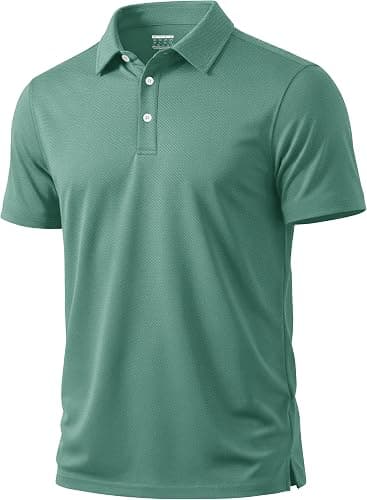
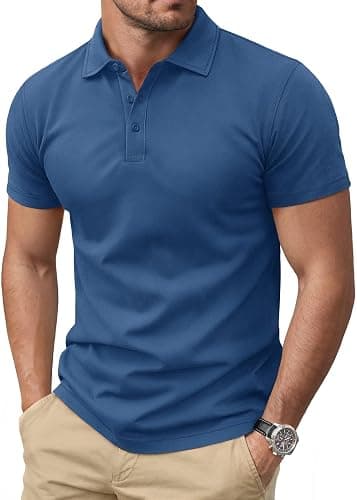
Construction details matter more in heat than they do the rest of the year. Side vents stop the hem riding when people bend and lift. A two-button placket left open behaves better than a three-button one done up. A self-fabric collar sits flatter under a lanyard than a heavy rib does. These are cheap decisions that change how the kit is actually worn.
What colour should event kit be?
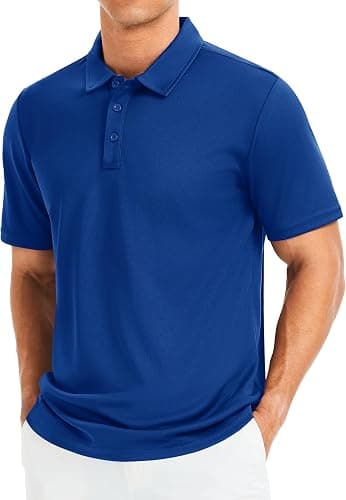
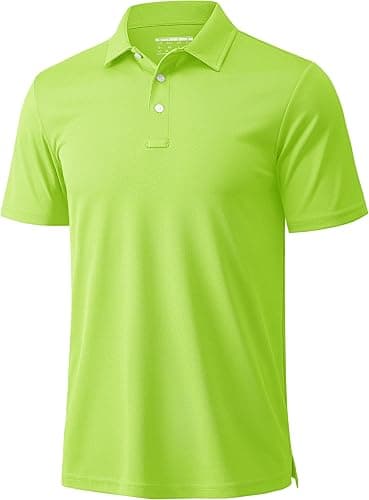
Bright and single. The purpose of an event polo is that a member of the public can find someone wearing one from thirty metres away, and that job is done by the body colour, not the logo. High-visibility yellows, strong oranges and saturated blues all work. Black looks smart in a photograph and is punishing to wear in direct sun.
Colour consistency matters more than usual because event crews are seen as a group. If the order is large enough to run across more than one batch, or if you are topping up an existing set, flag it at order stage so the run can be checked against a reference piece. The vocabulary for specifying colour is on the glossary page if you are writing a brief for the first time, and the current colourways are listed on the wholesale polo shirts page.
What about decoration in the heat?
Embroidery is the safest choice for kit that lives in a van and gets washed between dates, because there is nothing to crack or lift. A screen print is fine and cheaper across large quantities, but keep the ink coverage sensible; a heavy solid block across the whole chest is noticeably warmer to wear than the same design broken up. On a high-polyester performance knit, sublimation gives you all-over colour with nothing sitting on the surface at all.
Whichever route you take, get the positions settled before approval rather than during it. A chest crest, a back name and a sleeve sponsor is three positions and three prices, and shifting one after sign-off restarts the clock on a timeline that is already tight. If the garment is new to you, a physical piece first is worth the £150, credited against the bulk order, and the samples page explains what arrives and how long the build takes.