Ordering Apparel for a New Business Opening
By The Velocity Wear Team
Need this made?Get pricing for this product— free, no obligation, 50 pieces minimum.
Order so the kit lands in time for training week rather than opening week, and order for the team you actually have plus a modest buffer, not the team you hope to have in a year. Then write the specification down properly, because your second order will be placed under more pressure than your first and it has to match.
Aim at Training Week, Not Opening Day
Opening day is not the deadline. Whatever comes before it is: the training days, the soft launch, the photographs for your listings and social accounts. Staff who put a uniform on for the first time an hour before doors open look uncomfortable in it, and it shows in every photo taken that day.
There is a practical reason too. Trying kit on in advance is when you discover that three people need a different size. Discovering that on opening morning leaves you no options at all.
Ordering When You Do Not Yet Know Your Team
New businesses order uniform before hiring is finished, which feels like guessing because it is. The instinct is to buy generously so nobody is left out. That instinct produces a cupboard of sizes nobody wears and money spent before any revenue has arrived.
Order for confirmed staff plus a small buffer weighted to the middle sizes, and accept that you will place a top-up. The minimum is 50 pieces per order with sizes mixed freely within the run, so a second, smaller order is perfectly possible later. What is not possible is un-buying a stack of the wrong sizes.
What a First Order Should Actually Contain
Keep the first order narrow. Breadth is what makes it expensive and slow to agree. A workable starting point:
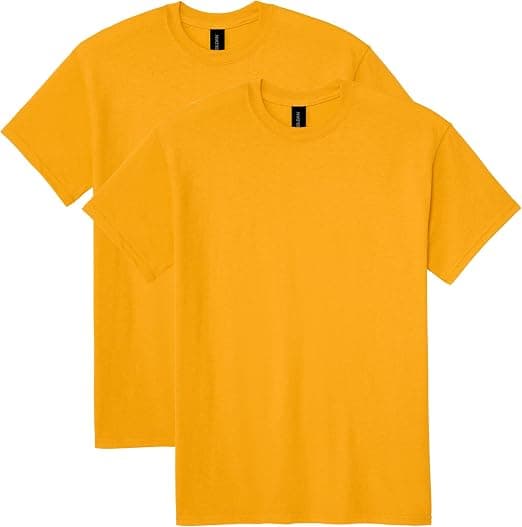
- One core garment per person, usually a polo or a tee, in the quantity people need to get through a working week.
- One layer for cold or outdoor work, which for most sites means a fleece or a sweatshirt.
- Aprons or tabards if the role needs them, since they carry the branding while protecting a cheaper base garment.
- A small number of spares in middle sizes for new starters and accidents.
- Nothing decorative that has not been agreed by whoever has final say on the brand.
Making the Specification Repeatable
This is the part new businesses skip and regret. In six months you will hire someone and need one more polo that matches. If nobody recorded the exact garment, colour, thread reference, logo size and placement, you will end up with a near-match, and near-matches are more visible than mismatches.
Write it into a single document and keep it somewhere that survives a staff change. Include a photograph of the finished garment with a ruler next to the logo if you want to be thorough. It takes ten minutes and saves an argument every time you re-order.
“"Your first uniform order is a decision. Every order after it is a copy, so make sure somebody wrote down what you decided."”
Choosing Decoration You Can Re-Order Cheaply
Decoration method affects how painful your top-up orders are. Screen printing charges setup per colour, which is efficient at volume but less so if you expect to re-order five polos at a time. Embroidery is durable, looks appropriate on staff kit, and reproduces consistently across orders once the design is set up, which is why it dominates uniform.
DTF has no per-colour setup, so it works well for detailed or full-colour logos on small runs. If your brand mark is complex and your orders will be small and frequent, that is worth knowing before you commit to a route.
Beyond Shirts
Branding does not stop at the garment. Aprons carry a logo at exactly the height a customer sees across a counter. Caps handle outdoor and food service roles. Towels are worth remembering for gyms, salons and anything with a wet area, and they read as a considered detail rather than an obvious piece of branding.
Timing the Order Against Everything Else
Opening a business means fifty deadlines converging. Apparel is one of the few that is genuinely predictable, so lock it early. Screen printing and embroidery typically run around 10-15 working days from artwork approval, with tracked UK delivery usually 2-5 working days after dispatch. Production starts at artwork approval, so approving the proof quickly is the single lever you hold. Preview the layout in the free Design Studio and check quantities against the instant price calculator before you commit, since bulk discounts reach up to around 35% as quantities rise.