Joggers for Sports Clubs: cost
By The Velocity Wear Team
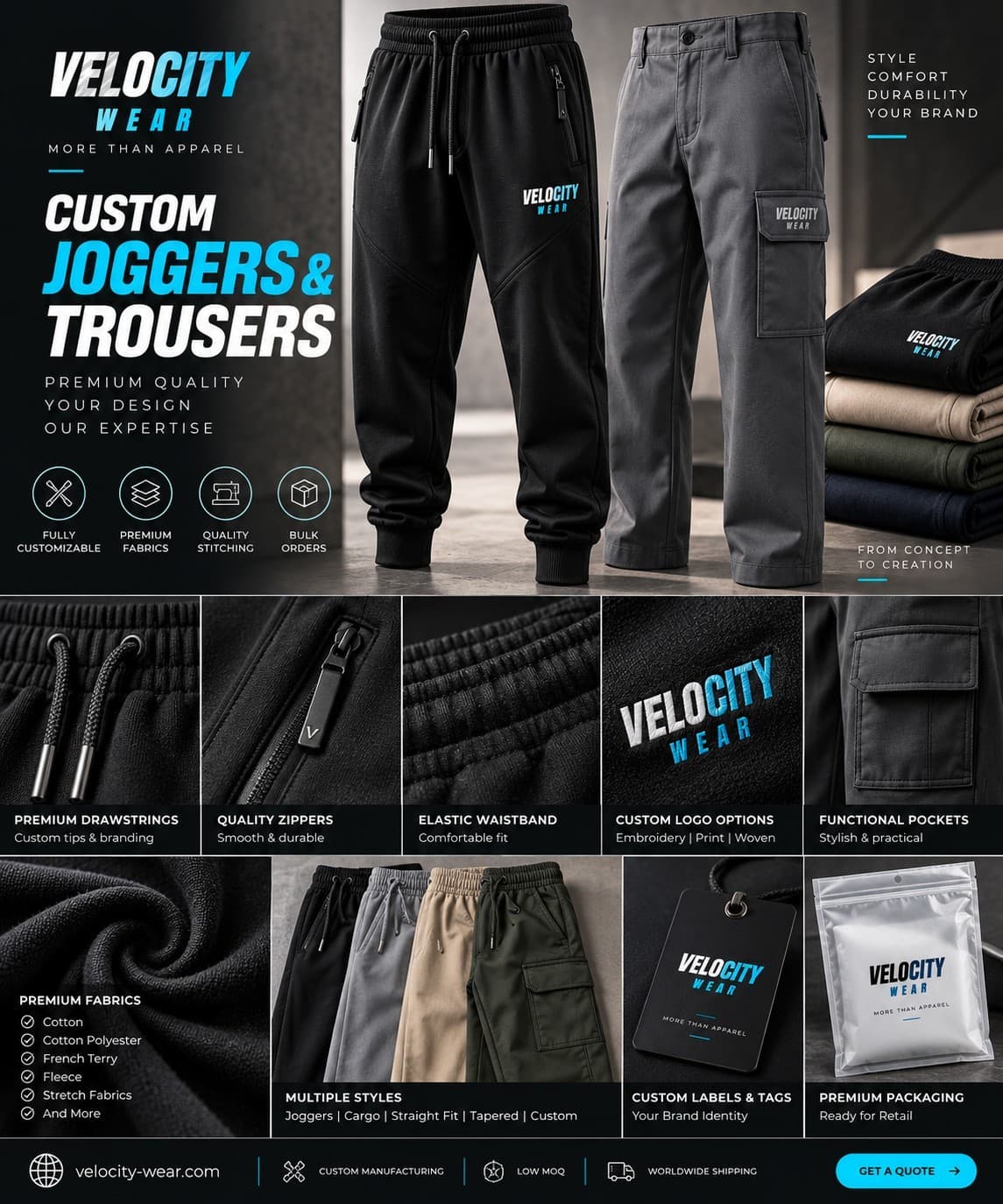
Joggers are $22 a pair at the 50-piece minimum, so a club buying a single squad set is looking at $1,100 for the blanks with decoration quoted separately. Most squads are smaller than 50, which means the real question for a committee is not the unit price. It is where the remaining pairs go, because that decision moves the per-pair figure more than anything else.
Clubs also carry a cost that gyms and brands do not: sponsor artwork that has to be reproduced faithfully and may arrive late. That affects the quote and the calendar together. The wholesale joggers page has the garment detail, and the sports clubs page covers how kit orders usually get structured.
What does a squad set actually come to?
Take the blanks at $22 and add decoration by method. A single sponsor mark screen printed on the thigh keeps the per-piece figure low once the screens have been paid for. An embroidered club crest costs by thread density. If the club wants both a crest and a sponsor, that is two decoration positions rather than one, and the quote reflects that. Fabric does not change the starting figure, so brushed fleece and loopback begin from the same place.
How does a sponsor logo affect the price?
Through colour count, mostly. A sponsor mark with four colours needs four screens, and that cost is fixed per run regardless of how many pairs you order, so it hurts a 50-piece order far more than a 300-piece one. DTF avoids the screens entirely and is often the better answer for a complicated sponsor logo on a small run. The economics are laid out in how many colours your design should have.
Where do clubs find the quantity to reach the next band?
- 1Open the order to the wider membership rather than the first team only.
- 2Include coaches, committee and volunteers, who are usually forgotten and usually want a pair.
- 3Combine age groups onto one design instead of running a separate version per section.
- 4Offer the same pair to parents and supporters as club merchandise.
The bands are 50 to 99, 100 to 249, 250 to 499, 500 to 999 and 1,000 upward, with up to 35% off the 50-piece price at the largest. A club that opens the order beyond the squad regularly jumps a band, and that saving is usually larger than anything a committee can negotiate elsewhere.
Should the club pay or should the players?
Both models work and they have different consequences. Club-funded orders are simpler to administer and let you control the size split, but they come out of one budget in one go. Player-funded orders spread the cost and self-select the sizes, but they need collecting before production starts, because the order cannot be split across payment dates. Whichever route you take, the four-line breakdown in budgeting a bulk jogger order gives you a total to quote from, and club hoodies for UK sports clubs covers the committee side of running an order like this.
If the order is player-funded, quote one price per pair and hold it. Clubs that pass a tiered figure through to members, promising a lower price if enough people sign up, end up either refunding people or absorbing a shortfall when the band is missed by four pairs. Set the price at the band you are confident of reaching, collect against it, and treat any saving from a higher band as club funds rather than a rebate. It makes collection simpler, it makes the deadline mean something, and it avoids the awkward conversation that follows an order landing a band lower than the committee hoped.