Joggers for Gyms: size splits
By The Velocity Wear Team
Weight the middle of the curve and keep the extremes light. A gym ordering 50 pairs usually finds medium and large carry more than half the run, with small and extra-large thinner and anything beyond that ordered only against a named person. Sizes mix freely inside the 50, so nothing about the price changes when you skew the split towards what your floor actually wears.
The split is the one part of a jogger order you cannot fix afterwards without a second run. Everything else, from colour to logo placement, is decided on paper. The curve is decided by people, and people are harder to predict. The gyms and fitness page covers the rest of the kit list, and the wholesale joggers page has the fabric and hem options that quietly affect which size somebody picks.
How should a gym spread 50 pairs across the sizes?
Start with the people you can name. Staff are a known list, so allocate their sizes first and treat those pairs as fixed. What is left is the speculative part, and that is where a curve weighted to the middle protects you. If member merch is part of the run, remember that members self-select and tend to buy slightly looser than staff do, which pushes the curve up rather than down.
Do staff and members need different curves?
They behave differently even on the same design. Staff wear the pair because it is the uniform, so they take the size that fits. Members buy because they like it, so they take the size they want to wear, and that is usually a size that sits away from the body. If you are running one design across both groups, build the curve from the staff list and add the speculative pairs one notch larger than you would instinctively choose.
How do you avoid eight pairs sitting in a cupboard?
Ask before you guess. A short form sent to staff, with a closing date and a stated fallback, converts most of the speculation into fact. For the member portion, hold a handful of pairs unallocated instead of pushing them out, because an unclaimed pair in the stockroom is replacement stock and an unclaimed pair given away is a size you now cannot cover. The handout mechanics are covered in handing out joggers to a team.
Does the hem style change the size somebody needs?
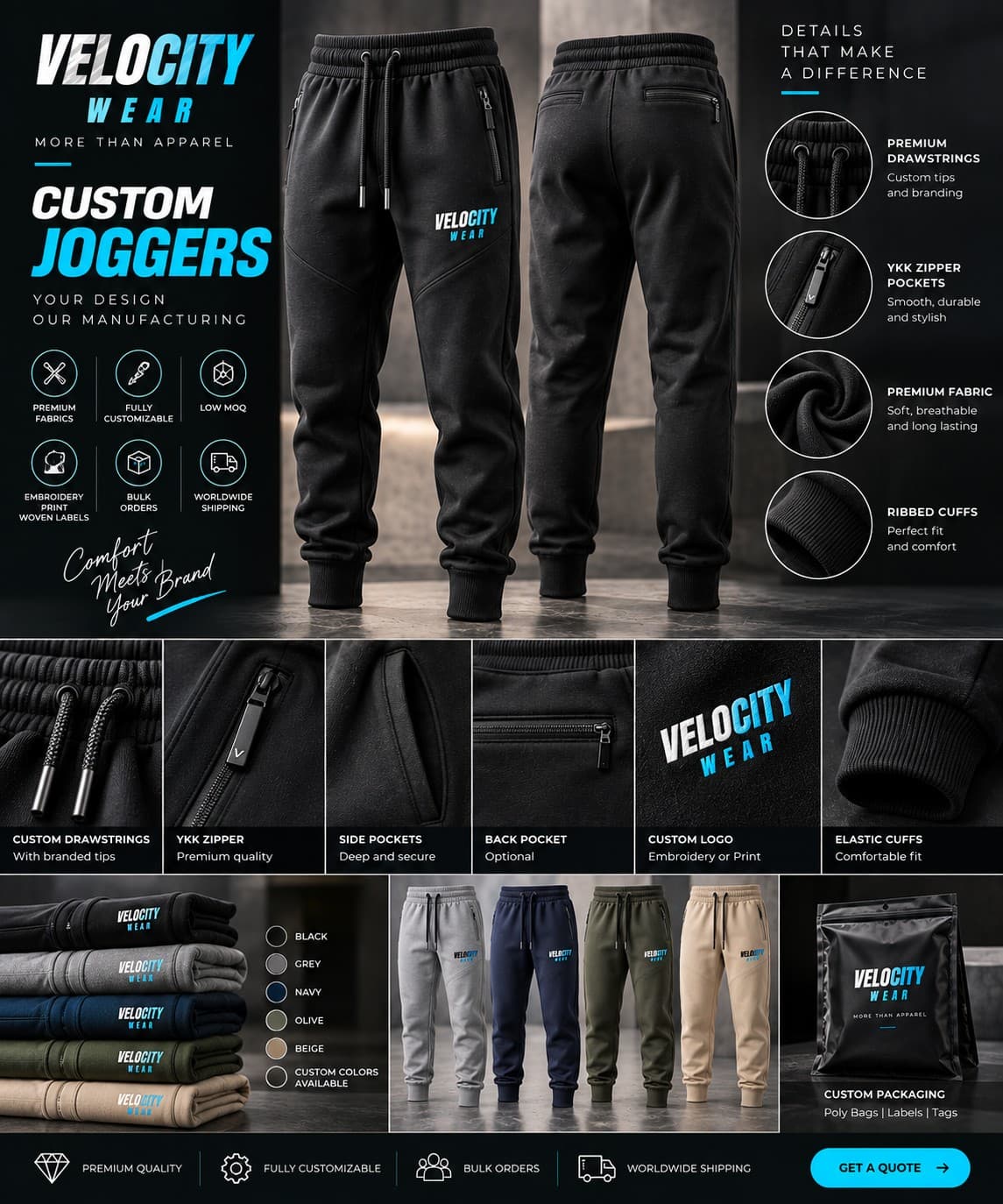
It changes how the length reads. A cuffed hem gathers at the ankle, so a pair that is slightly long still sits correctly and the size choice is driven by the waist and seat. An open hem falls straight over the shoe, which makes length visible and means taller wearers occasionally size up for the leg rather than the waist. Say which hem you have ordered when you collect sizes and that ambiguity disappears.
Fabric plays a smaller part but it is not nothing. Brushed fleece has more bulk through the leg than loopback, so a close-fitting cut in fleece feels tighter than the same size in the lighter knit. If you are ordering both over time, keep a note of which fabric each curve was built for. The wider principles of building a size run are in apparel sizing and fit, and they apply to a gym floor as much as to a retail rail.
Write the final numbers down somewhere the next person will find them. Gyms turn over staff and change managers, and the size curve is the most valuable piece of institutional memory an apparel order leaves behind. A record showing what was ordered, what was handed out and what was left turns the following run from guesswork into arithmetic. Keep it with the artwork file and the colourway reference, because those three together are what a repeat order actually needs. The difference between a gym placing its third order in ten minutes and one starting from scratch is nothing more than that.