Handing Out Joggers to a Team
By The Velocity Wear Team
Collect sizes in writing before you order, hold a small buffer back rather than allocating every pair, and bag each pair with a name on it if more than about twenty people are collecting. A run of 50 joggers mixes sizes freely, so the split is entirely yours to choose. What ruins a handout is not the manufacturing, it is a size list gathered by memory.
Once the boxes arrive the job becomes logistics. Doing the three steps below in order takes an afternoon. Doing them out of order turns into a fortnight of chasing people, and usually ends with four pairs nobody will claim. Start at the wholesale joggers page for the garment detail and the pricing page for what a buffer actually adds.
How do you collect sizes without chasing people for a fortnight?
Give people a deadline and a default. A short form with the sizes listed, a closing date, and a stated fallback size for anyone who does not reply removes the chasing entirely. People who care will respond; people who do not have accepted the default by saying nothing. Include the fabric in the question, because a brushed fleece pair fits differently from a loopback one and somebody will want to know before they pick.
Say whether the hem is cuffed or open at the same time. A cuffed leg sits on the ankle and the length matters less. An open hem drapes over the shoe, so taller wearers sometimes size differently. One sentence in the form prevents a handful of swaps later.
Is bagging by name worth the extra handling?
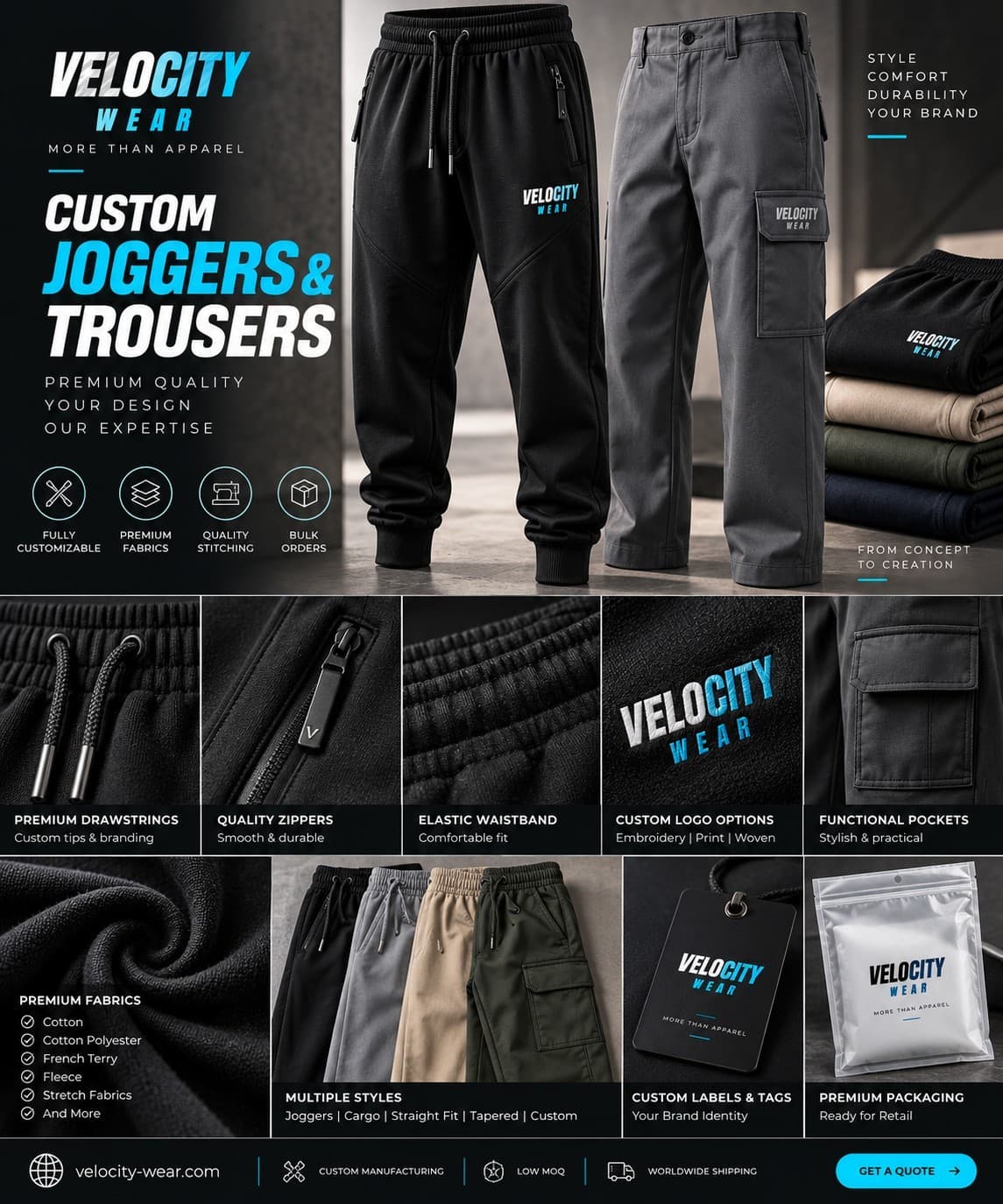
For a small group, no. For anything above roughly twenty people, it pays for itself in the first ten minutes. A bag with a name on it removes the rummaging that turns a neat stack into a jumble, and it makes an absent person's pair easy to set aside. Polythene bags are quoted per job if you want them branded, but plain bags and a marker pen do the same job for a one-off handout.
How many spare pairs should you hold back?
Enough to cover the sizes you know will be contested, which in practice means the middle of the curve. Holding a few back is far cheaper than a second run, because a repeat order is still 50 pieces and still takes 10 to 15 working days from artwork approval. The thinking in when to reorder and how much buffer to hold applies to a staff handout just as much as to retail stock.
What happens when someone leaves or a size is wrong?
This is what the buffer is for. Keep the unallocated pairs in one place with the sizes visible, and log who has what. A wrong size caught in week one is a swap out of the buffer. The same wrong size caught in month three, after the buffer has been given away, is a request for a new run. If your size guesses were shaky to begin with, apparel sizing and fit explains how a size curve goes wrong and how to tighten it next time.
One more habit worth keeping: write down the final allocation. When the next intake arrives, you will know exactly which sizes moved and which sat, and the second order is a much better guess than the first.
Where the handout covers several sites or a rota, work in waves rather than all at once. Allocate and bag by location, send one box per site, and keep the buffer centrally so a shortage anywhere can be covered from one place. Splitting the buffer across sites is how an organisation ends up with three unusable pairs in three different cupboards. Record the fabric and hem alongside the sizes, too, because the next person to run the order will not remember whether the brushed fleece version or the loopback one was the popular one, and that detail decides whether the repeat lands well.