Fits and Cuts for Wholesale Joggers
By The Velocity Wear Team
Three cuts cover most bulk jogger orders. A regular fit follows the leg with a light taper and suits the widest spread of people. A boxy fit is fuller through the thigh and shorter in the rise, which reads as streetwear. An oversized fit is deliberately roomy everywhere and sizes down: people who wear a large in a regular fit often want a medium. Pick one and build the size run around it.
What do regular, boxy and oversized really mean?
They describe where the extra fabric goes, not how big the garment is overall. Regular keeps a consistent amount of room from hip to ankle. Boxy adds width through the seat and thigh while keeping the length ordinary, so it looks relaxed without looking long. Oversized adds room in every direction and usually drops the crotch, which changes how the garment hangs rather than just how it fits. None of this is standardised across the industry, which is why a measurement chart beats a label every time.
How does each one size on a real team?
Regular is the safe choice for staff kit because most people order their usual size and it works. Boxy suits a self-selecting audience who know what they are buying and will size to taste. Oversized is the one that causes returns, because half the group orders their normal size and finds the garment swallows them. If you are ordering oversized for a team rather than for resale, publish the actual measurements and tell people to size down. The wider problem is set out in apparel sizing and fit.
Cuffed or open hem?
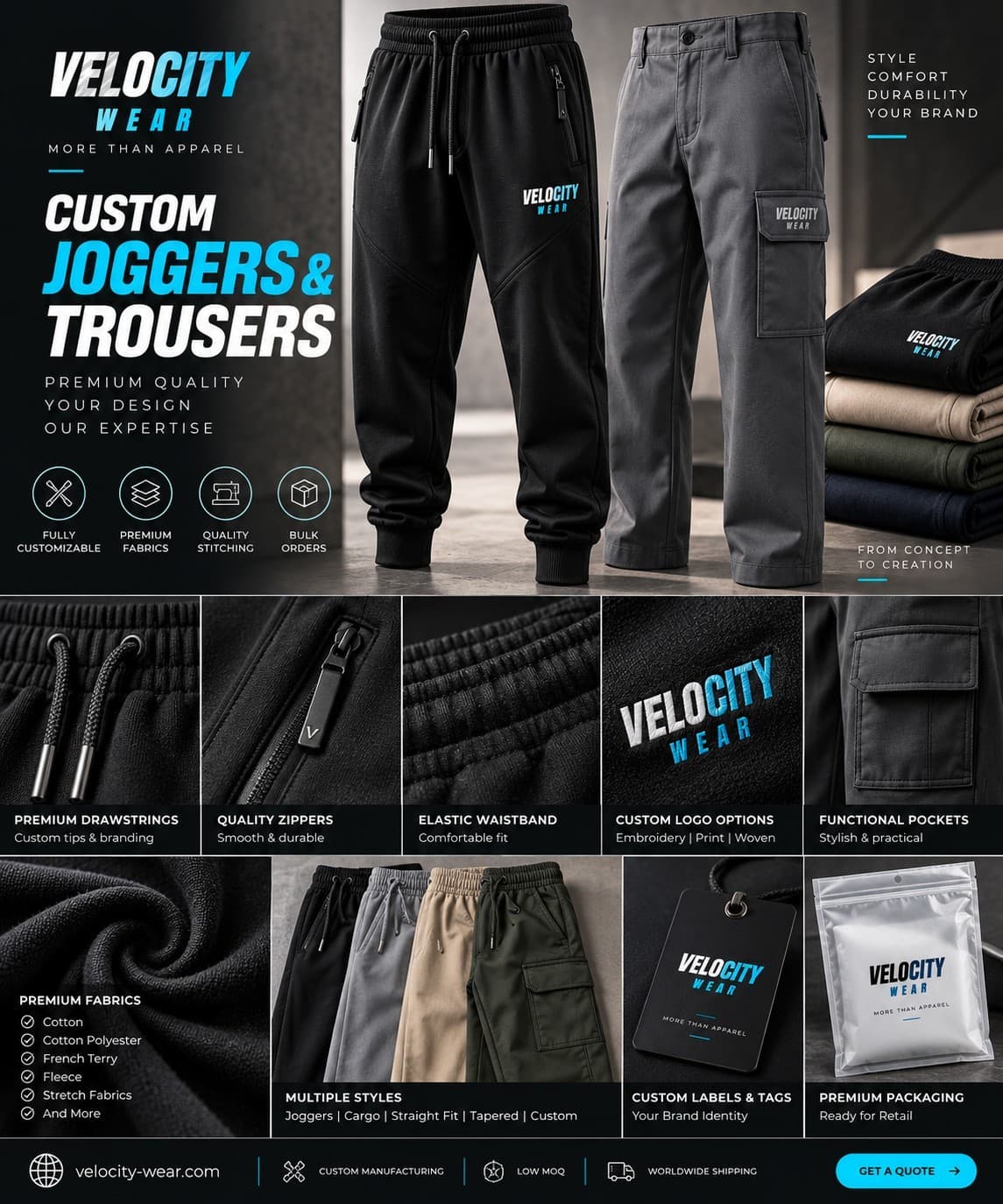
A cuff gathers the fabric at the ankle and makes the taper visible, which is what most buyers picture. It also has to fit an ankle, so it is less forgiving across a group. An open hem falls straight, fits more people without adjustment and works better where you are ordering for a crowd whose measurements you do not have. On an oversized cut the open hem exaggerates the volume, which may be the point or may be the problem.
How does fabric change the way a cut wears?
Brushed fleece has more body, so a boxy cut in fleece holds its shape and looks intentional. Loopback is flatter and drapes, so the same cut reads as softer and less structured. Heavyweight cloth in an oversized fit is a lot of garment; lightweight cloth in a regular fit almost disappears. Decide the cut and the fabric together rather than one after the other, because a cut chosen against the wrong cloth never quite looks like the drawing it came from. Pin both down before the sample is made.
Can you mix fits inside one order of fifty?
No. The fifty-piece minimum applies per design, and a different cut is a different design even with identical artwork, so a regular run and an oversized run are two lots of fifty. Sizes inside each fifty are completely flexible, which is the flexibility most buyers actually need. Pricing starts at $22 a piece at fifty on our wholesale joggers page, and the terminology used on spec sheets is defined in our glossary. If this is your first order, the sequence is laid out in your first bulk jogger order.
Whatever cut you settle on, publish the measurements with the product rather than a letter. Waist relaxed, waist stretched, inside leg, thigh and cuff opening, taken flat and in centimetres, let anyone compare against a garment already in their wardrobe. It is the simplest change a brand can make to reduce exchanges, and for team orders it turns a sizing conversation into a spreadsheet. Ask the supplier for the graded measurements at the sample stage so you have them before anything is sold.