
Embroidery vs Puff Embroidery on Joggers
By The Velocity Wear Team
Flat embroidery stitches thread directly onto the fabric and holds fine detail well. 3D puff lays stitch over a foam layer so the design stands proud of the garment, which looks bold and streetwear-led but destroys small detail. On joggers, flat stitch suits a discreet hip or waistband mark; puff suits a chunky badge above the cuff.
What is physically different between the two?
Flat embroidery is thread laid down in a stitch pattern, following the surface of the fabric. Puff embroidery places a strip of foam under the stitching, and the needle both covers and perforates it so that the excess tears away cleanly, leaving thread raised over a cushion. The height is real, not an illusion of dense stitching.
That difference decides what each can render. Flat stitch can follow a fine outline and hold a counter inside a letter. Puff has to cover its foam completely, so every stroke needs enough width to sit over the raised core. Thin lines simply cannot do that, which is why puff designs look like they were drawn with a marker pen. Our puff print service page shows what the finish looks like in practice.
How does each affect the cost?
Both carry a one-off digitising charge and then a per-piece cost driven by stitch count, which means neither falls away with volume the way a screen setup does. Puff usually runs a little higher per piece, because the stitching has to be denser to cover the foam and the machine runs slower through it.
The bigger cost lever on either method is the size and density of the design rather than the technique. A large badge in flat stitch can cost more than a small one in puff. Getting the design to the smallest size that still reads properly is the decision that moves the number, and the relationship is explained in how embroidery stitch count affects cost.
Where does each belong on the garment?
Flat embroidery goes wherever a small permanent mark belongs: the hip, beside the pocket, on the back of the waistband. It reads as quality, survives constant washing and never competes with whatever is on the top half of the outfit. It is the safer choice on staff kit and on anything a client has to sign off against a brand guideline.
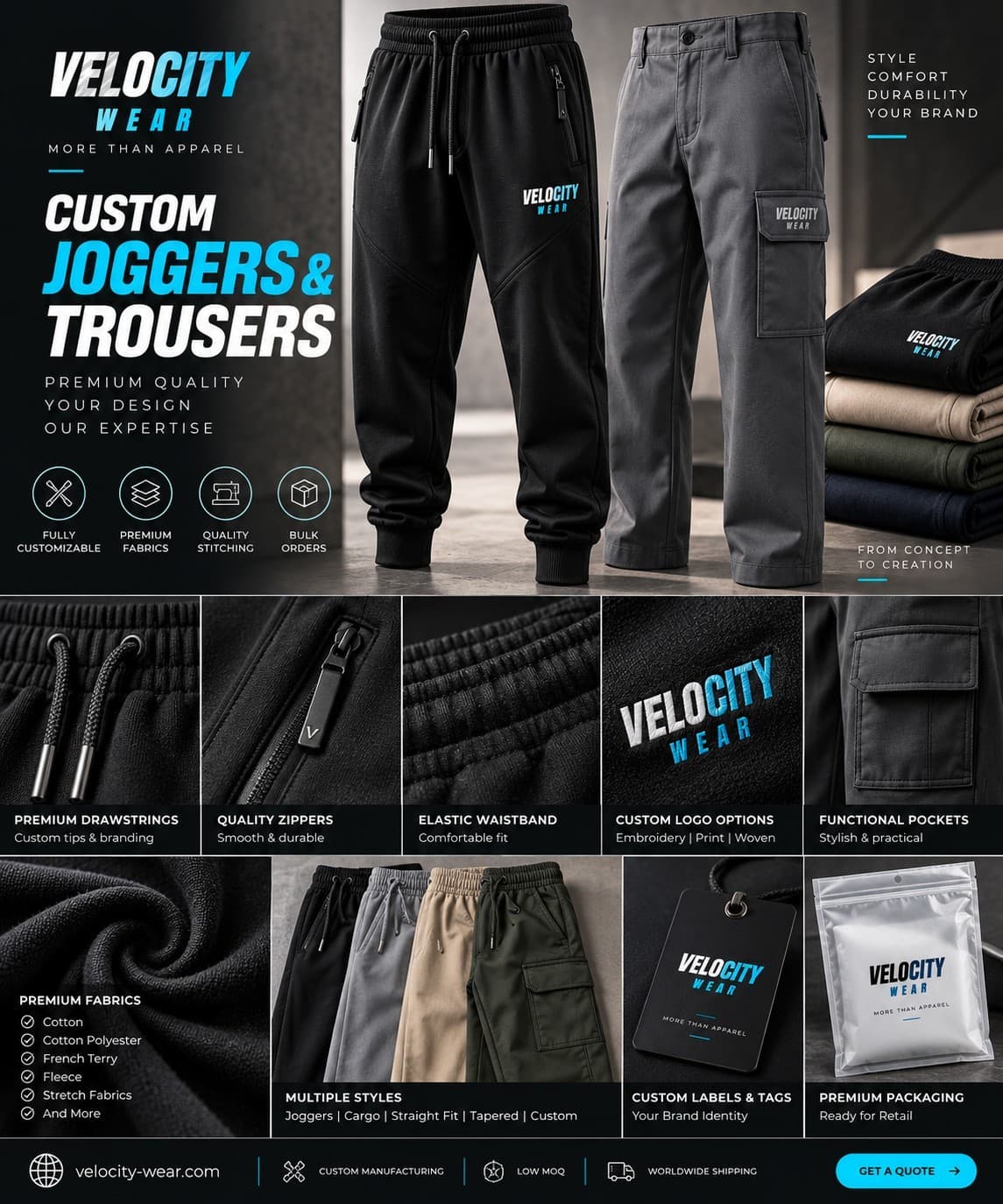
Puff belongs above the cuff or on the outer thigh, where the raised finish is seen and where nothing rubs against it all day. Avoid it under a waistband, where it sits against the body and fights a belt, and avoid it on any panel that folds. Both need the panel hooped flat and clear of pocket bags, so position is a construction question first and a design question second. The base garments are on the wholesale joggers page.
So which should you pick?
Pick flat embroidery when the mark is small, when it includes type or fine linework, when the garment is workwear or corporate kit, or when it has to be a close match to a printed logo used elsewhere. It is also the right answer whenever a brand guideline governs the mark, because it reproduces the shape faithfully.
Pick 3D puff when the design is bold, simple and few-stroked, when the garment is a retail piece where the finish is part of the appeal, and when the placement is somewhere the raised texture will not be crushed. If you are undecided, sample both at £150 each, credited against the bulk order, because the difference is a tactile one no proof conveys. Other non-print routes are covered in appliqué, patches and woven labels.

