How to Run a Merch Shop for a Club Without Losing Money
By The Velocity Wear Team
Need this made?Get pricing for this product— free, no obligation, 50 pieces minimum.
A club merch shop works best as a series of short pre-order windows rather than a permanent stock room. You open the shop for two or three weeks, take the money up front, close it, then place one consolidated order for exactly what was sold. The club never has cash sitting in unsold sizes, and pooling everyone into a single run is what gets you into the quantity where bulk pricing starts to matter.
Pre-Orders or Stock: Choose Deliberately, Not by Accident
There are only two models and most clubs drift into the wrong one. Holding stock means buying a range up front and selling from a box at home fixtures. It is satisfying, people walk away with the item on the day, and it is how clubs end up with eight extra-large training tops nobody wanted. Pre-ordering means the club commits nothing until the money is in. It is slower for the buyer and far safer for the treasurer.
Start on pre-order. Once you have run two or three windows you will know which one or two items sell every week regardless, usually a plain club hoodie in the middle sizes, and those are the only things worth holding spares of. Everything else stays pre-order until proven otherwise.
Collecting Sizes Without Chasing Forty People
Sizing is where merch shops quietly die. Use a form that forces a selection from a fixed list rather than a free-text box, because a free-text box gets you "medium-ish" and "same as last time". Publish real measurements in centimetres alongside the S/M/L labels: chest width flat and body length. Adults routinely order one size down in a fitted tee and one size up in a hoodie they want to wear over a base layer, so tell them which fit each garment is.
If you can, take one sample of each garment to a training night and let people hold it. Ten minutes of that removes most of the exchange requests later. If samples are not practical, ask people to lay a garment they already own flat and measure across the chest, then compare against your chart. It works better than any amount of sizing guidance.
Money Goes in Before the Order Goes Out
One rule keeps a club shop solvent: nothing gets ordered on a promise. Payment closes the window, not intent. Reconcile names against payments before you commit the order, because chasing a parent in November for a hoodie ordered in September is a genuinely miserable job and it turns a fundraiser into a grudge. Decide up front, in writing, who carries the risk on any spare pieces the club chooses to buy, and keep merch money visible in the club's accounts rather than passing through someone's personal account.
What Actually Sells at a Club
Ranges get too wide too fast. Five lines sell better than twelve because a short list is a decision and a long list is homework. The pattern is fairly consistent across sports.
- A plain club hoodie in one or two colours. It outsells everything else and it is the only item usually worth holding spares of.
- A training tee that matches what the coaches already wear. People buy the thing they see on the pitch, not the thing in a catalogue.
- Something for parents and supporters that is not playing kit. A zipped mid-layer or a beanie shifts better than a replica shirt.
- Personalised items with initials or a squad number, priced separately because they cost more to decorate and cannot be resold if someone changes their mind.
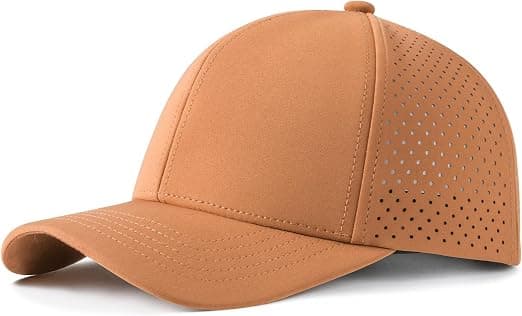
- One cheap add-on such as a cap or a drawstring bag, which lifts the average order without adding much complexity.
Minimums, and Why a Window of Twelve Is a Problem
Velocity Wear works to a 50-piece minimum per order with sizes mixed freely inside the run, so a window that gathers fourteen orders leaves you short. You then have three options: extend the window, top it up with a few club-held spares in popular sizes, or fold the juniors and seniors into the same window so the whole club orders together. The third one is almost always right. Bulk discounts reach up to around 35% as quantities climb, which is the difference between merch being a fundraiser and merch being unpaid admin that breaks even.
“"A merch shop that sells out is a fundraiser. A merch shop with a cupboard full of 3XL is a fundraiser running backwards."”
Two Windows a Season, Timed Backwards From the Handover Date
Most clubs need a pre-season window and a Christmas window. That is it. Work backwards from the date you want to hand items over, and remember that production starts at artwork approval, not at order placement. As qualitative guidance, screen printing and embroidery run around 10 to 15 working days from approval, while sublimated kit and more complex jobs sit nearer 15 to 20, with tracked UK delivery typically 2 to 5 working days after dispatch. Approving a proof promptly is the single cheapest thing you can do to protect a deadline.
Write the Specification Down So Year Two Matches Year One
This is the part clubs skip and regret. Keep a one-page record of the garment code, the exact colour name, the decoration method, the ink or thread colours, the print or embroidery dimensions, and the placement measured from the shoulder seam rather than described as "chest". Save the approved proof with it. Reorder against that record, not against memory, or the second batch of hoodies comes back half a shade off and somebody notices at presentation night. You can lay out and preview placements in the free Design Studio before you commit, and the instant price calculator shows what changing quantity does to the per-piece cost.