How Do I Order Uniform for Shift Workers?
By The Velocity Wear Team
Need this made?Get pricing for this product— free, no obligation, 50 pieces minimum.
Work out how many days someone wears kit between realistic laundry cycles, then multiply, rather than ordering one set per person. For most shift patterns that lands at around three sets each: one on, one in the wash, one in the drawer. Then add buffer stock for starters, damage and the sizes you will inevitably underestimate.
Count Wear Days, Not Heads
A day shift worker doing five days a week can just about survive on two sets if they are organised. Someone on four twelve-hour nights in a row cannot, because there is no gap in which to wash anything. Rotating patterns are worse again, since the laundry window moves around the week. Look at the actual rota, find the longest run of consecutive shifts anyone works, and make sure a person can get through that run without wearing something they wore the day before. That figure, not the staff list, is what you are ordering against.
Personal Issue or Pooled Kit
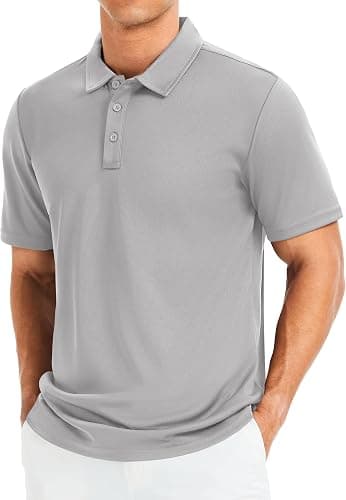
Pooled kit sounds efficient and rarely is. It reads as pooled to customers, because sizing drifts and garments end up on the wrong bodies, and it goes through laundering faster because nobody owns it. It also makes personalised names impossible, which is a genuine loss for front-of-house roles. Personal issue costs more up front and is cheaper over two years, because people look after garments with their name in the collar. Pooling makes sense for genuinely shared items: freezer coats, wet weather layers, visitor hi-vis. It rarely makes sense for polos.
Sizing People Who Are Never in the Building Together
This is the practical headache of shift work. You cannot hold one fitting session, because a third of the team is asleep. Two things fix it. Order a sample set of sizes in the styles you have chosen and let it travel between shifts with a simple sign-off sheet, so people try on rather than guess. And publish flat measurements, chest across from pit to pit and body length, rather than relying on the letter on the label, because size letters vary between brands and everybody knows it.
- Record for each person: name, role, site, shift, size in each garment, and whether they have tried the sample or guessed.
- Note anyone who needs a different fit, a longer body length or a specific style, before the order rather than after it.
- Add a buffer of the middle sizes, which is where starters and damage replacements will almost always fall.
- Note conditions by role, not by site, because a chiller picker and an office-based supervisor need different layers under the same roof.
- Keep the list somewhere shared and dated, so the next order starts from real data instead of memory.
Nights, Cold Stores and Everything In Between
Shift patterns often cross conditions the day team never meet. Night work outdoors or around vehicles usually pushes you towards high-visibility layers, and the requirements for those are set by the risk assessment rather than by taste, so check current official guidance rather than copying what another company wears. Temperature matters too. A site that is comfortable at two in the afternoon can be cold at four in the morning with the doors open for deliveries. Order a layer that can be added and removed rather than a single heavier garment, and put the logo on both the base layer and the outer, or your night team is unbranded whenever they are cold.
“"Count shifts, not staff. The rota is the thing wearing the uniform, and it never takes a day off."”
Starters, Leavers and the Buffer You Should Have Ordered
Shift operations tend to have steadier turnover than office teams, which means a slow, constant demand for replacement kit. If the cupboard is empty, two things happen: new starters spend their first fortnight in the wrong clothes, and everyone else quietly hoards spares because they have learned that the store runs dry. Holding a modest buffer of the common sizes removes both problems. It is also cheaper per piece than the emergency top-up order you would otherwise place three months later.
One Consolidated Order Beats Four Small Ones
Splitting the order by shift or by department feels tidy and costs money. The minimum is 50 pieces per order with sizes mixed freely inside the run, and bulk discounts reach up to around 40 per cent as quantities rise, so combining every shift into a single run is the single biggest lever you have on cost per piece. Production starts at artwork approval rather than order placement, so get the logo signed off early. As a guide, embroidery runs around 10 to 15 working days from approval, with UK tracked delivery typically 2 to 5 working days after dispatch. Use the instant price calculator to see what consolidating actually does to the number before you decide.