How Do I Order Clothing for a Team With Mixed Sizes?
By The Velocity Wear Team
Need this made?Get pricing for this product— free, no obligation, 50 pieces minimum.
Mixed sizes are free. The 50-piece minimum applies to the order, not to each size, so a run of fifty split across small to 3XL is completely normal. What decides whether the order lands well is the size sheet: get a sample garment in front of the team before you collect sizes, use the supplier's measurements rather than the labels people assume they wear, and expect a couple of swaps regardless of how carefully you do it.
The Minimum Is Per Order, Not Per Size
This trips people up constantly, usually because they have been quoted elsewhere on a per-size basis. Fifty pieces in total is the threshold, and you distribute those however the team needs. One 3XL and one XS inside a run of fifty is fine. The only sizes that get awkward are the extremes, where stock can be thinner, so flag those early rather than at the point of ordering.
Never Collect Sizes From Memory
Ask people what size they are and you will get what size they were, what size they buy in one particular high street shop, or what size they would like to be. None of those map onto a workwear manufacturer's chart. Send round the actual size guide with chest measurements in centimetres, and ask people to check against a garment they already own and like the fit of.
Size Labels Are Not Standardised
A large in one brand can sit closer to a medium in another, and workwear brands generally cut differently from fashion brands. Two manufacturers can both be right and still be two inches apart on the same label. This is why the number on the chart matters more than the letter on the tag, and why mixing brands within one uniform range produces more sizing complaints than anything else.
Order a Sample Before the Sheet Goes Out
For any order you expect to repeat, a single garment in a mid size is the best money you will spend. Let people handle it, try it, check the length. You will catch fit issues, sleeve problems and the fact that a particular style runs short in the body, all before you commit fifty or two hundred pieces to the same spec. It also settles arguments quickly.
Unisex, Women's Fit, or Both
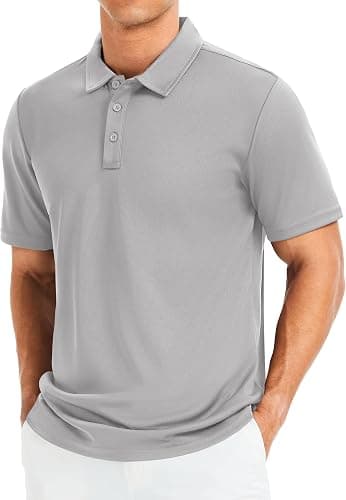
Unisex is the simplest option and works reasonably for outer layers. For fitted garments such as polos and softshells, offering a women's cut alongside it makes a visible difference to how the team looks. Both cuts can usually sit in the same order and count towards the same minimum. The important part is to ask rather than assume, and to make it a genuine choice instead of a default.
Getting the Size Sheet Right
A workable process for a team order looks roughly like this.
- Circulate the supplier's measurement chart, not just the S to XXL letters.
- Order one sample garment and let people try it before sizes are confirmed.
- Ask for cut preference, unisex or women's, at the same time as the size.
- Set a hard deadline for responses and default non-responders to a stated size.
- Keep the finished sheet somewhere you will be able to find it for the next order.
“"Everyone knows their size. Almost nobody knows their measurements. Ask for the second one."”
Check the Decoration on the Extremes
Decoration is normally applied at one size across the whole run, which means a chest logo scaled for a large will look oversized on an XS and slightly lost on a 3XL. For a small chest mark this rarely matters. For a large front print it very much does, and it is worth asking whether the print can be scaled down on the smallest sizes. Nobody checks this until they see the small garments hanging next to the large ones.
Build In a Small Buffer
Somebody will be away when sizes are collected, somebody will give the wrong one, and somebody will join next month. Adding a few extra pieces in the middle sizes costs far less per unit than placing a separate small order later, and it saves you having to reach the minimum again for two garments. Where names or numbers are involved, though, keep the buffer blank and personalise it afterwards.