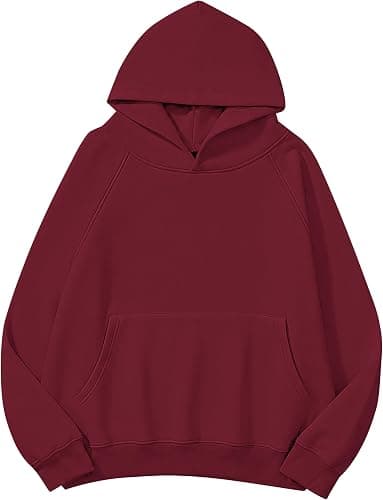
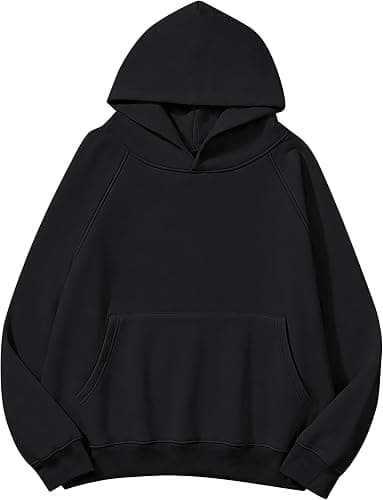
Heavyweight vs Lightweight Hoodies: Which to Choose
By The Velocity Wear Team
Need this made?Get pricing for this product— free, no obligation, 50 pieces minimum.
Heavyweight hoodies, roughly 350 GSM and up, win when the hoodie is the product people are paying for: retail merch, streetwear drops, premium club kit. Lightweight hoodies, roughly 240 to 300 GSM, win when the garment is worn indoors, layered, given away in quantity, or posted one at a time. Neither is the better fabric. They answer different questions.
What GSM Tells You, and What It Quietly Hides
GSM is grams per square metre. It measures how much fabric there is, not how good it is. Two hoodies at the same weight can feel completely different depending on the yarn and the back of the fabric. A ring-spun cotton fleece with a soft brushed back at 300 GSM will feel more expensive than a coarse open-end yarn at 380 GSM that pills after a few washes. Loopback fleece, where the loops are left unbrushed, breathes better and holds a crisper line but reads as less cosy. Brushed back feels softer straight away, then flattens over time.
Use GSM as shorthand for structure and hand-feel, then ask the second question: what is the yarn, and is the back brushed or looped? That is where the real quality difference sits.
Where the Heavy Option Earns Its Place
Heavier fleece holds its shape. The body hangs rather than clings, cuffs and hem keep their tension longer, and the garment survives being worn hard without going shapeless across the shoulders. If somebody is handing over money for the hoodie itself, the weight does a lot of the persuading before they have even looked at the print.
Heavyweight also suits embroidery. There is enough fabric behind the stitch to support it, so a chest logo sits flat instead of puckering and the backing is less likely to show through. If your main decoration is a stitched crest or wordmark, denser fleece makes the job easier and the result cleaner.
Where Lightweight Is Genuinely the Right Call
Plenty of hoodies are never worn outdoors in winter. Staff hoodies in a warm warehouse, gym layers, festival crew kit, conference giveaways, uniform for a hospitality team that spends the whole shift inside. In all of those a heavyweight fleece is uncomfortable and the extra cost buys nothing anybody notices. A lighter fleece also drapes more, which flatters a slimmer cut and layers under a jacket without bulking out the shoulders.
There is a shipping angle too. If you sell merch online and post it one unit at a time, garment weight feeds straight into your parcel band. A heavyweight hoodie can push a single-item order into a more expensive bracket, which either eats your margin or turns up as a delivery charge the buyer notices at checkout.
How Fabric Weight Changes the Print
Heavier fleece usually has a more textured surface, especially when brushed. Fine lines and small text sink into that texture. Screen printing on heavy brushed fleece tends to need a slightly heavier ink deposit, and very fine detail can break up along the edges. Lighter, smoother fabric holds crisp edges more reliably.
DTF sits on the surface as a thin film, so it handles detail well on both, but on a very fuzzy brushed fleece the film has less to grip and the edge of the print can look slightly raised. The practical fix is identical in both cases: simplify hairline detail, and avoid text smaller than you would comfortably read at arm's length.
- Retail merch and streetwear drops: heavyweight, because the fabric is part of what you are selling.
- Indoor staff and gym kit: lightweight or midweight, because comfort across a full shift beats presence on a hanger.
- Large giveaway runs: lightweight, and put the saved budget into a better print or a bigger quantity.
- Embroidered crests and premium club kit: heavyweight, which supports the stitch and hides the backing.
- Anything you post individually to customers: check what the extra weight does to your parcel cost before you commit.
The Cost Gap Is Smaller Than the Perception Gap
Moving up a weight class costs more per garment, but the jump in how the finished product reads is usually larger than the jump in price, particularly at volume where bulk discounts of up to around 40 percent come into play. If you are agonising over a small per-unit difference on a hoodie you intend to sell, the heavier option is normally the easier decision. If you are agonising over it on 200 giveaway hoodies destined for the gym, it is not.
“"GSM is a weight, not a verdict. Plenty of 400 gram hoodies feel worse than a good 300."”
Two Questions That Settle It
First: is the hoodie being bought, or being given? Bought garments justify weight. Given garments rarely do. Second: where is it worn? Outdoors and in cold months, go heavier. Indoors, layered, or in summer, go lighter and stop paying for warmth nobody wants.
If you are still torn, get a sample of each before committing the run. Weight is one of the few garment attributes you genuinely cannot judge from a photograph. With a minimum of 50 pieces per order and sizes mixed freely within that run, it is worth resolving before you approve artwork rather than after.