Custom Work Shorts: Check the Site Rules Before You Order
By The Velocity Wear Team
Need this made?Get pricing for this product— free, no obligation, 50 pieces minimum.
Before ordering work shorts, check whether the sites your team works on permit them, because many construction and industrial sites do not. Where shorts are allowed, they follow the same rule as trousers: the leg has almost no usable flat area, so branding is minimal or absent and the top half carries the identity. Velocity Wear supplies work shorts as part of a mixed kit order from a 50-piece minimum with tracked UK and international delivery.
Site Rules Come First
Shorts are the one workwear garment where the buying decision can be overridden by someone else's policy. Many sites require full leg coverage as part of their risk assessment, and site rules vary between principal contractors on otherwise identical projects. Check the specific policies your team will be working under, and if you supply staff to multiple clients, check each one. Nothing else in a kit order has this problem.
If the answer is mixed, buy fewer pairs than you would trousers and treat shorts as an optional extra rather than issued kit. That is also the honest position on cost, because a garment worn for a few months a year does not justify the same spend as one worn all year.
Who Shorts Actually Suit
Grounds maintenance, landscaping, delivery and logistics, warehouse work in summer, outdoor hospitality and events crews. What these have in common is that the hazard profile does not require leg coverage and the work generates a lot of heat. Construction, welding, anything with hot work or heavy handling, and most industrial settings are the opposite.
Retail and hospitality use work shorts more than people expect, particularly outdoor bar and festival work, and there the garment is closer to a uniform item than a piece of protective clothing. That changes the fabric priorities entirely.
Branding Shorts: Even Less Room Than Trousers
A trouser leg at least offers a long panel between the knee and the hem. A short does not. Once you allow for the pocket bags, the side cargo pockets and the hem, the flat area is tiny and awkwardly placed. The realistic options are a small embroidered logo on a thigh pocket flap, or a woven label at the side seam, and both are close to invisible in use.
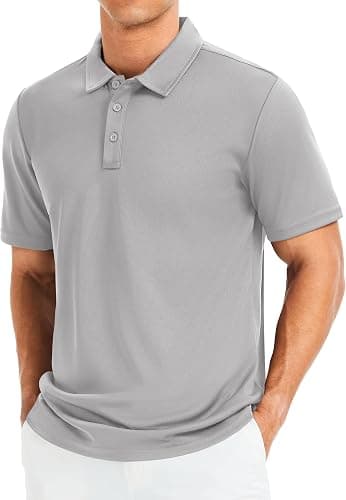
This is worth saying plainly. If you want people to recognise your team, the shorts are not where you achieve it. Spend on embroidered polos and printed hi-vis and let the shorts be plain, which also means you can replace them from stock without a reorder.
Fabric Weight for Summer Work
The instinct is to go lighter than trousers, and that is only half right. Very light fabric tears at the pocket corners and goes see-through when it gets wet. A poly-cotton around 220 to 245 GSM handles the abrasion while still being noticeably cooler than a full-weight trouser. Ripstop constructions are worth considering, because a snag on a short is more likely to catch bare skin.
For hospitality and events, comfort outweighs abrasion resistance and a lighter or stretch fabric makes more sense. Match the fabric to the actual work, not to the category name on the product page.
- Confirm site policy on shorts before spending anything, including for each client site if you subcontract.
- Buy fewer pairs than trousers, since the wearing season is short.
- Keep shorts plain, or restrict branding to a small thigh pocket flap embroidery.
- Aim for around 220 to 245 GSM poly-cotton for trades, and lighter stretch fabric for hospitality.
- Check hem width, because narrow hems on a short leg restrict movement when crouching.
“"Shorts are the only workwear item where somebody else's risk assessment gets a vote on your order."”
Pockets, Loops and What Actually Gets Used
Work shorts inherit trouser pocket layouts that do not always make sense on a shorter leg. A cargo pocket positioned for a trouser thigh can sit awkwardly close to the hem on a short, where it flaps and catches. Look at where the pockets land relative to the hem rather than assuming the layout transfers.
Hammer loops and ruler pockets are largely decorative on shorts, since anyone using them is unlikely to be wearing shorts in the first place. Deep, secure side pockets and a zipped or buttoned rear pocket earn their place. Everything else is weight.
Sizing Is Simpler Than Trousers
This is the one respect in which shorts are easier. There is no leg length to collect, so waist size alone covers it, and the tolerance is more forgiving because a short does not need to break correctly over a boot. If you have struggled getting leg lengths out of a team for a trouser order, shorts will feel straightforward by comparison.
Ordering Shorts Alongside a Year-Round Kit
The sensible approach is to fold shorts into a larger kit order rather than running them alone. The 50-piece minimum applies per order with sizes and styles mixed freely, so shorts can sit alongside polos, hoodies and trousers in one run, and bulk discounts of up to around 35% apply against the combined quantity. Embroidered items in that run take around 10 to 15 working days from artwork approval, with UK delivery typically 2 to 5 working days after dispatch.