Custom Workwear and Clothing Printing in Burnley
By The Velocity Wear Team
Need this made?Get pricing for this product— free, no obligation, 50 pieces minimum.
Burnley's advanced manufacturing base, aerospace components in particular, changes what a uniform has to do. It is not there to look smart in a photograph. It is there to tell anyone walking the floor, including customers and auditors, who does what and where they belong. That is best done with garment colour rather than embroidered job titles, and it is why the town's better uniform systems are simpler than they look.
From Weaving Sheds to Precision Components
The Weavers' Triangle and the canal that runs through it are the visible remains of the cotton trade that built the town. What replaced it is less photogenic and more valuable: precision engineering, aerospace supply, plastics and advanced manufacturing spread across the estates, plus a university campus in the centre feeding technical skills in. Those firms have customers who audit them, which is a detail that quietly shapes their clothing decisions.
Colour Codes Beat Embroidered Job Titles
The instinct on a busy factory floor is to embroider roles onto garments: quality, production, supervisor, visitor. It looks organised for about eight months. Then someone is promoted, someone moves department, two roles merge, and you have a drawer of garments that fit nobody's job. Since embroidery is a per-garment setup, every change is a new order.
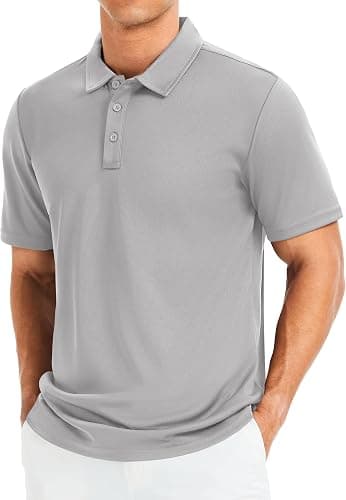
Colour does the same job and costs nothing extra. One embroidered company mark on every garment, and the role signalled by the colour of the polo: one shade for production, another for quality, another for engineering, another again for visitors and contractors. Someone who changes department changes garment, not identity. A visitor from a customer can tell at a glance who to ask. And because you are only ever setting up one logo, your reorders stay cheap and your floor stays consistent.
Your Floor Gets Walked By People Who Matter
Aerospace and automotive supply chains bring customer visits and audits, and a factory floor tells a visitor a great deal before anyone opens their mouth. Mismatched garments, a mix of company kit and personal hoodies, and no way of telling staff from contractors all read as looseness, fairly or not. It is one of the few genuine arguments for spending properly on uniform: not vanity, but the impression of control.
Setting Up a Colour Coded System
If you are building one from scratch, do it in this order.
- Fix one embroidered company mark and use it identically on every garment, in one size and one placement.
- Assign colours to functions rather than to individuals, and keep the number of colours to four or fewer so it stays readable.
- Choose a distinct colour for visitors and contractors, and hold a stock of those sizes centrally.
- Record the garment codes and thread references so a reorder in eighteen months matches what is already on the floor.
- Order a float of unallocated sizes with the main run, sized towards the middle of the range.
“"Put the role in the colour, not in the thread. People move around inside a company far more often than a polo wears out."”
Fabric Choice Near Finished Work
One detail that rarely makes it into a uniform discussion: brushed cotton fleece sheds fibres. In an area doing paint, coating, adhesive bonding or fine assembly, that is a nuisance you have introduced yourself. Poly-rich garments with a smoother face shed considerably less and are the safer default near finished surfaces. Keep the soft brushed hoodies for the leisurewear order, where the only thing they shed onto is a sofa.
Apprentice Intakes Set the Ordering Cycle
Manufacturing in this part of Lancashire still runs proper apprenticeship programmes, and the intake is predictable. That predictability is useful. It means you can run one main annual order timed just ahead of the intake, cover the year's expected joiners in the same run, and avoid the expensive habit of ordering five garments every few weeks. Consolidating like that also gets you further into bulk pricing, which reaches up to around 35% as quantities rise.
Clarets, Charity Runs and the Rest
Turf Moor gives the town an unusually strong shared identity for its size, and a lot of company clothing here ends up doubling as charity event kit for a run, a walk or a works team. That is a different job from uniform. Printed tees at short notice suit DTF, which carries no per colour setup and handles detail, while a simple one or two colour design for a larger group is cheapest by screen printing.
How to Order for a BB Postcode Site
The whole process is online. Brief and proof by email, check the mark at real scale in the free Design Studio, and compare quantities in the instant price calculator before you commit. The minimum is 50 pieces per order with sizes mixed freely, production begins at artwork approval rather than order placement, and embroidery and screen printing typically run around 10 to 15 working days from that point, plus 2 to 5 working days for tracked UK delivery.