Custom Workwear and Clothing Printing in Barrow-in-Furness
By The Velocity Wear Team
Need this made?Get pricing for this product— free, no obligation, 50 pieces minimum.
Barrow's custom clothing brief is written by heavy engineering. Submarine and ship construction and the long supply chain feeding it impose rules that ordinary workwear advice never covers, chiefly around loose items and controlled areas. Add a peninsula geography that punishes drip-feed ordering, and the practical answer is embroidered, cord-free garments bought in fewer and larger batches. Velocity Wear supplies it online from a 50 piece minimum with tracked delivery into LA postcodes.
An Engineering Town at the End of the Line
Barrow sits at the far end of the Furness peninsula, which is a genuinely unusual position for a town of serious industrial weight. Everything arrives by one road and one railway line. The shipyard dominates, and around it sits a dense network of fabricators, machinists, electrical contractors, testing firms and specialist suppliers, many of them small businesses with a dozen staff and a very specific customer.
Loose Items Are the Whole Problem
In a controlled build environment, anything that can detach from a garment is a liability. Hood cords, toggles, metal poppers, pin badges, loose applique patches, hanging swing tags and even a badly finished embroidery tail all fall into the same category: a small object that could end up somewhere it should not be. Firms working in or near those areas usually run tight rules about it, and the sensible move is to specify garments that avoid the problem rather than to police it later.
In practice that means crew neck sweatshirts rather than drawcord hoodies for anyone who works in the halls, embroidery or a well bonded transfer rather than a stitched-on patch that can lift at the edge, sewn-in labels rather than anything that hangs, and covered or plastic fastenings rather than exposed metal. Keep the drawcord hoodies for the leisurewear order and the branded gear people wear at home, where nobody minds them.
Geography Rewards Bigger, Rarer Orders
You cannot nip somewhere and pick up ten more polos in Barrow the way you might in a large city, and a fifteen mile top-up run is a forty mile round trip. That makes consolidation more valuable here than almost anywhere. One larger annual order beats six small ones on unit price, on consistency of garment colour between production runs, and on the number of times you pay screen print setup, which is charged per colour every time a run starts. Bulk pricing improves up to around 35% as quantities rise, and the peninsula makes that saving worth chasing harder.
A Kit List for a Supply Chain Firm
Most Barrow subcontractors need something like the following, and the list is short deliberately.
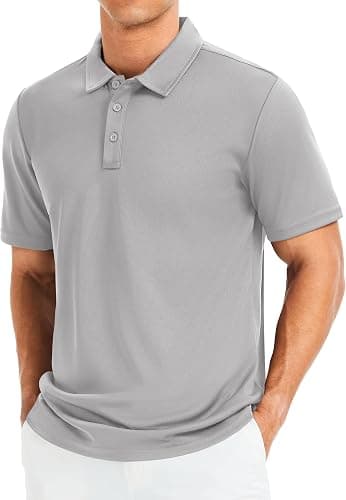
- Embroidered poly-cotton polo as the identifiable everyday garment, two or three per person so nothing is ever waiting on a wash.
- Crew neck sweatshirt or cord-free fleece as the warm layer, chosen specifically because it has nothing on it that can come off.
- Printed cotton tees for summer and for the workshop, treated as a consumable rather than an asset.
- A softshell or windproof for anyone working outdoors on the Walney side, where the wind off the Irish Sea is the deciding factor.
- A small float of unallocated sizes, because getting a single garment to Barrow at short notice is the expensive scenario.
“"In a build hall a drawstring is not a styling choice. It is a component, and somebody has to account for every component."”
Offshore Wind and the Irish Sea
Barrow is also an operations base for offshore wind in the Irish Sea, and that work brings its own clothing pattern. Crews move between vessel, quayside and turbine in one shift, which means layering rather than a single garment, and salt air that is unkind to surface prints and to cheap zips alike. Embroidery holds up better than print in that environment. Dark garments hide the marine grime and stay presentable for longer, which also rules out sublimation for most of the kit, since it needs polyester and light coloured bases to work at all.
Bluebirds, Raiders and Club Kit
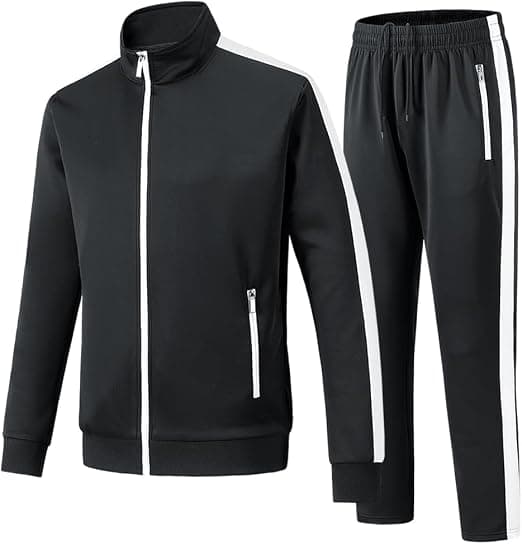
For a town of its size, Barrow carries a lot of sporting identity, with football and rugby league both deeply rooted and a strong junior scene under both. Rugby league shirts are a natural fit for sublimation, since they are polyester and the design usually runs edge to edge with no surface layer to crack under contact. Club hoodies and training wear are a separate job, better suited to screen printing when the run is large and the design simple, or DTF when it is detailed or the run is short.
Ordering Online and Planning the Timeline
Everything happens online, which suits a town where the nearest large centre is a long drive. Use the free Design Studio to check placement and scale on the garment, and the instant price calculator to test quantities before you commit. Production starts at artwork approval rather than order placement, so a delay in signing off a proof pushes the whole schedule. Embroidery and screen printing usually run around 10 to 15 working days from approval, complex work nearer 15 to 20, and tracked UK delivery typically adds 2 to 5 working days.